

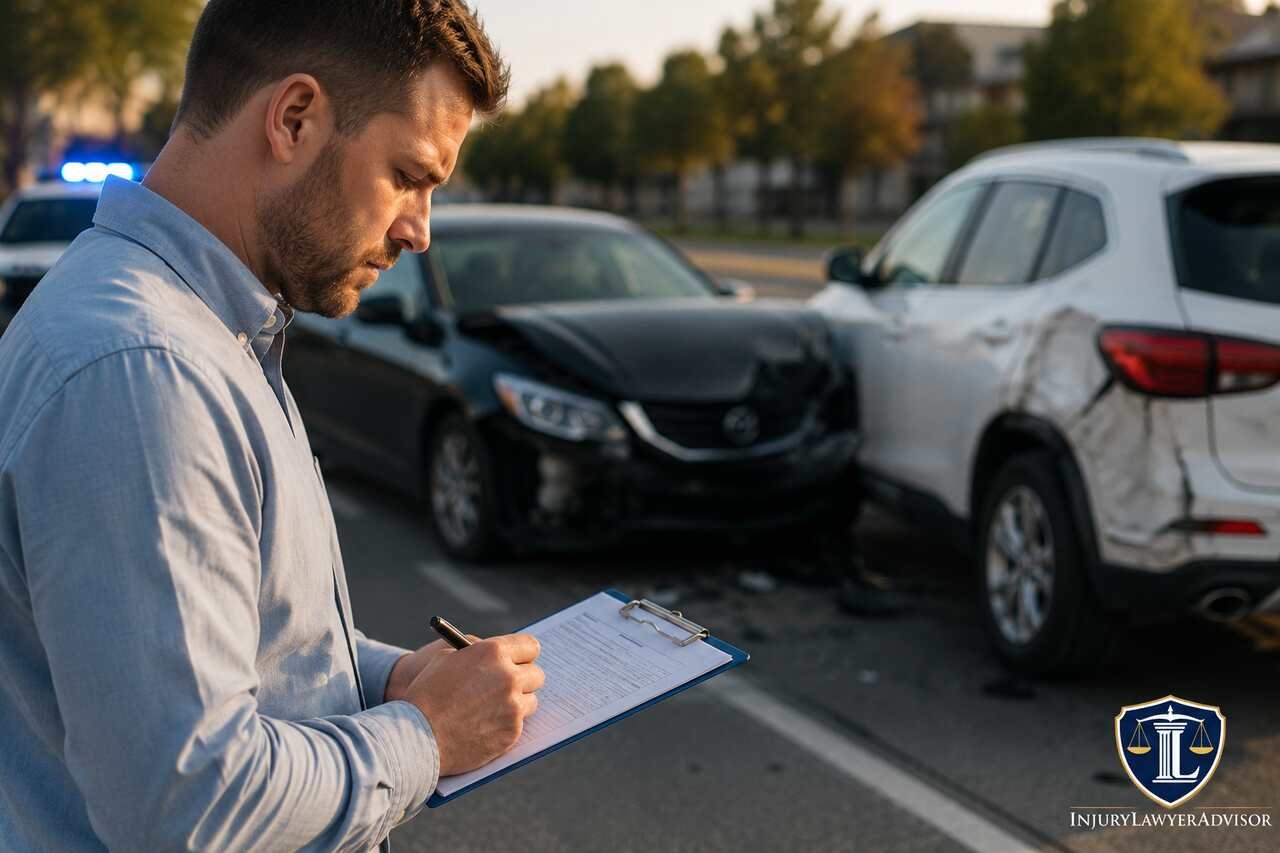
A car accident police report can affect insurance decisions, repair payments, injury claims, and legal responsibility. When a report contains mistakes, drivers should act quickly, carefully, and with proof. Correcting errors does not rewrite the crash, but it helps ensure the official record reflects accurate facts.
Review the Police Report Carefully
Start by reading every part of the report, including names, addresses, vehicle details, insurance information, crash location, date, time, weather, road conditions, witness names, citations, and the officer’s crash narrative. A small mistake, such as the wrong lane, incorrect vehicle direction, or missing injury note, can create problems during an insurance claim.
Compare the report with your own records. Use photos, videos, medical papers, repair estimates, dashcam footage, phone records, and witness messages. Check whether the report describes the vehicles correctly, lists the right driver, identifies damage areas, and records any statements accurately.
Some mistakes are simple clerical errors. Others involve the officer’s opinion, such as fault, speed, distraction, or unsafe driving. Factual mistakes are usually easier to correct than opinion-based conclusions, so separate clear errors from disputed interpretations before contacting the police department.
| Report Section | Common Mistake | Proof That May Help |
| Driver information | Wrong name, address, license number | Driver’s license, registration |
| Vehicle details | Wrong plate, make, model, color | Registration, photos |
| Crash location | Incorrect street, lane, intersection | Photos, GPS data, maps |
| Damage description | Missing or wrong impact area | Repair estimate, accident photos |
| Injuries | Injury omitted or understated | Medical records, EMT notes |
| Witnesses | Missing witness name or statement | Written witness statement |
Identify Factual Errors Before Requesting Changes
Mark each mistake clearly and write down the correct information beside it. A strong correction request uses exact details, not emotional statements. For example, “The report lists my vehicle as a 2018 Toyota Camry, but it is a 2021 Honda Civic” is stronger than “The report is wrong.”
Gather documents that prove each correction. Police departments are more likely to amend basic facts when the driver provides official records, photographs, or neutral evidence. A registration card can correct a license plate. Medical paperwork can support an injury correction. Photos can support vehicle position or damage location.
Avoid mixing factual corrections with blame arguments. If the report says the crash happened at 5:30 p.m. but it actually happened at 6:10 p.m., that is a factual issue. If the report says you failed to yield and you disagree, that may require a supplemental statement rather than a direct correction.
Contact the Reporting Police Department
Call or visit the police department that created the report. Ask for the traffic records unit, accident report division, or the officer who filed the report. Give the report number, crash date, crash location, and your name so staff can locate the file.
Ask about the department’s process for corrections. Some agencies allow written correction requests. Others require a form, sworn statement, or direct review by the reporting officer. The police department may not remove the original report, but it may add an amended report or supplemental note.
Keep your tone professional. The officer may have written the report based on limited information at the scene. A clear request with proof works better than accusations. Your goal is to improve the record, not argue with the department.
Submit a Written Correction Request
Prepare a short written request that lists each mistake and the accurate replacement information. Include the police report number, your contact details, crash date, and supporting documents. Keep the request organized so the officer can review it quickly.
For simple mistakes, state the correction directly. For example, “Please correct the license plate from ABC123 to ABD123.” For disputed crash details, ask whether you may submit a supplemental statement explaining your version of events.
Attach copies, not originals. Include photos, repair documents, insurance cards, registration papers, medical records, witness statements, or other supporting materials. Label each attachment so the department understands which correction it supports.
Add a Supplemental Statement When Fault Is Disputed
When the mistake involves fault, driver behavior, speed, lane position, or signal use, the department may refuse to change the officer’s conclusion. In that situation, ask to add your own written statement to the report file.
A supplemental statement should be factual and calm. Explain what happened, where your vehicle was, what the other driver did, and which evidence supports your account. Avoid insults, guesses, or exaggeration.
This statement can help your insurance company, attorney, or claims adjuster understand that the report is disputed. It may not erase the officer’s opinion, but it creates a record showing that you objected and provided a different account.
Notify Your Insurance Company
Send your insurer a copy of the police report and point out the mistakes. Insurance adjusters often rely on police reports when deciding liability, coverage, and settlement value. A wrong statement in the report can influence the claim if it is not challenged early.
Give the adjuster your correction request, supporting proof, and any supplemental statement. Ask the adjuster to add these materials to your claim file. This protects your position even before the police department responds.
If the report wrongly suggests that you caused the accident, provide evidence that supports your version. Photos, dashcam footage, witness details, traffic camera information, medical records, and vehicle damage patterns can all help the insurer review the claim independently.
Preserve Evidence That Supports the Correction
Save every document connected to the accident. Keep the original report, amended report, emails, letters, claim notes, repair invoices, medical records, rental car receipts, towing bills, and witness messages. Organized proof makes it easier to challenge inaccurate information later.
Store digital evidence in more than one place. Upload photos, videos, and scanned documents to secure storage. Keep file names clear, such as “rear bumper damage,” “intersection photo,” or “medical visit June 14.”
Evidence can become harder to obtain with time. Businesses may delete camera footage, witnesses may forget details, and damaged vehicles may be repaired or sold. Acting early gives you a better chance of proving the report contains a mistake.
Work With an Attorney for Serious Mistakes
Consider legal help if the report incorrectly blames you, omits injuries, misstates witness accounts, ignores key evidence, or affects a serious injury claim. An attorney can communicate with the police department, insurer, and other parties in a structured way.
A lawyer may also help obtain traffic footage, 911 recordings, body camera footage, vehicle data, medical documentation, and expert opinions. These materials can be important when the police report conflicts with physical evidence.
Legal support becomes especially important when the other driver’s insurance company denies liability based on the report. A police report is important, but it is not always the final word. Claims can still be challenged with strong evidence.
| Mistake Type | Best First Step | Possible Result |
| Wrong personal details | Submit ID or registration proof | Corrected clerical record |
| Wrong insurance details | Provide insurance card | Updated claim information |
| Missing injury note | Provide medical records | Supplemental injury record |
| Incorrect damage description | Provide photos and repair estimate | Added or corrected damage details |
| Disputed fault statement | Submit supplemental statement | Your version added to file |
| Missing witness | Provide witness contact details | Witness may be added or contacted |
Follow Up Until the Record Is Updated
After submitting your request, follow up with the department. Ask whether the report was amended, whether a supplemental statement was accepted, and how to obtain the updated copy. Keep notes of each call, including the date, person spoken to, and response.
Send the amended report or supplemental statement to your insurance company as soon as you receive it. Do not assume the insurer will automatically receive the update from the police department.
If the department refuses to change the report, ask for written confirmation or note the refusal in your claim file. You can still dispute the report through insurance evidence, attorney letters, witness statements, and expert review.
Avoid Common Mistakes During the Correction Process
Do not wait too long to act. Delays can make your correction seem less reliable and may allow the insurance company to make decisions based on inaccurate information.
Do not submit unsupported claims. A correction request should include documents, photos, or clear explanations. Police departments are less likely to change a report based only on disagreement.
Do not argue aggressively with the officer or claims adjuster. Professional communication protects your credibility. Your written record should show that you acted responsibly, provided proof, and requested a fair review.
Conclusion
Car accident police report mistakes can affect fault decisions, insurance payments, medical claims, and legal outcomes. The best response is to review the report carefully, separate factual errors from disputed opinions, collect proof, request corrections in writing, and notify your insurer. When the mistake is serious, legal guidance can help protect your claim and prevent an inaccurate report from damaging your case.
