




A check fraud lawyer consultation helps individuals understand their legal options when facing accusations involving forged, altered, counterfeit, or unauthorized checks. Because these cases often depend on financial records, communications, and proof of intent, early legal guidance can help protect your rights, assess potential charges, and determine the best next steps.
Confirm the Nature of the Check Fraud Allegation
Begin a check fraud lawyer consultation by clearly identifying what conduct authorities, a bank, an employer, or another party claims occurred. A lawyer needs to know whether the matter involves creating a counterfeit check, changing a legitimate check, depositing a check belonging to another person, endorsing someone else’s name, participating in check kiting, or receiving money from a questionable check.
Different allegations create different legal questions. A forged signature may require examination of authorization and handwriting evidence. An altered check may raise questions concerning who changed the payee or amount. A counterfeit-check allegation may depend heavily on whether the accused person knew the check was false. Check kiting generally involves moving funds between accounts in a manner designed to exploit processing delays and create access to money that is not actually available.
Federal and state authorities may also treat conduct differently. The Department of Justice has historically recognized that the federal bank fraud statute can reach check-kiting schemes involving protected financial institutions. Your lawyer should therefore determine whether the matter appears to be a bank dispute, state criminal investigation, federal investigation, civil dispute, or combination of proceedings.
Preserve Checks, Bank Records, and Communications


Gather and preserve every document connected with the disputed transaction before meeting the lawyer. Useful records can include copies or photographs of checks, deposit slips, bank statements, withdrawal records, mobile-deposit confirmations, account alerts, emails, text messages, social-media conversations, invoices, receipts, employment records, and correspondence from banks or investigators.
Do not alter, delete, destroy, or manufacture evidence. Electronic conversations can be especially important when another person supplied the check, instructed you to deposit it, promised payment, or directed you to transfer money afterward. Preserving complete conversations is usually more helpful than providing isolated screenshots because surrounding messages may show how the transaction developed.
Bank records can also establish timing. They may show when a check was deposited, when provisional funds appeared, when money was withdrawn, when the check was returned, and whether the bank contacted the account holder. CFPB guidance notes that counterfeit checks can initially appear as deposited funds before the financial institution later determines the instrument was fraudulent and reverses the amount. Those details may become important when evaluating knowledge and intent.
| Record | Information It May Establish | Preparation Step |
| Check copy | Payee, amount, signature, alterations | Preserve front and back |
| Bank statement | Deposits, withdrawals, transfers | Download complete statements |
| Messages | Instructions and knowledge | Save complete conversations |
| Deposit receipt | Date, location, method | Keep original or digital copy |
| Surveillance information | Who handled the transaction | Tell the lawyer where footage may exist |
| Bank correspondence | Notices and account actions | Preserve emails and letters |
Prepare a Complete Timeline Before the Consultation
Create a chronological account of events before speaking with the attorney. Start with how you received the check and continue through the most recent communication from the bank, police, prosecutor, employer, business, or other involved person.
Include dates, approximate times, locations, account activity, conversations, and the names of potential witnesses. Explain who issued the check, what you believed it represented, whether you were expecting payment, where it was deposited, what happened to the proceeds, and when you first learned that someone considered the transaction fraudulent.
Accuracy matters more than attempting to make the story sound favorable. Lawyers evaluate cases by identifying facts that prosecutors may use and facts that support alternative explanations. If you cannot remember something, say so rather than guessing. A reliable timeline can help counsel identify contradictions, obtain records, locate witnesses, and determine whether important evidence is at risk of disappearing.
Identify Possible Criminal and Civil Exposure

Ask the lawyer to explain every realistic form of exposure created by the alleged conduct. Check fraud can potentially lead to criminal prosecution, restitution claims, bank account restrictions, civil lawsuits, employment consequences, or related allegations depending on the facts.
Federal bank fraud is one possible offense when a qualifying financial institution is involved. Section 1344 prohibits knowingly executing or attempting a scheme to defraud a financial institution or obtain property under its custody or control through false or fraudulent representations. The statute authorizes a maximum fine of $1 million, imprisonment of up to 30 years, or both. State offenses and penalties vary considerably, so a lawyer must analyze the law of the jurisdiction handling the case.
A consultation should distinguish maximum statutory exposure from a likely outcome. Charges, plea negotiations, sentencing rules, restitution, criminal history, loss amounts, evidence strength, and local procedures can all affect a case. Avoid assuming that an online penalty description predicts what will happen in an individual prosecution.
Discuss Knowledge, Intent, and Possible Defenses
Explain exactly what you knew when the disputed check was received, deposited, endorsed, altered, transferred, or cashed. Fraud cases frequently turn on whether prosecutors can prove dishonest knowledge or intent rather than merely proving that a bad check passed through someone’s possession or account.
A person may receive a counterfeit or altered check without knowing it is fraudulent. Scammers sometimes send fake checks and instruct recipients to return part of the money or forward funds elsewhere. CFPB guidance identifies this arrangement as a common scam and warns that recipients may ultimately be responsible for money withdrawn after a counterfeit check is discovered.
Potential defenses depend entirely on the evidence. Issues may include lack of knowledge, lack of fraudulent intent, mistaken identity, authorization, insufficient evidence, unreliable witnesses, account compromise, coercion, or involvement in a scam without awareness of its fraudulent nature. A lawyer should evaluate defenses rather than assuming that one explanation applies to every check fraud allegation.
Review Contact With Banks and Investigators
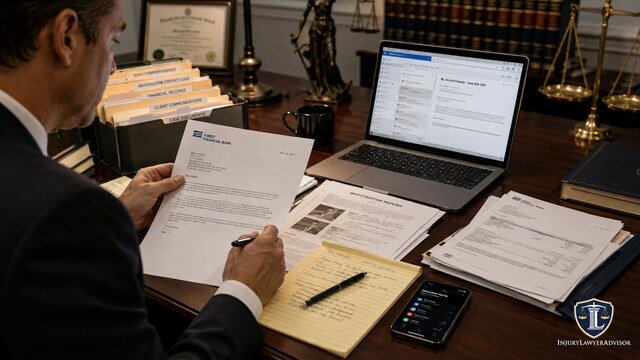
Tell the attorney about every communication you have already received from investigators, police officers, prosecutors, bank fraud departments, employers, or alleged victims. Provide copies of letters, emails, subpoenas, notices, warrants, voicemail messages, and interview requests.
Avoid giving investigators false information or attempting to coordinate stories with other people. Statements made during an investigation can become evidence. A lawyer can explain whether an interview is advisable, whether counsel should communicate with investigators on your behalf, and which legal rights apply at the current stage.
Bank communications also deserve attention. If you discovered an unauthorized check rather than being accused of creating one, prompt reporting may be important. The CFPB advises consumers who discover unauthorized checks to contact their bank or credit union quickly and notes that available protections may depend partly on whether the payment was processed electronically and on applicable state law.
Choose a Lawyer With Relevant Fraud Case Experience
Evaluate whether the lawyer regularly handles financial crimes, fraud investigations, forgery cases, theft allegations, bank fraud, or white-collar criminal defense. General criminal defense experience can be useful, but cases involving complicated financial records may require additional familiarity with banking evidence and transaction analysis.
Ask who will actually handle the case, whether the lawyer has experience with the court or investigative agency involved, and whether federal representation is available if federal authorities become involved. Federal criminal procedure differs significantly from many state systems, making relevant experience particularly important when federal exposure exists.
The consultation should also show whether the lawyer communicates clearly. Effective counsel should explain uncertainty rather than guarantee an outcome. No attorney can responsibly promise dismissal, acquittal, or a specific sentence before fully reviewing the evidence and legal circumstances.
Compare Legal Fees and Representation Terms
Request a clear explanation of fees before hiring counsel. Criminal defense lawyers may charge flat fees, hourly fees, retainers, or staged fees depending on whether representation covers an investigation, pretrial proceedings, negotiations, trial, sentencing, or appeals.
Determine exactly which services are included. Ask whether investigators, forensic accountants, expert witnesses, travel, copying, court costs, or other expenses are billed separately. Written representation agreements should identify the scope of work and financial obligations.
| Consultation Issue | Question to Ask |
| Experience | Have you handled similar check fraud cases? |
| Investigation | Can you communicate with investigators for me? |
| Strategy | Which evidence appears most important? |
| Fees | Is the fee flat, hourly, or staged? |
| Trial | Does the agreement include trial representation? |
| Expenses | Are experts and investigators charged separately? |
Price should not be the only consideration. Experience, availability, communication, strategy, and the seriousness of potential consequences can also influence the decision.
Follow Immediate Evidence and Communication Instructions
After the consultation, carefully follow the lawyer’s instructions regarding evidence preservation, bank communications, court appearances, investigators, and contact with other involved individuals. Do not assume that deleting an uncomfortable message or closing an account will solve the problem.
Continue preserving documents generated after the consultation. New bank notices, court documents, emails, transaction records, and investigator communications should be provided to counsel promptly. Tell the lawyer immediately if you receive a subpoena, search warrant, charging document, arrest notice, court date, or request for an interview.
If you are the victim of stolen or altered checks, continue working with the relevant financial institution. The CFPB describes check washing as a form of check fraud in which criminals chemically remove or modify information on genuine checks and recommends protective measures such as securely mailing checks and using ink that is harder to remove.
Evaluate the Next Steps After the Consultation
Finish the check fraud lawyer consultation with a concrete understanding of the immediate legal priorities. Determine whether counsel recommends further investigation, preservation letters, witness interviews, bank-record collection, communication with prosecutors, preparation for surrender, court representation, or another response.
Ask which facts remain unknown and what evidence could change the lawyer’s assessment. Early case evaluations often change as additional records become available. A disputed transaction that initially appears suspicious may look different after messages, authorization records, account history, or witness testimony is reviewed.
Also clarify deadlines. Court dates, subpoena response dates, bank dispute deadlines, and investigative developments can create time-sensitive obligations. Prompt legal advice is particularly important when criminal charges have already been filed or investigators are actively requesting statements.
Act Promptly to Protect Your Legal Position
A check fraud lawyer consultation provides more than a general explanation of fraud law. It creates an opportunity to organize evidence, assess criminal exposure, identify possible defenses, understand investigative risks, and establish a strategy before additional decisions are made.
Bring complete records, provide an accurate timeline, disclose previous communications, and discuss knowledge and intent openly with counsel. Check fraud cases vary substantially according to jurisdiction and evidence, so individualized legal advice is essential. Early preparation allows the attorney to evaluate both the government’s allegations and information that may support the defense.
Conclusion
A check fraud lawyer consultation can be an important first step when you are accused of depositing, cashing, altering, forging, or participating in the use of a fraudulent check. These cases often depend on detailed financial records, communications, authorization, and evidence showing whether the accused person actually knew about the fraud or intended to deceive another party.
Preparing for the consultation can make the legal review more productive. Preserve copies of checks, bank statements, deposit records, messages, notices, and investigative communications, and create an accurate timeline of events. Avoid destroying evidence, providing misleading information, or making unnecessary statements about the allegations before receiving legal advice.
An experienced check fraud lawyer can examine the applicable state or federal laws, evaluate possible defenses, communicate with investigators when appropriate, and explain potential charges, restitution, penalties, and court procedures. Because every case involves different facts and legal requirements, personalized advice is essential. Seeking a check fraud lawyer consultation as early as possible allows you to understand your legal position and make informed decisions about the next steps.
FAQ’s
Should I hire a lawyer before speaking with police about check fraud?
Consulting a criminal defense lawyer before an investigative interview can help you understand your rights, potential exposure, and the consequences of making statements. Whether an interview should occur depends on the circumstances.
Can depositing a fake check automatically result in a fraud conviction?
Not necessarily. Criminal fraud generally requires proof of legally required elements, which may include knowledge and fraudulent intent. The applicable elements depend on the specific statute charged.
Can check fraud become a federal case?
Yes. Certain schemes involving financial institutions can potentially trigger federal bank fraud laws or related federal offenses. Other cases remain under state jurisdiction.
What should I bring to a check fraud lawyer consultation?
Bring checks, bank statements, deposit records, messages, letters from financial institutions, court documents, investigator communications, identification of witnesses, and a written timeline.
How much does a check fraud lawyer consultation cost?
Fees vary by lawyer, jurisdiction, case complexity, and whether the meeting is an initial consultation or part of retained representation. Some attorneys offer free consultations, while others charge consultation fees.
Can a lawyer guarantee that check fraud charges will be dismissed?
No responsible lawyer can guarantee dismissal or another specific result. Counsel can evaluate evidence, identify weaknesses, negotiate where appropriate, prepare defenses, and explain realistic potential outcomes based on the case.


