



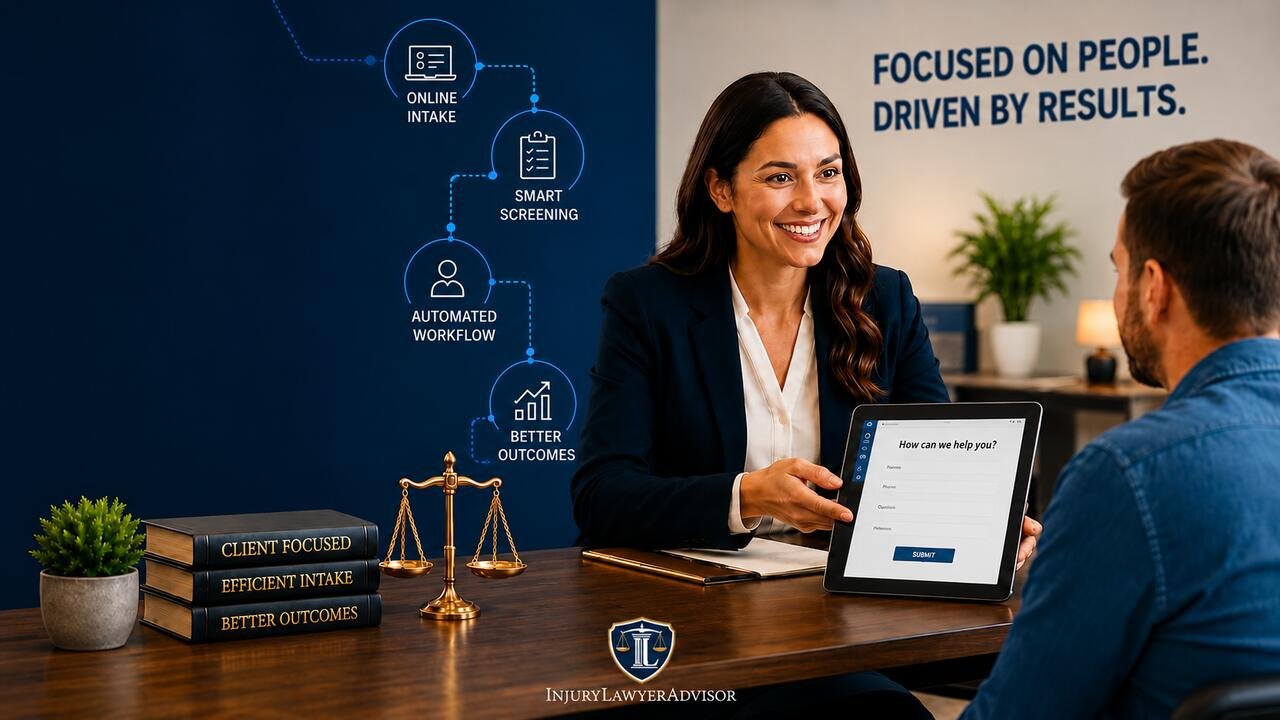
The best personal injury firms don’t just win cases in the courtroom. They win them at the first phone call. When your intake process is fast, prospective clients feel heard before they’ve signed anything, and that trust converts.
A 2025 national study of law firm responsiveness found that 35% of calls go unanswered, an estimated $109 billion in lost business each year, so the firms that answer well capture cases their competitors leave on the table.
Your firm can win more of those cases by pairing smarter processes with specialized support, which frees your internal team to focus on higher-value work.
Drive Revenue Growth Through a Stronger Intake Process
When your intake team answers every call with confidence and gives prospective clients a clear next step, those conversations turn into signed retainers. That’s the opportunity most firms underestimate. Intake isn’t administrative overhead. It’s the function that routes potential clients from a first phone call to a signed retainer.
The firms pulling ahead treat speed-to-lead as a growth strategy. Prospective clients reaching out after an accident or injury are comparing firms in real time, and the practice that responds first with a clear, empathetic conversation earns the retainer. Every minute you shave off that initial response directly strengthens your case acquisition pipeline.
Winning that speed race is one thing. Knowing where the race is headed next is what keeps you ahead of it.
Track the Trends Reshaping Personal Injury Intake in 2026
Increased competition for high-value cases and rising client expectations make intake performance a true differentiator. Leading practices now run round-the-clock coverage and structured case-qualification scripts, backed by dedicated intake teams that answer every call.
Understanding where the industry is heading puts you in a stronger position to build the intake infrastructure your firm needs next.
- Cover every hour of the day: Accident victims and injured workers reach out around the clock, and the firm that answers first earns their trust.
- Qualify cases at the first call: High-volume PI and mass tort practices are moving beyond informal screening toward documented criteria and trained specialists who can assess viability at the first call.
- Lead with empathy: Clients who call after an accident or injury are often in distress, and intake teams trained to lead with empathy are better positioned to turn those calls into signed retainers.
Key legal trends in personal injury and accident law point to firms competing on speed, with injured clients contacting several practices at once and the fastest, clearest responder earning the call.
That puts more pressure on your team to qualify leads accurately at the point of first contact, while the consultation is still on the line. The firms adapting fastest are giving their intake teams better tools and clearer workflow to meet that moment.
Use Technology to Make Legal Intake Faster
The right technology stack gives your intake process speed and structure. It handles the repetitive steps so that your specialists can spend their time where it counts, on the phone with a prospective client. Three tools do the most work here, and each one builds on the right legal technology stack:
- Automate your follow-up workflow: A legal CRM runs your follow-up sequences and gives intake coordinators a single view of every prospect in the pipeline, so a lead that calls on a Friday night still gets a callback by Monday morning.
- Accelerate case qualification: AI tools screen documents and summarize case details in seconds, which gives your specialists more time for the client-facing conversations where trust gets built.
- Build your digital foundation now: Firms that put these systems in place today are ready to adopt the next wave of intake tools the moment they mature.
The Thomson Reuters Institute’s 2026 Report on the State of the U.S. Legal Market found that the average law firm increased its technology investment by 9.7% in 2025, with generative AI at the center of that shift.
Build a Legal Intake Model That Serves Your Clients and Your Firm
Technology sets the pace, and people deliver the trust. The strongest intake partnerships pair documented case-qualification playbooks with culturally aligned teams who understand the emotional context of a personal injury call.
Nearshore BPO providers working in overlapping U.S. time zones give you the responsiveness of an onshore team at a lower cost. The legal intake specialists at Amalga Group show what a purpose-built nearshore intake partnership can look like, with trained specialists and documented workflow behind every call.
Streamlining legal intake creates more room for genuine human connection across client experience. Every prospective client who reaches out gets the same responsive, human first contact, whatever the hour and however they call. That’s where case wins and lasting client relationships begin.


