



A possession notice is an official legal notice informing a property owner or borrower that a lender or authorized authority intends to take possession of a property or secured asset due to unpaid debts or other legal breaches. Understanding its meaning helps homeowners, borrowers, and investors protect their rights, respond appropriately, and explore available options before further legal action is taken.
Gather the Meaning of a Possession Notice
A possession notice is an official notice issued by a lender, court, landlord, or government authority stating that possession of a property or secured asset will be taken because the owner or occupant has failed to comply with legal or contractual obligations. In most mortgage and secured loan cases, it is issued after repeated payment defaults.
The notice serves as a formal warning rather than an immediate eviction order. It informs the borrower that unless the outstanding obligations are fulfilled within the prescribed period, the lender may proceed to take physical possession of the secured property and later sell it to recover outstanding dues.
Depending on the country, possession notices are governed by different laws. Although the legal procedures differ, the overall objective remains the same: to provide legal notice before taking possession of the asset while giving the borrower an opportunity to remedy the default.
Identify Situations That Lead to a Possession Notice
Several situations can trigger the issuance of a possession notice.
The most common reason is mortgage or home loan default. When borrowers miss several monthly installments and fail to respond to reminders, lenders may initiate recovery proceedings.
Other common situations include:
- Commercial loan defaults
- Business loan non-payment
- Vehicle loan recovery
- Lease agreement violations
- Rental property disputes
- Tax-related property seizures
- Court-ordered possession actions
- Breach of financing agreements
Lenders generally attempt collection efforts before issuing a possession notice. Borrowers often receive payment reminders, overdue notices, demand letters, and final warning notices before legal recovery begins.
Understand the Main Parties Involved
Several parties participate throughout the possession process.
| Party | Primary Role |
| Borrower | Owns or occupies the secured property |
| Lender | Financed the property or asset |
| Bank | Initiates recovery for unpaid loans |
| Financial Institution | Enforces security interest |
| Court | Reviews disputes where required |
| Recovery Officer | Oversees legal recovery proceedings |
| Auction Authority | Conducts sale of seized property |
| Property Valuer | Determines market value |
Each participant performs specific legal duties designed to ensure that the recovery process follows applicable regulations.
Review the Different Types of Possession Notices
Possession notices vary depending on the legal situation.
Mortgage Possession Notice
Issued after a borrower defaults on mortgage repayments. It informs the borrower that the lender intends to recover the property.
Symbolic Possession Notice
In many jurisdictions, lenders first take symbolic possession. This means they officially declare control over the property without physically removing the occupants immediately.
Physical Possession Notice
If dues remain unpaid, authorities may proceed with physical possession, transferring actual control of the property to the lender.
Court Possession Notice
Some countries require lenders to obtain court approval before taking possession.
Landlord Possession Notice
Landlords may issue possession notices when tenants violate lease terms or fail to pay rent.
Each type follows different procedural requirements and timelines depending on local laws.
Examine the Information Included in a Possession Notice
A properly drafted possession notice generally contains essential legal information.
Typical contents include:
- Borrower’s name
- Property address
- Loan account details
- Outstanding loan amount
- Nature of default
- Date of default
- Legal authority invoked
- Time allowed for compliance
- Consequences of non-payment
- Contact information
- Instructions for repayment
- Details regarding future legal proceedings
Accurate information helps borrowers understand both the reason for the notice and the actions required to prevent further enforcement.
Follow the Legal Process After Receiving a Possession Notice
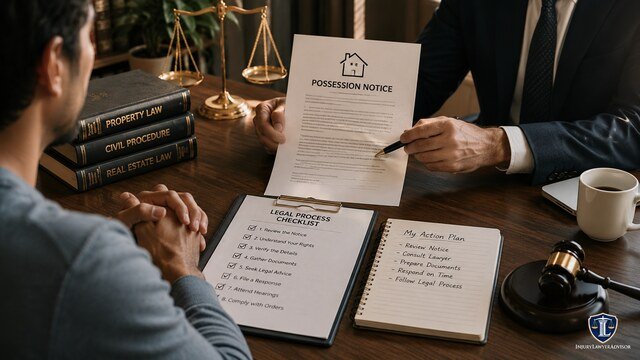

Receiving a possession notice does not automatically mean immediate loss of the property.
The usual sequence is:
- Loan payment default
- Reminder notices
- Demand notice
- Borrower response period
- Possession notice issued
- Opportunity to settle dues
- Physical possession, where permitted
- Property valuation
- Public auction
- Recovery of outstanding loan
- Return of any surplus proceeds, if applicable
Throughout this process, borrowers may still have opportunities to negotiate repayment, restructure the loan, or challenge procedural errors.
Protect Your Rights After Receiving a Possession Notice
Borrowers continue to have legal protections even after a possession notice is issued.
Important rights commonly include:
- Receiving adequate notice
- Access to loan statements
- Opportunity to repay outstanding dues
- Right to dispute calculation errors
- Right to challenge procedural defects
- Right to seek legal representation
- Right to negotiate settlement
- Right to obtain copies of recovery documents
- Right to participate in legal hearings where applicable
Knowing these rights helps borrowers respond effectively instead of ignoring the notice.
Fulfill the Responsibilities of the Lender
Lenders must also comply with legal obligations.
They are generally expected to:
- Issue proper written notice
- Follow statutory timelines
- Calculate dues accurately
- Maintain transparent documentation
- Avoid unlawful intimidation
- Conduct fair property valuation
- Follow approved auction procedures
- Apply sale proceeds toward outstanding debt
- Return any excess amount when required by law
Failure to follow legal procedures may allow borrowers to challenge the possession process.
Respond Immediately to a Possession Notice
Taking prompt action significantly improves the chances of resolving the matter.
Recommended steps include:
Verify the Notice
Confirm that the notice is genuine and issued by the appropriate authority.
Review Outstanding Amounts
Compare the claimed dues with your loan statements and payment records.
Contact the Lender
Discuss repayment plans, restructuring options, or settlement possibilities.
Obtain Legal Advice
A lawyer can explain your legal rights and identify any procedural issues.
Preserve Documentation
Maintain copies of loan agreements, payment receipts, correspondence, and notices.
Avoid Ignoring Deadlines
Missing response deadlines may reduce available legal options.
Compare Symbolic Possession and Physical Possession
| Feature | Symbolic Possession | Physical Possession |
| Property Occupied | Usually Yes | Usually No |
| Legal Control | Lender Declares Control | Lender Takes Actual Control |
| Occupant Removal | Normally Not Immediate | May Occur According to Law |
| Property Sale | May Follow Later | Often Precedes Auction |
| Recovery Stage | Earlier | Later |
Understanding this distinction helps borrowers recognize the stage of the recovery process.
Prepare for Property Auction Procedures

If outstanding dues remain unpaid, the lender may proceed with selling the secured property.
The process generally includes independent valuation, public notice of sale, reserve price determination, auction scheduling, bidder participation, successful bid confirmation, payment collection, and transfer of ownership.
Borrowers may still be able to redeem the property before the sale by paying the required amount, depending on applicable law.
Avoid Common Mistakes After Receiving a Possession Notice
Many borrowers unintentionally worsen their situation by delaying action.
Common mistakes include:
- Ignoring the notice
- Missing response deadlines
- Failing to communicate with the lender
- Discarding important documents
- Assuming immediate eviction is inevitable
- Believing verbal assurances without written confirmation
- Avoiding legal advice
- Not checking whether the outstanding amount is accurate
Early communication often leads to more favorable outcomes.
Consider Available Resolution Options
Several solutions may prevent the loss of the property.
Potential options include:
- Paying overdue installments
- Loan restructuring
- Loan refinancing
- One-time settlement
- Partial repayment agreement
- Sale of the property by the owner
- Mediation
- Court intervention where appropriate
- Financial counseling
- Debt management arrangements
The appropriate solution depends on the borrower’s financial situation, the lender’s policies, and local legal requirements.
Recognize the Long-Term Consequences
A possession notice can have lasting financial effects if the matter remains unresolved.
Possible consequences include damage to credit history, reduced borrowing capacity, additional legal costs, accrued interest, loss of property ownership, and difficulty obtaining future financing. Resolving the issue promptly can help minimize these long-term impacts.
Conclusion
A possession notice is a formal legal warning that signals a lender’s or authority’s intention to take control of a property or secured asset because contractual or legal obligations have not been met. It is an important stage in the recovery process, but it does not always mean immediate eviction or loss of ownership. Borrowers typically retain rights to review the claim, communicate with the lender, negotiate repayment, and seek legal remedies where appropriate.
The best response is to act quickly, verify the information in the notice, understand your legal rights, maintain complete documentation, and explore all available repayment or settlement options. Early action can often prevent further legal proceedings and reduce financial losses.
FAQ’s
1. Does receiving a possession notice mean I will immediately lose my property?
No. A possession notice is generally a formal warning that begins or advances the legal recovery process. In many cases, borrowers still have time to respond, negotiate, or repay outstanding amounts before physical possession is taken.
2. Can I challenge a possession notice?
Yes. If you believe the notice contains incorrect information, calculation errors, or procedural defects, you may be able to challenge it through the appropriate legal process.
3. What happens if I ignore a possession notice?
Ignoring the notice may allow the lender or relevant authority to continue with recovery proceedings, which can eventually lead to physical possession and sale of the property.
4. Can I sell my property after receiving a possession notice?
In some situations, borrowers may still be able to sell the property voluntarily to repay the debt before the lender completes enforcement. The availability of this option depends on local law and the stage of the proceedings.
5. Is a possession notice the same as an eviction notice?
No. A possession notice and an eviction notice are not always the same. A possession notice usually concerns taking legal control of a property or secured asset, while an eviction notice specifically requires an occupant or tenant to vacate the premises.
6. How can I stop the possession process?
Possible options include paying overdue amounts, negotiating a repayment plan, refinancing the loan, agreeing to a settlement, or pursuing available legal remedies. Acting promptly after receiving the notice generally provides the widest range of solutions.


