



A car accident creates confusion, stress, and financial risk within seconds. Drivers often struggle to decide whether they should call the police, exchange information, contact an insurance company, seek medical treatment, or document the scene first. The actions taken immediately after a collision directly affect personal safety, vehicle damage claims, insurance settlements, medical compensation, and legal protection.
Understanding what to do after a car accident step by step helps drivers stay organized during an emergency. A structured response reduces mistakes, preserves evidence, and improves communication with insurance adjusters, repair shops, healthcare providers, and law enforcement agencies. Whether the collision involves minor property damage, serious injuries, multiple vehicles, or uninsured drivers, following the correct process protects both financial and legal interests.
Check for Injuries and Move to a Safe Location
The first priority after a collision is protecting human life and preventing additional harm. Drivers and passengers should quickly assess injuries, remain calm, and determine whether anyone needs emergency medical assistance. Severe symptoms such as heavy bleeding, loss of consciousness, neck pain, breathing difficulty, or chest pain require immediate emergency response.
If the vehicles can safely move, drivers should relocate to the shoulder, parking lot, or another secure area away from traffic. Hazard lights should remain on to alert nearby drivers. Remaining in active traffic lanes increases the risk of secondary crashes, especially on highways, intersections, and low-visibility roads.
Some accidents involve fuel leaks, smoke, shattered glass, or damaged electrical systems. In those situations, occupants should exit the vehicle carefully and stand a safe distance away. Drivers should avoid smoking or using open flames near damaged vehicles because leaking gasoline creates a fire hazard.
| Immediate Safety Action | Purpose |
| Check passengers for injuries | Identify emergency medical needs |
| Turn on hazard lights | Warn approaching vehicles |
| Move to a safe area | Reduce secondary crash risk |
| Call emergency services | Request police and medical help |
| Stay calm and alert | Improve decision-making |
Call Emergency Services and Report the Accident
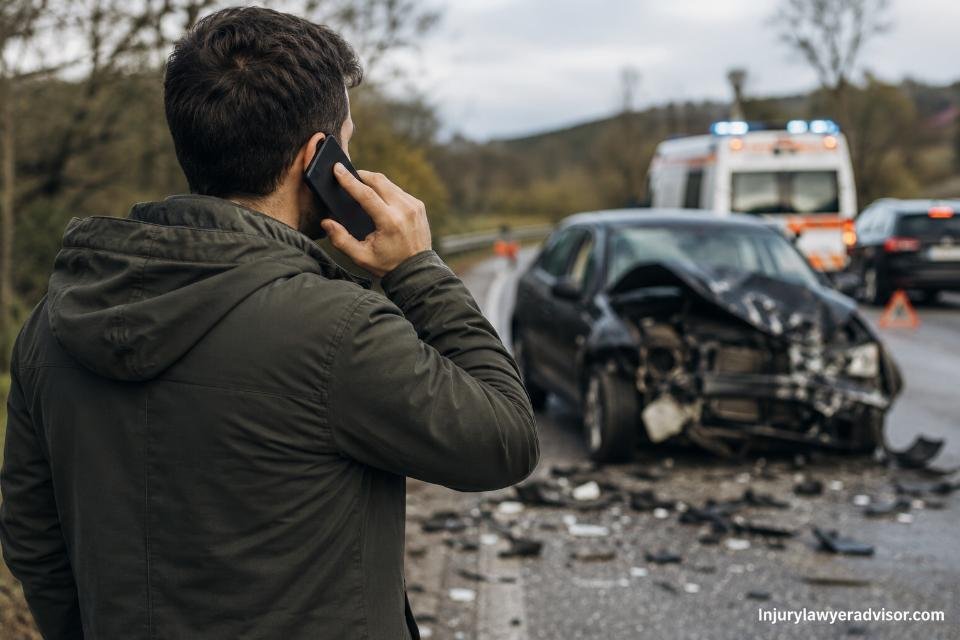

Contacting emergency services creates an official record of the incident and ensures injured individuals receive medical attention. Even when an accident appears minor, hidden injuries and delayed symptoms can develop later. Calling the police also helps document road conditions, witness statements, driver information, and potential traffic violations.
When speaking with emergency dispatchers, drivers should provide the exact location, number of vehicles involved, visible injuries, and hazards such as leaking fuel or blocked lanes. Clear communication allows emergency responders to arrive with the appropriate support.
Police officers often prepare an accident report that insurance companies later use during claim investigations. This report may include diagrams, photographs, statements, citations, and preliminary fault assessments. Drivers should request the report number and ask how to obtain a copy afterward.
Some states or countries legally require drivers to report accidents involving injuries, fatalities, or significant property damage. Failing to report a crash may result in fines, license penalties, or insurance complications.
Drivers should remain cooperative while avoiding unnecessary speculation about fault.
Exchange Information With All Drivers Involved
Accurate information exchange helps insurance companies verify identities, vehicle ownership, and policy coverage. Drivers should collect essential details from every involved party without arguing or admitting blame.
The most important details include full legal names, phone numbers, addresses, driver’s license numbers, license plate numbers, vehicle descriptions, insurance company names, and policy numbers. Taking photographs of insurance cards and licenses often reduces recording mistakes.
Commercial vehicles, rideshare drivers, delivery vans, and rental cars may involve additional insurance policies or employer liability coverage. Drivers should note company names, vehicle numbers, and employer contact details whenever applicable.
Witnesses also play an important role in accident investigations. Independent witness statements may support insurance claims and legal disputes when drivers provide conflicting accounts. Drivers should politely ask witnesses for names and contact information before they leave the scene.
| Information to Collect | Importance |
| Driver’s license number | Verify identity |
| Insurance policy details | Start insurance claim |
| Vehicle registration | Confirm ownership |
| License plate number | Identify vehicle |
| Witness contact details | Support factual evidence |
| Photos of documents | Reduce recording errors |
Document the Accident Scene Thoroughly
Photographic and video evidence significantly strengthens insurance claims and legal cases. Drivers should capture wide-angle and close-up images before vehicles are moved whenever it is safe to do so.
Important photographs include vehicle damage, skid marks, broken glass, traffic signs, weather conditions, road hazards, debris, intersection layouts, and visible injuries. Multiple angles provide context that helps accident reconstruction specialists and insurance adjusters evaluate the collision accurately.
Drivers should also record the date, time, location, traffic conditions, and sequence of events while memories remain fresh. Small details often become important later during insurance investigations or legal proceedings.
Dash cameras, security cameras, and nearby surveillance systems may contain valuable evidence. Drivers should note nearby businesses, homes, or intersections with cameras that may have recorded the accident.
Requesting footage quickly matters because many systems automatically overwrite recordings after several days.
Smartphone notes, voice recordings, and timestamped images help preserve factual information. Clear documentation reduces disputes about speed, lane position, traffic signals, weather conditions, and driver behavior.
Avoid Admitting Fault or Making Speculative Statements
Many drivers apologize instinctively after an accident, even before understanding what happened. Statements such as “I didn’t see you,” “It was my fault,” or “I’m sorry” may later be interpreted as admissions of liability.
Fault determination depends on police investigations, witness testimony, traffic laws, insurance reviews, and physical evidence. Drivers should provide factual information without speculating about responsibility or discussing legal conclusions.
When speaking with police officers, insurance representatives, and other drivers, concise and accurate communication is safest. Drivers should explain observable facts instead of assumptions. For example, saying “the vehicles collided in the intersection” is safer than claiming responsibility without full information.
Social media posts also create legal risks after an accident. Insurance investigators and attorneys sometimes review public posts, photographs, and comments during claim evaluations. Drivers should avoid discussing injuries, settlements, or fault online until claims conclude.
Seek Medical Evaluation as Soon as Possible
Some injuries appear hours or days after a collision. Conditions such as whiplash, concussions, spinal injuries, soft tissue damage, and internal bleeding may not produce immediate symptoms. Early medical evaluation protects health and creates documentation linking injuries to the accident.
Drivers should visit an emergency room, urgent care center, primary physician, or specialist depending on symptom severity. Medical professionals may order X-rays, CT scans, MRIs, neurological assessments, or orthopedic evaluations to identify hidden injuries.
Medical records, prescriptions, diagnostic imaging, and treatment plans become important evidence during insurance claims. Delayed treatment sometimes allows insurance companies to argue that injuries were unrelated to the crash.
Common post-accident symptoms include headaches, dizziness, back pain, neck stiffness, numbness, confusion, sleep disturbances, bruising, and limited mobility. Any worsening symptoms require immediate medical attention.
| Common Accident Injuries | Possible Symptoms |
| Whiplash | Neck pain and stiffness |
| Concussion | Dizziness and headaches |
| Back injuries | Pain and numbness |
| Soft tissue injuries | Swelling and soreness |
| Internal injuries | Abdominal pain and weakness |
| Fractures | Severe pain and immobility |
Notify Your Insurance Company Promptly
Most insurance policies require timely accident reporting. Drivers should contact their insurance provider as soon as practical, even if another driver appears fully responsible.
Insurance representatives typically request the accident date, location, police report information, involved parties, photographs, and vehicle damage details. Some insurers also provide mobile apps for uploading images and tracking claims.
Drivers should remain factual during recorded statements. Exaggeration, speculation, and inconsistent details may complicate claim investigations. If injuries are serious or liability remains disputed, drivers may choose to consult an attorney before providing extensive recorded statements.
Several insurance coverages may apply after a collision, including liability coverage, collision coverage, uninsured motorist coverage, personal injury protection, and medical payments coverage. Understanding available benefits helps drivers manage repair costs and medical expenses effectively.
Insurance adjusters may inspect vehicle damage, estimate repair costs, review medical records, and analyze accident evidence. Keeping organized records improves communication throughout the claims process.
Arrange Vehicle Repairs and Damage Assessments
After an accident, drivers should obtain professional repair estimates and document all damage carefully. Insurance companies may recommend approved repair facilities, but drivers often retain the right to choose their preferred mechanic or collision center depending on local laws and policy terms.
Certified repair shops evaluate structural damage, frame alignment, electrical systems, airbags, suspension components, and cosmetic repairs. Hidden damage frequently appears after technicians disassemble affected areas.
Rental car coverage may help drivers maintain transportation during repairs. Drivers should verify daily rental limits and coverage duration with their insurer before selecting a rental vehicle.
When a vehicle repair cost exceeds its market value, insurers may declare the car a total loss. Settlement calculations usually consider vehicle age, mileage, condition, and local market prices. Drivers should review settlement offers carefully and provide maintenance records or comparable listings if disputes arise.
Maintaining repair invoices, towing receipts, storage fees, and rental agreements helps support reimbursement claims later.
Track Expenses and Maintain Organized Records
Detailed documentation improves insurance negotiations and legal preparation. Accident-related expenses often extend beyond vehicle repairs and may include medical bills, physical therapy, prescriptions, transportation costs, lost wages, and property replacement.
Drivers should create a dedicated folder containing police reports, medical records, insurance correspondence, repair estimates, receipts, photographs, and witness information. Digital backups provide additional protection against lost documents.
Accurate timelines also strengthen claims. Recording appointment dates, phone calls, symptoms, repair progress, and missed workdays helps demonstrate the accident’s overall impact.
Employers may need written verification regarding injuries or work restrictions. Healthcare providers can often supply documentation supporting medical leave or temporary disability accommodations.
Organized records simplify communication with insurance companies, attorneys, healthcare providers, and repair facilities while reducing claim delays.
Consult a Car Accident Attorney When Necessary
Not every accident requires legal representation, but serious collisions often involve complex liability disputes and significant financial exposure. Drivers should consider legal consultation when accidents involve severe injuries, permanent disabilities, disputed fault, uninsured drivers, fatalities, or denied insurance claims.
Car accident attorneys evaluate evidence, negotiate settlements, calculate damages, and communicate with insurance companies on behalf of injured individuals. Legal representation may also help recover compensation for medical expenses, lost income, reduced earning capacity, pain and suffering, and long-term rehabilitation costs.
Insurance companies frequently use adjusters and legal teams to minimize payouts. Attorneys understand comparative negligence laws, policy language, medical documentation requirements, and litigation procedures that affect settlement outcomes.
Many personal injury attorneys work on contingency fee arrangements, meaning legal fees are typically collected only if compensation is recovered. Initial consultations often help drivers understand available legal options without immediate financial commitment.
Follow Up on Medical Treatment and Insurance Claims
Recovery and claim resolution often continue for weeks or months after an accident. Drivers should attend all medical appointments, follow prescribed treatment plans, and monitor ongoing symptoms carefully.
Insurance companies may request additional documentation, repair inspections, recorded statements, or independent medical examinations during the claim process. Prompt responses help prevent unnecessary delays.
Settlement offers should be reviewed carefully before acceptance. Once a settlement agreement is signed, drivers may lose the ability to pursue additional compensation later. This becomes especially important when injuries require future treatment or long-term rehabilitation.
Communication records should remain organized throughout the process. Saving emails, claim numbers, adjuster names, and written correspondence improves accountability and reduces misunderstandings.
Persistent symptoms, delayed repairs, denied claims, or settlement disputes may require additional medical evaluations or legal guidance before final resolution.
Understand Common Mistakes Drivers Make After an Accident
Many drivers unintentionally weaken their claims by making avoidable mistakes immediately after a crash. Understanding these errors helps prevent financial and legal complications.
Leaving the accident scene without proper reporting may result in criminal penalties, especially when injuries occur. Delaying medical treatment can weaken injury claims and jeopardize health outcomes.
Incomplete evidence collection often creates liability disputes that become difficult to resolve later.
Some drivers accept quick settlement offers before understanding the full extent of injuries or vehicle damage. Others post accident details on social media, giving insurers material that may be used against them during investigations.
Failing to review insurance coverage also creates unnecessary stress. Drivers who understand deductibles, rental reimbursement limits, medical coverage, and uninsured motorist protection often navigate claims more effectively.
Careful decision-making immediately after an accident significantly improves long-term outcomes.
Conclusion
Knowing what to do after a car accident step by step helps drivers protect their safety, health, finances, and legal rights during a highly stressful situation. Immediate actions such as checking for injuries, contacting emergency services, documenting evidence, exchanging information, and seeking medical evaluation create a strong foundation for insurance and legal processes.
Accurate records, professional communication, timely medical treatment, and organized claim management reduce disputes and improve recovery outcomes. Whether the accident involves minor damage or severe injuries, a structured response prevents costly mistakes and supports fair compensation.
Drivers who remain calm, gather evidence carefully, and follow the proper procedures place themselves in a stronger position throughout the repair, insurance, and recovery process.
FAQ’s
Should I call the police after a minor car accident?
Yes. Even minor accidents can involve hidden injuries or disputed fault later. A police report provides official documentation that may help insurance claims and legal proceedings.
How soon should I contact my insurance company after an accident?
Drivers should notify their insurance company as soon as possible, preferably within 24 hours. Prompt reporting helps insurers begin investigations and process claims efficiently.
What pictures should I take after a car accident?
Take photos of vehicle damage, license plates, road conditions, skid marks, traffic signs, injuries, weather conditions, debris, and the overall accident scene from multiple angles.
Can I file a claim if the other driver is uninsured?
Yes. Uninsured motorist coverage may help pay for injuries and damages if the at-fault driver lacks insurance coverage. Policy details vary by insurer and jurisdiction.
Should I see a doctor even if I feel fine after the accident?
Yes. Some injuries, including whiplash and concussions, may not produce immediate symptoms. Early medical evaluation protects health and creates important medical documentation.
When should I hire a car accident lawyer?
Drivers should consider legal representation when accidents involve serious injuries, disputed liability, denied claims, permanent disability, or significant financial losses.


