




Understanding wife right on husband property requires separating ownership, inheritance, residence, and maintenance rights. A wife does not automatically own her husband’s property after marriage, but she may have legal rights depending on the property type, applicable law, joint ownership, divorce, or the husband’s death.
Confirm Whether the Property Is Self-Acquired, Jointly Owned, or Ancestral
Start by identifying the legal nature of the husband’s property because different property categories create different rights. A self-acquired property is generally an asset purchased or obtained by the husband from his own income, savings, or resources. During his lifetime, the wife does not automatically receive an ownership share merely because she is married to him.
Jointly owned property works differently. When both spouses appear as owners on a registered sale deed, conveyance deed, or another valid ownership document, the wife ordinarily has a legal interest according to the title and applicable property law. Her contribution toward the purchase price, home loan, registration expenses, or construction may also become relevant if ownership or financial interests are disputed.
Ancestral and inherited property can involve additional rules. Under Hindu law, ancestral property may involve coparcenary rights of eligible family members. A wife does not become a coparcener simply through marriage, although she may acquire inheritance rights in her husband’s share after his death. Determining the source of the property is therefore essential before calculating any possible claim.
| Property Type | Wife’s Position During Husband’s Lifetime | Possible Right After Death |
| Husband’s self-acquired property | No automatic ownership merely through marriage | May inherit according to succession law or will |
| Joint property | Ownership depends on title and share | Her existing share generally remains hers |
| Ancestral property | No automatic coparcenary right through marriage | May inherit from husband’s determined share |
| Shared household | Residence protection may exist without ownership | Depends on ownership and succession circumstances |
Check the Wife’s Rights During the Husband’s Lifetime
Review the title documents before assuming that marriage creates an ownership interest. If a house, apartment, land parcel, or commercial property is exclusively registered in the husband’s name and was acquired by him independently, he normally remains its legal owner during his lifetime. The wife cannot generally demand a fixed percentage of that property solely because of her marital status.
This rule does not eliminate other marital protections. Ownership, residence, and maintenance are separate legal issues. A wife may lack title to a property while still having a legally protected right to reside in a shared household or seek financial relief under applicable matrimonial and domestic violence laws.
The distinction becomes especially important when spouses separate. Saying that a wife has no automatic ownership in a particular property does not mean that she has no legal remedies. Courts may consider maintenance, permanent alimony, residence arrangements, jointly owned assets, and property belonging to the spouses when appropriate matrimonial proceedings are brought.
Protect the Right to Live in the Shared Household
Determine whether the property qualifies as a shared household when residence is the main concern. Section 17 of the Protection of Women from Domestic Violence Act, 2005 recognizes a woman’s right to reside in a shared household even when she does not hold a right, title, or beneficial interest in that property.
This protection is different from ownership. A residence right does not automatically transfer the house to the wife or make her a registered co-owner. Instead, it can protect her from being unlawfully excluded or dispossessed from a qualifying shared household. Courts can also issue residence orders under the Act where statutory conditions are satisfied.
A wife facing eviction, domestic violence, financial abuse, or exclusion from the matrimonial home should therefore examine residence remedies separately from a property ownership claim. The applicable facts can include where the couple lived, the nature of their domestic relationship, who owns or rents the premises, and whether legal proceedings have already begun.
Calculate the Wife’s Share After the Husband’s Death
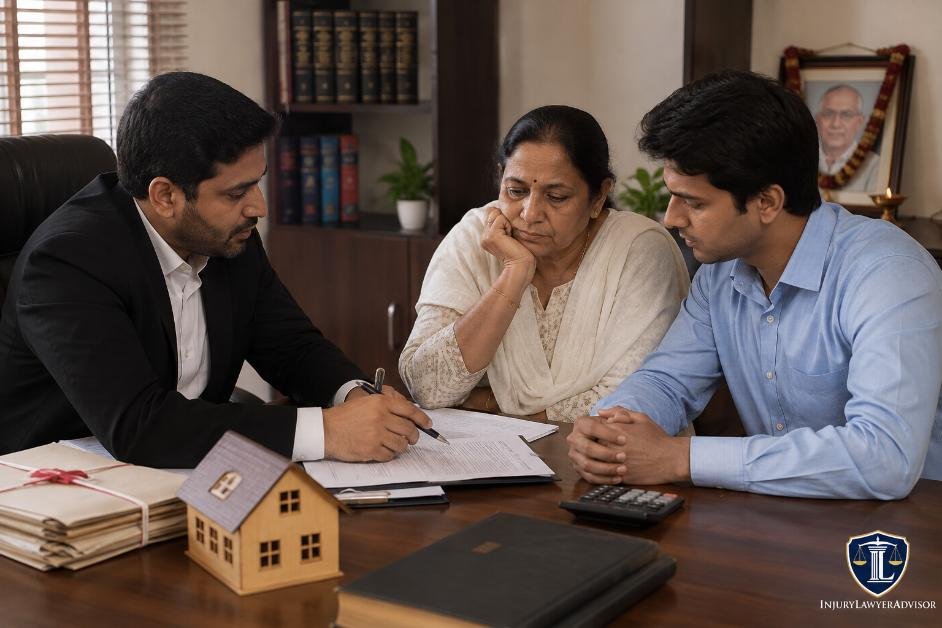

Check whether the husband left a valid will before calculating inheritance. When a person dies with a valid will, property is generally distributed according to the will, subject to the succession rules and legal restrictions applicable to the deceased. When a person dies without a valid will, intestate succession laws determine the heirs and their respective shares.
For a Hindu male dying intestate, the Hindu Succession Act, 1956 provides that property initially devolves upon Class I heirs. The widow is included among these heirs. The distribution rules provide a share for the widow while surviving sons, daughters, and the mother of the deceased may also receive shares according to the statutory scheme.
The wife should not assume that she automatically receives the entire property after her husband’s death. Other legal heirs can share the estate. Personal law also matters because succession rules for Muslims, Christians, Parsis, and other communities may follow different statutory or personal-law frameworks. A succession calculation should therefore identify the husband’s religion, heirs, will, property type, and ownership share.
Review Rights During Divorce or Judicial Separation
Examine property ownership independently from the divorce petition. Divorce does not automatically create a fifty-percent share for the wife in every asset owned by the husband under Indian law. A property registered exclusively in one spouse’s name generally remains subject to its legal title unless another legal basis for a claim exists.
Financial relief can nevertheless be substantial. Under the Hindu Marriage Act, courts have powers relating to maintenance during proceedings, permanent alimony and maintenance, and certain property connected with the marriage. Sections 24, 25, and 27 address these areas within matrimonial proceedings governed by the Act.
Courts may consider matters such as income, property, financial resources, needs, conduct where legally relevant, and other circumstances prescribed by applicable law. Consequently, the practical financial outcome of divorce should not be reduced to the question of whose name appears on the house. Maintenance, settlement terms, jointly purchased assets, personal property, and residence arrangements must be evaluated together.
Secure Maintenance and Financial Support Separately
Treat maintenance as a separate legal remedy instead of assuming it gives ownership of the husband’s property. A maintenance or permanent alimony order generally creates a financial obligation rather than automatically transferring title in a house or land to the wife.
Under the Hindu Marriage Act, Section 24 addresses maintenance and expenses during proceedings, while Section 25 addresses permanent alimony and maintenance. The court may consider the financial circumstances of the parties when deciding appropriate relief under the applicable provisions.
Other Indian laws can also provide monetary or maintenance remedies depending on the parties and circumstances. Because multiple remedies can sometimes interact, a wife should disclose income, bank accounts, liabilities, dependants, housing needs, employment circumstances, and significant assets when seeking financial relief.
Verify Rights in Jointly Purchased Property


Inspect the registered sale deed whenever husband and wife purchased property together. If both names appear as purchasers or owners, the wife may have an ownership interest that exists independently of her status as a spouse. Divorce or separation does not automatically cancel her registered ownership.
Financial records can become important when the spouses dispute their respective interests. Home-loan statements, bank transfers, down-payment receipts, construction payments, tax records, and registration expenses may help establish how the property was acquired and financed.
Nomination should also be distinguished from ownership. Merely naming a spouse as a nominee for certain assets does not always produce the same legal consequences as transferring ownership or creating inheritance rights. The governing law for the particular asset must be examined before treating nomination as absolute title.
Collect Documents Before Making a Property Claim
Gather documents before approaching a court, lawyer, mediator, or government authority. Property disputes often turn on documentary evidence rather than assumptions about marital rights.
Important records may include the registered sale deed, gift deed, partition deed, inheritance documents, property tax receipts, mutation records, loan statements, bank statements, marriage certificate, husband’s death certificate where applicable, legal-heir documents, and any available will. Documents showing the wife’s financial contribution toward acquisition or construction should also be preserved.
| Document | Main Purpose |
| Sale deed | Confirms registered ownership |
| Will | Shows intended testamentary distribution |
| Death certificate | Supports succession proceedings |
| Bank and loan records | Evidence of financial contribution |
| Marriage certificate | Establishes marital relationship |
| Property tax records | Helps identify property and possession |
| Court orders | Confirm maintenance or residence protections |
Keeping organized records can significantly reduce confusion. Copies should be checked against official or registered records whenever authenticity or ownership is disputed.
Follow the Correct Legal Process for the Claim
Choose the legal procedure according to the right being asserted. An inheritance dispute may require succession-related proceedings, mutation, probate, letters of administration, or other procedures depending on the property, will, and jurisdiction. A jointly owned property dispute may require a partition or civil proceeding where appropriate.
A residence or domestic violence matter can require an application under the Protection of Women from Domestic Violence Act. The Act contains provisions for applications to a Magistrate, residence orders, monetary relief, compensation, and interim relief where statutory requirements are satisfied.
Matrimonial financial disputes may proceed through the relevant family court or other competent court. Because property, succession, maintenance, and domestic violence proceedings can follow different procedures, obtaining advice based on the documents and applicable personal law can prevent the wrong remedy from being pursued.
Avoid Assuming Marriage Automatically Transfers Property
Do not rely on the common belief that a wife automatically owns half of everything her husband owns. Indian property law generally requires examination of legal title, acquisition, succession, matrimonial relief, and specific statutory rights rather than applying a universal fifty-fifty rule.
Likewise, do not assume that a property being in the husband’s name eliminates every right available to the wife. Residence protection can exist without ownership, inheritance can arise after death, maintenance can be awarded independently, and joint ownership may be established through registered documents.
Another common mistake is mixing the husband’s entire ancestral family property with his individual share. Where ancestral or coparcenary property is involved, the husband’s legally determined interest must first be identified before the wife’s possible inheritance through him can be evaluated.
Protect the Wife’s Property Rights With the Correct Legal Basis
The wife right on husband property depends on the type of property and the legal event involved. Marriage itself does not normally make a wife an automatic co-owner of property exclusively acquired and owned by her husband. However, important protections may arise through joint ownership, succession, maintenance, permanent alimony, and residence rights.
A widow governed by the Hindu Succession Act can be a Class I heir when her husband dies intestate, while other Class I heirs may share the estate with her. A married woman may also have statutory protection relating to residence in a shared household even without ownership title.
The most reliable approach is to identify the property category, verify registered ownership, determine the applicable personal law, collect financial records, and select the correct legal remedy. Individual cases can differ substantially, so specific disputes should be evaluated using current law and the actual property documents.
Conclusion
Understanding wife right on husband property requires looking at ownership, inheritance, residence, maintenance, and matrimonial rights separately. A wife does not automatically become the owner of half of her husband’s property simply because of marriage. Her actual rights depend on whether the property is self-acquired, jointly owned, inherited, or ancestral, as well as the personal law and legal circumstances that apply.
During the husband’s lifetime, a wife may have residence and maintenance protections even when she does not hold legal title to the property. If the husband dies without a valid will, she may inherit a share of his estate along with other eligible legal heirs under the applicable succession law. Jointly purchased property can also give her an independent ownership interest based on registered documents and the terms of acquisition.
For this reason, anyone evaluating a wife’s claim should first examine the sale deed, ownership records, will, financial contributions, and applicable family or succession law. Proper documentation and the correct legal procedure are essential for protecting legitimate rights and avoiding incorrect assumptions about property ownership.


