




Renting a home creates legal responsibilities for both landlords and tenants. When disagreements arise over rent, repairs, evictions, security deposits, lease agreements, or discrimination, an attorney who practices tenant law can help protect a renter’s legal rights. Understanding when to hire legal representation, what services a tenant attorney provides, and how rental laws work can help tenants resolve disputes efficiently while avoiding costly mistakes.
Whether you are facing an eviction notice, dealing with unsafe living conditions, recovering a security deposit, or negotiating a lease dispute, knowing how tenant law works allows you to make informed decisions. This guide explains the role of tenant attorneys, common rental disputes, legal protections available to tenants, and practical steps to strengthen your position before and during legal proceedings.
Identify the Legal Issue Before Contacting a Tenant Attorney
The first step is determining the exact legal problem. Different rental disputes involve different laws and legal strategies. Identifying the issue helps an attorney evaluate your case more efficiently and recommend the most appropriate course of action.
Most tenant disputes fall into categories such as eviction, lease violations, security deposit disagreements, habitability concerns, discrimination, illegal rent increases, retaliation, or privacy violations. Each category has unique legal standards and filing deadlines.
Gather a timeline of events before seeking legal advice. Record dates, communications, payments, notices, repair requests, inspections, and conversations with your landlord. A detailed chronology often becomes valuable evidence if litigation becomes necessary.
Common Tenant Legal Issues
| Legal Issue | Typical Problem | Attorney Assistance |
| Eviction | Notice to vacate or unlawful detainer | Defend eviction and negotiate settlements |
| Security Deposit | Deposit withheld unfairly | Demand repayment and file claims |
| Repairs | Unsafe or unhealthy conditions | Enforce habitability laws |
| Lease Disputes | Contract disagreements | Interpret lease terms and negotiate |
| Rent Increases | Illegal or excessive increases | Review compliance with local laws |
| Discrimination | Housing discrimination | File administrative or civil complaints |
| Retaliation | Punishment after complaints | Seek legal remedies |
| Privacy Violations | Illegal entry by landlord | Enforce tenant privacy rights |
Gather Evidence to Strengthen Your Tenant Law Case
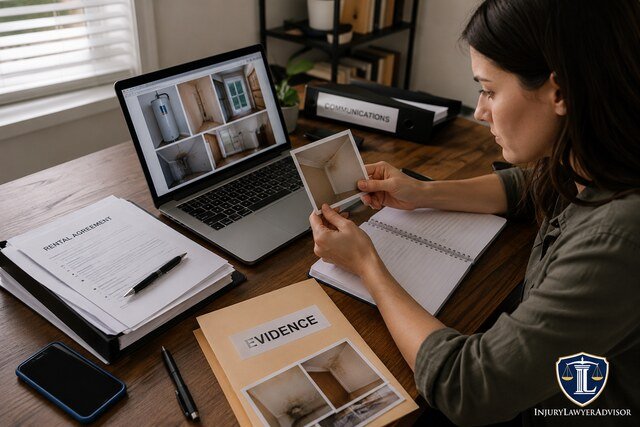

Strong evidence significantly improves a tenant’s position. Attorneys rely on documentation rather than verbal allegations when evaluating claims.
Save copies of your lease agreement, rent receipts, maintenance requests, inspection reports, photographs, videos, text messages, emails, and written notices. Financial records demonstrating timely rent payments are equally important.
Medical reports, contractor evaluations, building inspection reports, and witness statements may further strengthen claims involving mold, structural hazards, plumbing failures, pest infestations, or health-related concerns.
Essential Documents
| Document | Purpose |
| Lease Agreement | Defines legal obligations |
| Rent Payment Records | Shows payment history |
| Repair Requests | Demonstrates notice to landlord |
| Photos and Videos | Documents property conditions |
| Emails and Text Messages | Shows communication history |
| Inspection Reports | Confirms housing defects |
| Eviction Notices | Establishes legal deadlines |
| Security Deposit Records | Supports refund claims |
Understand the Responsibilities of a Tenant Attorney
A tenant attorney protects renters by interpreting housing laws, reviewing lease agreements, negotiating settlements, filing lawsuits, defending eviction proceedings, and representing clients in court.
Many attorneys begin by reviewing the lease and evaluating whether the landlord complied with state and local housing regulations. They identify violations, estimate potential damages, and explain available legal remedies.
Representation extends beyond courtroom appearances. Attorneys often negotiate settlements that resolve disputes faster and at lower cost than litigation. Successful negotiations may preserve housing, reduce financial losses, or avoid eviction judgments.
Typical services include:
- Lease review
- Eviction defense
- Security deposit recovery
- Habitability claims
- Housing discrimination claims
- Rent overcharge disputes
- Settlement negotiations
- Court representation
- Appeals
- Mediation assistance
Review Lease Agreements Carefully Before Taking Legal Action
A lease functions as the primary contract governing the landlord-tenant relationship. Before filing claims or responding to legal notices, tenants should review every relevant lease provision.
Important clauses include rent obligations, maintenance responsibilities, renewal options, termination procedures, late fees, occupancy limits, pet policies, and notice requirements.
Some lease provisions may conflict with local housing laws. Even if a tenant signed an agreement, certain clauses may be unenforceable if they violate consumer protection statutes or housing regulations. An experienced attorney can distinguish valid contractual terms from unlawful provisions.
Respond Properly to Eviction Notices
Receiving an eviction notice does not automatically require a tenant to move immediately. Many jurisdictions require landlords to follow strict legal procedures before removing a tenant.
An attorney reviews whether notice requirements were satisfied, whether deadlines were properly calculated, and whether the landlord has legal grounds for eviction. Procedural errors may delay or even defeat an eviction case.
Ignoring court documents usually worsens the situation. Filing timely responses, attending hearings, and preserving evidence greatly improves a tenant’s ability to defend against eviction.
Common eviction grounds include:
- Nonpayment of rent
- Lease violations
- Property damage
- Illegal activity
- Lease expiration
- Holdover tenancy
Each ground requires specific legal proof.
Request Repairs Using Proper Legal Procedures
Landlords generally have legal duties to maintain safe and habitable rental housing. Problems involving plumbing, electrical systems, heating, mold, pests, structural defects, water leaks, or broken locks may violate housing standards.
Tenants should report repair issues in writing and retain copies of all requests. Written communication establishes proof that the landlord received notice.
If repairs remain unaddressed, available legal remedies may include government inspections, rent withholding where permitted by law, repair-and-deduct remedies in some jurisdictions, damages, or court orders requiring repairs. Because these remedies vary by location, tenants should obtain legal advice before withholding rent or making repairs themselves.
Protect Your Security Deposit After Moving Out

Security deposit disputes remain among the most common landlord-tenant conflicts. Many states establish deadlines requiring landlords to return deposits or provide itemized deductions.
Before moving out, tenants should photograph every room, clean the property thoroughly, return all keys, and request a final inspection if available.
If deductions appear excessive or unsupported, a tenant attorney can send a demand letter, negotiate reimbursement, or pursue recovery through small claims or civil court. Some laws allow tenants to recover additional damages when landlords intentionally violate security deposit statutes.
Address Housing Discrimination Through Legal Channels
Federal, state, and local housing laws prohibit many forms of discrimination during the rental process.
Protected characteristics often include:
- Race
- Color
- National origin
- Religion
- Sex
- Disability
- Familial status
Many jurisdictions also protect additional categories such as age, marital status, military status, sexual orientation, gender identity, or lawful source of income.
Discrimination may occur during advertising, tenant screening, lease renewals, repairs, accessibility accommodations, or eviction proceedings. Attorneys assist with administrative complaints, negotiations, and civil litigation when unlawful discrimination occurs.
Resolve Rental Disputes Through Negotiation or Mediation
Not every dispute requires a lawsuit. Negotiation and mediation often produce faster, less expensive resolutions.
An attorney evaluates settlement opportunities while protecting the tenant’s legal interests. Agreements may involve payment plans, repair schedules, lease modifications, move-out arrangements, or security deposit reimbursement.
Successful mediation can preserve landlord-tenant relationships while avoiding lengthy court proceedings. When negotiations fail, documented settlement efforts may still benefit later litigation.
Prepare for Court if Litigation Becomes Necessary
Some disputes ultimately require judicial intervention. Court preparation begins well before the hearing date.
Organize documents chronologically. Prepare copies of leases, payment records, repair requests, inspection reports, communications, photographs, witness information, and legal notices.
Practice explaining the facts clearly and accurately. Courts generally rely on documented evidence rather than emotional arguments. An attorney ensures procedural rules are followed, legal arguments are properly presented, and deadlines are satisfied.
Litigation Preparation Checklist
| Preparation Step | Purpose |
| Organize Evidence | Support factual claims |
| Review Lease | Understand contractual rights |
| Prepare Witnesses | Strengthen testimony |
| Calculate Damages | Support compensation requests |
| Meet Filing Deadlines | Avoid procedural dismissal |
| Attend Hearings | Preserve legal rights |
| Follow Court Orders | Maintain compliance |
Know When Hiring a Tenant Attorney Makes Financial Sense
Some rental disputes involve relatively small amounts of money, while others threaten housing stability or substantial financial losses.
Hiring an attorney often becomes worthwhile when:
- An eviction could affect future housing opportunities.
- Significant security deposits are at stake.
- The property has dangerous living conditions.
- Discrimination is involved.
- Retaliation follows legitimate complaints.
- Large financial damages are possible.
- Complex lease disputes arise.
- Multiple legal claims exist.
Many attorneys offer initial consultations to evaluate whether representation is likely to provide meaningful value compared to self-representation.
Compare Different Types of Tenant Law Cases
| Case Type | Complexity | Typical Resolution |
| Security Deposit | Low | Settlement or small claims |
| Minor Lease Dispute | Low | Negotiation |
| Repair Dispute | Medium | Repairs, damages, settlement |
| Rent Overcharge | Medium | Refund or court order |
| Eviction Defense | High | Court hearing or settlement |
| Housing Discrimination | High | Administrative complaint or lawsuit |
| Personal Injury from Unsafe Property | High | Civil litigation |
| Wrongful Eviction | High | Damages and court judgment |
Conclusion
Tenant law exists to balance the rights and responsibilities of landlords and renters while promoting safe, fair, and legally compliant housing. An attorney who focuses on tenant law can help resolve disputes involving evictions, lease disagreements, security deposits, housing conditions, discrimination, retaliation, and other rental conflicts.
The strongest tenant cases are built on careful documentation, timely action, and a clear understanding of applicable laws. By identifying the legal issue early, preserving evidence, reviewing lease terms, communicating in writing, and seeking legal guidance when necessary, tenants can protect their housing rights and improve their chances of achieving a favorable outcome.


