


A civil claim lawyer consultation helps you understand whether you have a valid legal claim, what evidence may support it, and what options are available for resolving the dispute. A lawyer can assess the facts, identify possible deadlines or defenses, and explain whether negotiation, settlement, or court action may be appropriate.
What Happens During a Civil Claim Lawyer Consultation?
The first consultation usually begins with the lawyer asking you to explain what happened, who was involved, when the events occurred, and what outcome you want. The lawyer may interrupt with specific questions because details that seem minor to you can have significant legal consequences.
The lawyer will generally try to determine several things: whether a recognizable legal claim may exist, whether the potential defendant can be identified, whether supporting evidence is available, whether any filing deadline may be approaching, and whether pursuing the dispute is proportionate to the likely recovery.
You may also discuss how the dispute could proceed. Court proceedings are only one possibility. Depending on the claim and jurisdiction, options might include negotiation, a formal demand, mediation, arbitration, administrative proceedings, small claims procedures, or litigation.
For example, in the U.S. federal court system, a civil lawsuit generally begins when a plaintiff files a complaint and serves it on the defendant. Cases may later involve discovery, motions, settlement discussions, and potentially a trial. (United States Courts) The exact procedure applicable to your claim may be very different, especially when state, provincial, national, specialist, or small claims rules apply.
When Should You Speak to a Civil Claim Lawyer?
Consider seeking a consultation when a dispute could result in meaningful financial loss, damage to property or business interests, continuing harm, or legal proceedings.
Speaking with a lawyer early can be particularly useful when:
- Someone owes you a significant amount of money.
- A business or individual has breached a contract.
- You have received a demand letter or court documents.
- Negotiations have repeatedly failed.
- You suffered financial or physical harm because of another party’s alleged negligence.
- A property ownership, boundary, landlord, tenant, or construction dispute has developed.
- A business partner, supplier, contractor, or customer is threatening legal action.
- You believe evidence may disappear.
- You are unsure whether a filing deadline is approaching.
- The opposing party already has legal representation.
Do not assume that you can postpone seeking advice until negotiations completely fail. Civil claims often have limitation periods, procedural deadlines, notice requirements, or contractual dispute provisions. Their length and operation vary substantially between jurisdictions and types of claims.
If you have already been served with a lawsuit, injunction application, hearing notice, or another formal legal document, seek jurisdiction-specific advice promptly rather than relying on a general timeline found online.
Documents to Take to Your Consultation

Good documentation can help a lawyer understand your position much faster. Instead of bringing every document you possess without organization, gather materials that show what happened, what was agreed, what damage occurred, and how the other party responded.
Useful materials may include:
| Document or Evidence | Why It May Matter |
| Contracts and agreements | Shows the parties’ obligations and dispute provisions |
| Emails and messages | May establish promises, admissions, notices, or timelines |
| Invoices and receipts | Helps establish payments, losses, or amounts owed |
| Photographs or videos | May document property condition, damage, or events |
| Letters and demand notices | Shows previous attempts to resolve the dispute |
| Estimates and repair bills | May help quantify financial loss |
| Witness information | Identifies people who may have relevant knowledge |
| Court documents | Reveals claims, deadlines, hearings, and procedural status |
| Insurance correspondence | May affect coverage, liability, or settlement |
| Chronology of events | Helps the lawyer understand the sequence efficiently |
Keep original documents safe. Unless instructed otherwise, bring organized copies or electronic versions that can be reviewed easily.
A short chronology can be especially valuable. List important events by date, identify the people involved, and connect each event with the relevant document. This helps separate provable facts from assumptions and makes inconsistencies easier to identify.
What Will a Lawyer Evaluate About Your Civil Claim?
A lawyer does not evaluate a dispute solely by deciding who appears morally right. A successful civil claim normally depends on satisfying particular legal requirements and supporting those requirements with admissible evidence.
The lawyer may examine whether the potential defendant owed you a contractual, statutory, professional, property-related, or other legal obligation. The next question is usually whether that obligation was breached and whether the breach caused a legally recognized loss.
Evidence is equally important. A convincing account may still present litigation difficulties if important conversations were undocumented, witnesses are unavailable, records contradict the claim, or the opposing party has strong evidence supporting a different version of events.
The consultation may therefore involve separating three questions:
Do you have a legal claim?
The facts must fit a recognized legal basis for recovery or another remedy.
Can you prove it?
Documents, witnesses, expert evidence, electronic records, photographs, and other material may determine whether allegations can be established.
Is pursuing it worthwhile?
Legal costs, time, risk, enforceability, stress, and the likely value of the remedy should be considered alongside the legal merits.
A claim can potentially be legally arguable but commercially unattractive to pursue.
Questions to Ask During the Consultation
The consultation is also your opportunity to evaluate the lawyer. The American Bar Association encourages prospective clients to ask questions before deciding whether a lawyer is the right person to hire. (American Bar Association)
Useful questions include:
- What legal issues do you see in my situation?
- What additional information do you need before assessing the claim?
- What are the strongest and weakest aspects of my position?
- Could a limitation period or other deadline apply?
- What defenses might the other party raise?
- Is negotiation realistic before court proceedings?
- Could mediation or another dispute resolution method be appropriate?
- What remedies could potentially be available?
- How will legal fees and other costs be calculated?
- Who will actually handle my matter?
- What expenses could arise beyond lawyer fees?
- What happens if the dispute becomes more complicated than expected?
- What should I do immediately after this consultation?
- What should I avoid doing?
Be cautious of anyone who promises a guaranteed outcome before the evidence, applicable law, opposing arguments, and procedural risks have been properly assessed.
How Legal Fees May Work
Ask about fees before committing to representation. Different firms and different types of civil claims may use different billing arrangements.
A lawyer might charge an hourly rate, a fixed amount for defined work, a retainer against future fees, or another arrangement permitted under applicable professional rules. In some types of claims and jurisdictions, conditional or contingency arrangements may also be available.
Clarify whether the quoted amount includes expenses such as filing fees, expert reports, investigators, process servers, transcripts, travel, mediation fees, or other litigation costs.
Also ask what work the lawyer proposes to perform. Paying for an initial opinion or demand letter may cost far less than instructing a lawyer to conduct full litigation.
The consultation should help you understand both the legal strategy and its financial implications.
Settlement Versus Going to Court
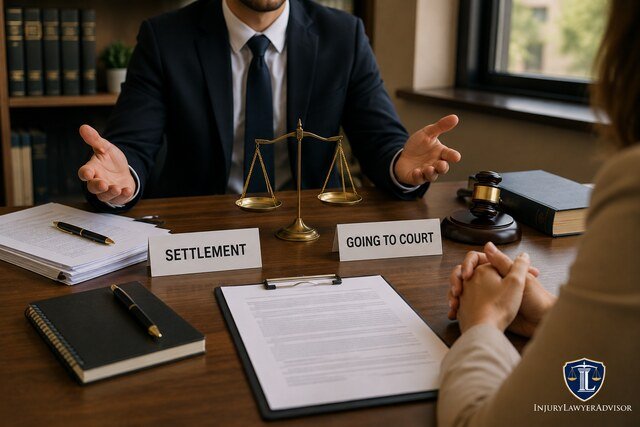
Winning at trial is not the only measure of a successful civil claim. Many disputes can be resolved through negotiation or alternative dispute resolution.
Settlement may reduce legal expenses, shorten the dispute, provide greater certainty, and allow parties to negotiate terms that a court might not otherwise order. However, accepting a weak settlement simply to avoid litigation may not be appropriate when the claim is strong and the difference between the offer and potential recovery is substantial.
Courts themselves frequently encourage settlement and alternative dispute resolution. U.S. federal courts, for example, recognize mediation, arbitration, and other dispute-resolution methods as potential ways to resolve civil disputes without trial. (United States Courts)
A lawyer can help compare the value of a settlement with the expected value and risks of continuing the case. That assessment should include legal costs, uncertainty, available evidence, enforcement prospects, time, and the possibility of counterclaims.
Common Mistakes Before Consulting a Civil Claim Lawyer
One common mistake is deleting messages, documents, photographs, or other records because they appear unhelpful. Evidence should generally be preserved once a dispute is foreseeable. Let your lawyer determine what is legally significant.
Another mistake is exaggerating facts or concealing information that appears unfavorable. A lawyer needs the complete picture to identify weaknesses before the opposing party does. An embarrassing email or damaging document discovered later can change the strategy entirely.
Avoid publicly discussing an active dispute in detail, particularly on social media. Statements, photographs, comments, and other communications may become relevant evidence depending on the circumstances.
Do not contact witnesses and tell them what they should say. You can identify potential witnesses and preserve their contact information, but attempts to influence testimony can create serious problems.
Finally, avoid assuming that an informal negotiation automatically stops a legal deadline. Whether negotiations affect a limitation period depends on applicable law and circumstances.
Does a Consultation Automatically Mean the Lawyer Represents You?
Not necessarily. An initial meeting may be intended only to determine whether the lawyer and prospective client want to establish a formal professional relationship.
You should understand whether representation begins immediately or only after an engagement agreement, retainer, or other required step has been completed.
Communications with prospective clients can still create professional duties in some circumstances. For example, the American Bar Association’s Model Rule 1.18 addresses duties relating to prospective clients, including certain confidentiality and conflict considerations. (American Bar Association) Professional rules vary by jurisdiction, however, so do not assume that every conversation creates the same rights or obligations.
Before sending highly sensitive information through an unsolicited website form or email, review the firm’s instructions about prospective-client communications.
What If You Cannot Afford a Civil Lawyer?
Lack of funds does not always mean legal help is unavailable. Depending on your location, income, dispute, and eligibility, you may be able to obtain assistance through legal aid organizations, nonprofit services, clinics, pro bono programs, limited-scope representation, or court self-help resources.
In the United States, the Legal Services Corporation funds independent nonprofit legal aid organizations that assist qualifying people with civil legal problems. (Legal Services Corporation) Other countries and jurisdictions operate different legal assistance systems.
You can also ask a lawyer whether limited representation is possible. For example, instead of handling the entire case, a lawyer might provide an initial assessment, review documents, draft a demand, advise on settlement, or assist with a particular procedural stage where local rules permit.
How to Get More Value From Your Consultation
Arrive with a clear objective. Saying, “I want justice,” does not tell the lawyer what practical outcome matters most. Specify whether you want compensation, payment of a debt, performance of a contract, return of property, an injunction, a negotiated exit, or another remedy.
Prepare a one-page chronology if the facts are complicated. Write down the key dates and identify documents that support each event.
Separate facts from conclusions. Instead of saying, “The contractor committed fraud,” explain what the contractor represented, when the representation was made, what evidence exists, what happened afterward, and what loss resulted.
Be ready to discuss weaknesses. A useful consultation does not simply confirm your preferred interpretation. It identifies risks early enough for you to make an informed decision.
The ABA’s guidance for lawyer consultations emphasizes reviewing documents, understanding chronology, identifying witnesses, discussing goals, explaining fees, and defining the scope of possible representation. (American Bar Association) These are also useful preparation points for prospective clients.
FAQ’s
How long does a civil claim lawyer consultation take?
Consultation length varies by lawyer, firm, and complexity of the dispute. A straightforward matter may require only a relatively short meeting, while document-heavy or technically complicated disputes can require more detailed review. Ask about the consultation format and time available when booking.
Is a civil claim lawyer consultation free?
Some lawyers offer free initial consultations, while others charge a fixed or hourly consultation fee. The ABA recommends confirming the fee before scheduling the meeting. (American Bar Association) A paid consultation may also involve substantive document review or detailed legal advice, depending on the firm’s terms.
Can a lawyer tell me whether I will win?
A responsible lawyer can assess strengths, weaknesses, evidence, possible defenses, and litigation risks, but should not treat the outcome as certain. Witness credibility, undiscovered evidence, legal rulings, settlement developments, and other factors can affect a case.
Should I contact the other party before speaking to a lawyer?
That depends on the circumstances. Informal communication may sometimes resolve a dispute, but contacting the other party can also affect evidence, negotiations, contractual notice requirements, or strategy. If the dispute is substantial, urgent, or already contentious, legal advice before further communication may be sensible.
Can I consult more than one civil lawyer?
Generally, prospective clients may speak with more than one lawyer before choosing representation, subject to applicable rules and circumstances. Comparing relevant experience, communication style, proposed strategy, availability, and fees can help you make a better decision.
What should I do immediately after the consultation?
Follow any time-sensitive advice first. Preserve relevant evidence, obtain requested documents, record important dates, and review the lawyer’s proposed scope and fees carefully. If you decide to hire the lawyer, confirm the representation terms and understand who will handle the matter and what happens next.
Conclusion
A civil claim lawyer consultation should help you answer more than whether you can file a lawsuit. The more useful questions are whether you have a legally supportable claim, what evidence can prove it, what defenses or deadlines could affect it, what remedies are realistic, and whether pursuing the dispute makes practical and financial sense.
Prepare your chronology, organize your documents, identify witnesses, calculate your losses where possible, and write down the questions you want answered. Give the lawyer both favorable and unfavorable information so the assessment reflects the actual dispute rather than only one side of it.
Most importantly, obtain advice that applies to the jurisdiction and type of civil claim involved. Court rules, limitation periods, procedural requirements, costs, available remedies, and professional obligations can differ significantly, so a personalized legal assessment is more reliable than general online information when important rights or deadlines are at stake.
