

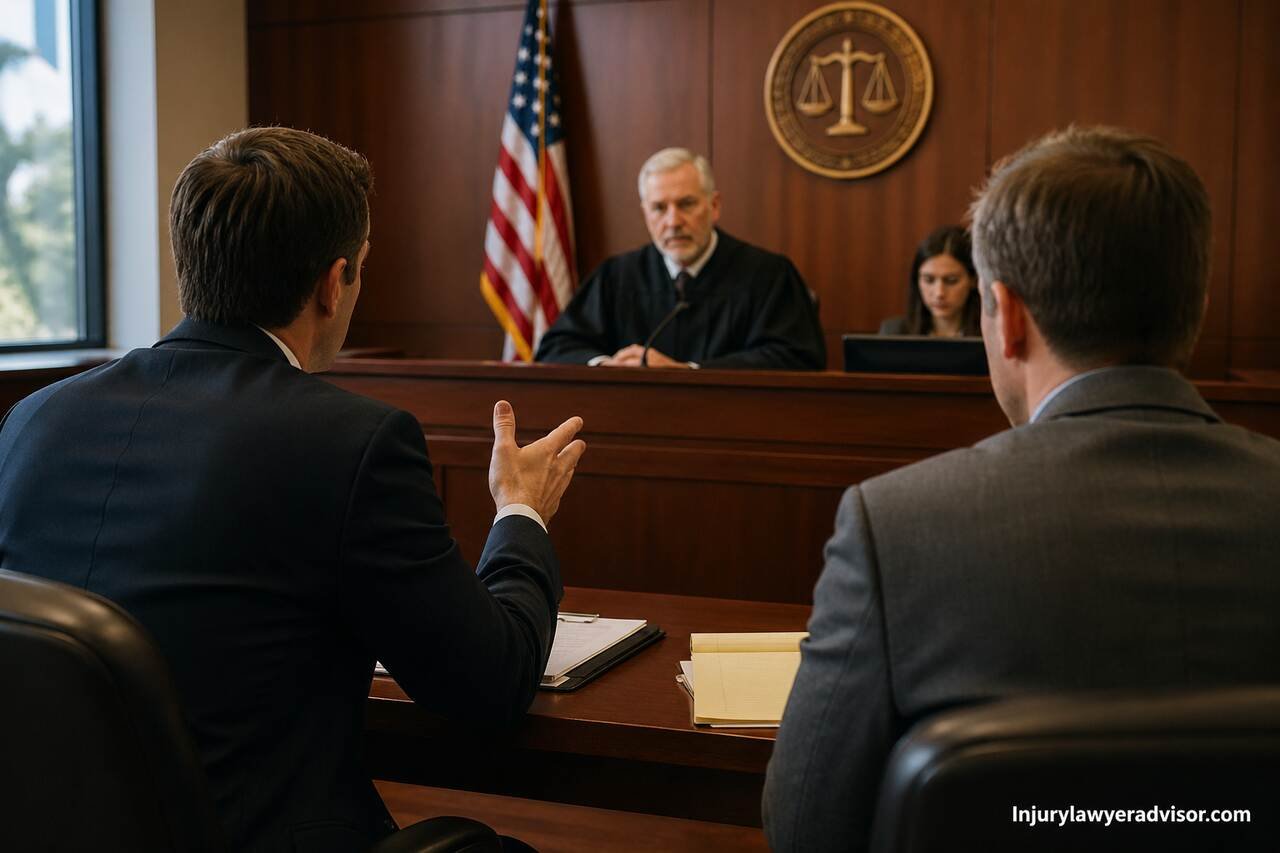
Receiving a traffic ticket can affect your driving record, insurance premium, license status, and budget. Many drivers pay the fine immediately because they assume the officer’s decision is final, but a citation is only an allegation until it is resolved. Learning how to fight a traffic ticket helps you understand your options, protect your rights, and present a stronger case in court or through an administrative process.
Review the Traffic Ticket Carefully
Start by reading every detail on the traffic ticket before taking any action. The citation usually lists the alleged violation, date, time, location, officer’s name, vehicle information, fine amount, court deadline, and instructions for responding.
Check whether the ticket includes a statute number, speed reading, posted speed limit, lane description, or equipment issue. These details matter because your defense must address the exact allegation, not a general complaint about the stop.
Small mistakes do not always cancel a ticket, but major errors can help your case. A wrong vehicle, incorrect location, missing officer information, or unclear charge may create doubt about the accuracy of the citation.
Confirm the Response Deadline
Find the due date printed on the ticket or court notice. Most jurisdictions require you to respond by paying, requesting traffic school, asking for a hearing, or entering a not guilty plea.
Missing the deadline can lead to late fees, license suspension, a default judgment, or a warrant in serious cases. Courts often treat silence as failure to appear or failure to respond.
If the deadline is close, contact the court clerk and ask how to request an extension. A written extension request creates a record and may give you more time to gather evidence.
Identify the Exact Traffic Violation
Look up the law or code section listed on the citation. A speeding ticket, red-light ticket, illegal turn ticket, stop sign ticket, and cellphone ticket each require different proof.
For example, a speeding case may depend on radar calibration, pacing accuracy, posted speed signs, or traffic conditions. A red-light case may depend on signal timing, camera photos, or whether your vehicle crossed the line after the light changed.
Understanding the charge helps you focus your defense. You do not need to prove everything about the stop was unfair; you need to challenge the required proof for that specific violation.
Gather Evidence From the Scene
Visit the location where the ticket was issued as soon as possible. Take photos of road signs, lane markings, traffic signals, obstructions, speed limit signs, construction zones, lighting, and visibility conditions.
If the ticket involved a sign, photograph the sign from the driver’s viewpoint. If the sign was blocked by trees, trucks, construction equipment, or poor lighting, document it clearly.
Evidence from the scene can become weaker over time because signs get repaired, road markings get repainted, and construction changes. Clear photos with dates can support your explanation.
Collect Documents That Support Your Defense

Build a simple file that includes the ticket, registration, insurance, driver’s license, repair receipts, photos, dashcam clips, GPS records, witness statements, and court letters.
For equipment violations, a repair invoice can show that you fixed a broken light, expired registration issue, or insurance problem quickly. For moving violations, location photos and witness notes can support your version of events.
Keep copies of everything. Courts may keep submitted documents, so bring originals when required and extra copies for the judge, prosecutor, and your own records.
Request Discovery From the Court or Prosecutor
Discovery is the process of asking for evidence the government may use against you. Depending on local rules, you may request the officer’s notes, radar or lidar records, calibration certificates, camera images, video footage, and maintenance logs.
A speeding ticket often depends on the accuracy of the measuring device. If the device was not tested, calibrated, or operated properly, the reading may be weaker.
Submit discovery requests in writing and follow the court’s deadline. If the government fails to provide required evidence, you may ask the court to exclude it or consider the lack of disclosure when evaluating the case.
Choose the Best Defense Strategy
Select a defense that matches the facts. Common defenses include mistaken identity, unclear signage, inaccurate speed measurement, emergency circumstances, officer error, blocked visibility, defective equipment that was promptly repaired, or lack of required proof.
Avoid emotional arguments such as “everyone else was speeding” or “the fine is too expensive.” Courts usually focus on whether the violation occurred.
A strong defense connects facts to the law. For example, “the posted speed sign was not visible because a construction sign blocked it” is stronger than “I did not know the speed limit.”
Prepare for the Hearing
Organize your evidence in the order you plan to explain it. Write a short outline that includes the charge, your main defense, key facts, supporting documents, and the result you want.
Practice explaining your position clearly. Judges hear many traffic cases, so a brief, respectful, fact-based explanation works better than a long argument.
Bring printed copies of photos, maps, receipts, and records. If you have video evidence, confirm whether the court accepts digital files and what format is allowed.
Challenge the Officer’s Evidence Respectfully
At the hearing, the officer may testify about what they saw, how they measured speed, where they were positioned, and why they issued the ticket.
You may ask questions if the court allows cross-examination. Good questions focus on distance, visibility, traffic conditions, device calibration, training, weather, road layout, and memory of the stop.
Stay polite. The goal is not to attack the officer personally. The goal is to show that the evidence does not prove the violation clearly enough.
Present Your Evidence Clearly
When it is your turn, explain your defense in a calm and organized way. Start with the main point, then support it with documents or photos.
For example, you might say that the stop sign was blocked, then show photos taken from the same direction you were driving. If the ticket involved an expired registration, you might show that the renewal was completed before the hearing.
Do not interrupt the judge, prosecutor, or officer. A respectful presentation can improve how your argument is received.
Consider Negotiating a Reduced Penalty
Some courts allow drivers to speak with a prosecutor before the hearing. You may be able to request a reduced charge, lower fine, no points, deferred judgment, or traffic school.
Negotiation may be useful when the evidence against you is strong but you want to reduce the long-term impact. A no-point resolution can be more valuable than a small fine reduction because insurance costs may rise after points appear on your record.
Ask whether the agreement affects your driving record. A cheaper fine is not always the best outcome if it still adds points or triggers insurance increases.
Compare Your Options Before Deciding
| Option | Best For | Possible Benefit | Possible Risk |
| Pay the ticket | Minor ticket with low impact | Fast resolution | Points, insurance increase |
| Request traffic school | Eligible drivers | May prevent points | Fees and course time |
| Contest the ticket | Weak evidence or strong defense | Dismissal or reduction | Court time and preparation |
| Negotiate reduction | Strong evidence against you | Lower fine or fewer points | May still count on record |
| Hire a lawyer | Serious or high-point violation | Professional defense | Legal cost |
Decide Whether to Hire a Traffic Lawyer
A lawyer may help when the ticket carries serious consequences, such as license suspension, commercial driver penalties, reckless driving, excessive speeding, accident involvement, or high insurance risk.
Traffic lawyers understand local court procedures, common negotiation practices, and technical defenses.
They may also appear in court for you in some jurisdictions.
For a minor ticket, self-representation may be enough. For a serious ticket, legal advice can prevent a small citation from becoming a long-term problem.
Track the Final Outcome
After the hearing or agreement, confirm the final result in writing. Make sure the court records show dismissal, reduction, traffic school approval, or payment completion.
Check your driving record later to confirm that points were not added incorrectly. Insurance companies may review your record during renewals, so errors should be corrected quickly.
Keep proof of payment, dismissal, or completion. These documents protect you if the court later claims you failed to respond.
Common Traffic Ticket Defense Points
| Ticket Type | Useful Evidence | Possible Defense |
| Speeding | Radar records, photos, GPS, traffic flow | Device error, unclear speed limit, wrong vehicle |
| Red light | Camera images, signal timing, dashcam | Entered legally, unclear photo, emergency vehicle |
| Stop sign | Photos, road angle, visibility | Sign blocked, full stop made, officer view limited |
| Cellphone use | Phone records, mount photos | Not using phone, legal hands-free use |
| Equipment violation | Repair receipt, inspection proof | Issue corrected, equipment working at stop |
Conclusion
Knowing how to fight a traffic ticket gives you more control over the outcome. A strong approach starts with reading the citation, meeting deadlines, identifying the exact charge, collecting evidence, requesting records, and presenting a clear defense. Even when dismissal is not guaranteed, contesting or negotiating a ticket may reduce fines, points, and insurance consequences.
FAQ’s
Can a traffic ticket be dismissed because of a mistake?
Yes, but only some mistakes matter. A minor typo may not help, while a wrong vehicle, wrong location, missing charge, or serious factual error may support dismissal.
Is it worth fighting a traffic ticket?
It can be worth it if the ticket adds points, increases insurance, affects your job, or carries a large fine. The value depends on the charge and your evidence.
Do I need a lawyer to fight a traffic ticket?
Not always. Many drivers handle minor tickets alone. A lawyer is more useful for serious violations, commercial drivers, accident cases, or possible license suspension.
What happens if the officer does not appear?
Some courts dismiss the ticket if the officer does not appear, but rules vary. The court may also reschedule the hearing.
Can traffic school keep points off my record?
In many places, traffic school can reduce or prevent points if you are eligible. Check the court’s rules before choosing this option.
