




The Instant Dream Home lawsuit has drawn attention because it raises issues involving home renovation contracts, workmanship, project delays, financing, advertising, and consumer rights. It emphasizes that understanding the facts requires relying on verified legal records and credible sources rather than headlines or speculation.
It also outlines the purpose of the guide: to explain the legal principles involved, the responsibilities of homeowners and contractors, available legal remedies, the importance of documentation, and practical steps consumers can take to protect themselves during home improvement projects.
Gather Verified Information About the Lawsuit
Before drawing conclusions about any lawsuit, verify information using court records, official filings, attorney statements, or reputable news reports. Headlines often simplify complex legal disputes, while court documents provide the actual allegations, defenses, and procedural history.
A lawsuit generally begins with a complaint filed by one party. The complaint outlines alleged misconduct but does not prove liability. The defendant then files an answer or motion responding to those allegations. Throughout litigation, additional evidence, witness testimony, expert opinions, and judicial rulings shape the case.
Consumers should distinguish between:
- Allegations
- Court findings
- Settlements
- Jury verdicts
- Appeals
Each represents a different stage in the legal process and carries different legal significance.
Identify the Parties Involved
Every construction or remodeling lawsuit centers around specific parties whose legal responsibilities differ.
| Party | Primary Responsibility | Possible Legal Issues |
| Homeowner | Payment, cooperation, access | Breach of contract |
| Contractor | Complete work as agreed | Poor workmanship |
| Subcontractor | Specialized construction work | Installation defects |
| Supplier | Materials delivery | Defective products |
| Lender | Project financing | Lending disputes |
| Insurance Company | Coverage decisions | Claim denial |
Understanding each participant’s role helps determine who may be legally responsible if problems arise.
Large renovation projects frequently involve numerous subcontractors, electricians, plumbers, roofers, designers, inspectors, and suppliers. Liability may therefore be shared among multiple parties rather than resting with one company alone.
Review the Contract Before Evaluating Claims
The written contract is often the most important piece of evidence in any home improvement lawsuit.
A well-drafted renovation agreement typically specifies:
- Project scope
- Materials
- Timeline
- Payment schedule
- Warranty terms
- Change order procedures
- Permit responsibilities
- Inspection requirements
- Dispute resolution methods
Many lawsuits arise because expectations differ from contractual obligations. For example, homeowners may expect premium materials while the contract allows comparable alternatives.
Courts generally interpret disputes according to the language both parties agreed upon rather than verbal promises that cannot be documented.
Examine Common Allegations Raised in Home Improvement Lawsuits

Home remodeling litigation often involves recurring legal issues.
Breach of Contract
A contractor may allegedly fail to perform work according to contractual terms.
Possible examples include:
- Missing deadlines
- Abandoning projects
- Using unauthorized materials
- Failing inspections
- Incomplete construction
Poor Workmanship
Construction defects can include:
- Improper roofing
- Plumbing leaks
- Electrical code violations
- Foundation issues
- Flooring defects
Expert inspections frequently determine whether workmanship meets industry standards.
Misrepresentation
Some lawsuits allege misleading advertising, inaccurate estimates, or promises that influenced purchasing decisions.
Courts evaluate whether representations were factual, material, and relied upon during contract formation.
Payment Disputes
Disagreements may arise regarding:
- Final invoices
- Additional work
- Change orders
- Deposit refunds
- Financing charges
Clear documentation usually becomes essential when resolving payment disputes.
Document Construction Problems Thoroughly
Strong documentation significantly improves the ability to resolve disputes.
Useful evidence includes:
- Signed contracts
- Change orders
- Receipts
- Photographs
- Videos
- Emails
- Text messages
- Inspection reports
- Permit records
- Payment confirmations
Keeping records throughout the project creates a timeline that may become valuable during negotiations or litigation.
Independent inspections conducted by licensed professionals often carry substantial evidentiary weight.
Understand Consumer Protection Laws
Many jurisdictions provide additional protections for homeowners beyond ordinary contract law.
Consumer protection statutes may address:
- False advertising
- Unfair business practices
- Home solicitation sales
- Disclosure requirements
- Licensing obligations
- Warranty rights
Some states allow consumers to recover attorney fees or statutory damages if contractors violate consumer protection laws.
Licensing boards may also investigate misconduct independently of civil lawsuits.
Evaluate Construction Defect Claims Carefully
Construction defects fall into several categories.
| Defect Type | Typical Example | Possible Consequences |
| Structural | Foundation movement | Safety concerns |
| Mechanical | HVAC failure | Reduced efficiency |
| Plumbing | Hidden leaks | Water damage |
| Electrical | Code violations | Fire risk |
| Roofing | Water intrusion | Mold growth |
| Finish Work | Uneven flooring | Cosmetic defects |
Not every defect automatically creates legal liability. Courts often examine whether the issue resulted from poor workmanship, defective materials, design flaws, homeowner maintenance, or ordinary wear.
Expert testimony frequently determines the cause.
Follow the Legal Process After Filing a Lawsuit
Civil litigation typically progresses through multiple stages.
A lawsuit usually begins with filing a complaint and serving the opposing party. The defendant responds through pleadings, motions, or affirmative defenses.
Discovery follows, allowing both parties to exchange documents, answer written questions, and conduct depositions.
Expert witnesses may inspect the property and prepare technical reports explaining construction standards and alleged defects.
Many disputes settle before trial through mediation or negotiation. If settlement fails, the court determines liability and damages after evaluating evidence.
Appeals remain possible if legal errors occurred during trial.
Explore Alternative Dispute Resolution Options
Many renovation contracts require disputes to proceed through mediation or arbitration before litigation.
Mediation involves a neutral facilitator who helps both parties negotiate a voluntary agreement.
Arbitration resembles a private court proceeding in which an arbitrator issues a binding or non-binding decision depending on the contract.
Alternative dispute resolution often reduces:
- Litigation costs
- Court delays
- Attorney expenses
- Public exposure
However, arbitration clauses may limit certain legal rights depending on applicable law.
Calculate Potential Damages
Courts consider several categories of damages when awarding compensation.
Economic damages may include:
- Repair costs
- Replacement expenses
- Temporary housing
- Inspection fees
- Engineering reports
- Lost property value
Some jurisdictions permit recovery of consequential damages if reasonably foreseeable.
Punitive damages are generally reserved for particularly egregious misconduct and are unavailable in many ordinary breach of contract cases.
The amount awarded depends on evidence, applicable law, and judicial findings.
Recognize the Importance of Licensing and Insurance
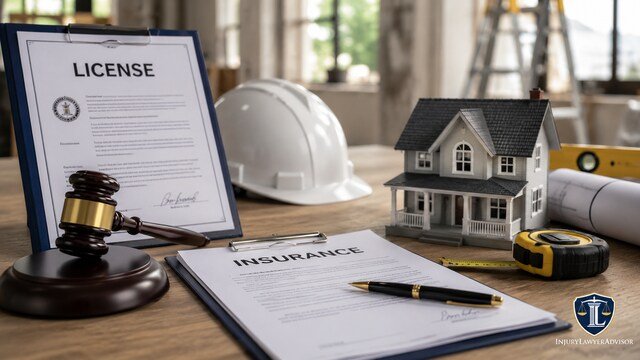
Professional licensing protects consumers by establishing minimum standards for contractors.
Homeowners should verify:
- Active licenses
- General liability insurance
- Workers’ compensation coverage
- Bonding requirements
- Complaint history
Hiring properly licensed professionals reduces certain legal risks, although it cannot eliminate all construction disputes.
Insurance may cover accidental property damage but often excludes defective workmanship itself.
Compare Settlement and Trial Outcomes
Both settlement and trial have advantages.
| Settlement | Trial |
| Faster resolution | Formal court decision |
| Lower legal costs | Public record |
| Flexible agreements | Judicial enforcement |
| Greater privacy | Opportunity for appeals |
| Less uncertainty | Potentially larger awards |
Many parties prefer settlement because it minimizes financial and emotional costs while providing predictable outcomes.
Protect Yourself Before Starting a Remodeling Project
Preventing disputes is generally easier than resolving them later.
Practical precautions include:
- Obtain multiple estimates.
- Verify licensing.
- Check references.
- Review insurance certificates.
- Require detailed written contracts.
- Document every change order.
- Avoid large upfront payments unless legally appropriate.
- Schedule milestone inspections.
- Keep written communication.
- Retain copies of every invoice.
These practices create transparency throughout the project and reduce misunderstandings.
Monitor Industry Standards and Regulatory Changes
Home improvement regulations continue evolving to strengthen consumer protections.
Changes may include:
- Enhanced contractor licensing requirements
- Digital contract disclosures
- Electronic payment documentation
- Expanded warranty obligations
- Updated building codes
- Stronger advertising regulations
Contractors who comply with evolving standards generally reduce litigation risks while improving customer confidence.
Consumers also benefit by understanding current regulations before entering contractual relationships.
Learn How Lawsuits Influence the Home Remodeling Industry
High-profile lawsuits often encourage broader improvements across the construction sector.
Companies may respond by:
- Improving quality control
- Enhancing customer communication
- Increasing employee training
- Updating contract language
- Expanding project documentation
- Strengthening warranty procedures
Insurance providers may also revise underwriting standards, while regulators examine whether additional consumer protections are necessary.
These developments can ultimately improve service quality and reduce future disputes.
Conclusion
An instant dream home lawsuit represents more than a disagreement over a renovation project. Such cases frequently involve contract interpretation, construction quality, consumer protection laws, licensing requirements, payment disputes, and technical expert analysis. Because allegations alone do not establish liability, it is essential to rely on verified court records and credible reporting rather than assumptions.
For homeowners, the most effective strategy is prevention through careful contractor selection, detailed written agreements, thorough documentation, and regular project oversight. When disputes arise, understanding the legal process, preserving evidence, and exploring negotiation or mediation before trial can often lead to more efficient and satisfactory outcomes. Whether following a specific lawsuit or preparing for a remodeling project, informed decision-making remains the strongest safeguard.
FAQ’s
1. What typically causes home improvement lawsuits?
The most common causes include alleged breach of contract, construction defects, project delays, payment disputes, poor workmanship, misrepresentation, and disagreements over change orders.
2. Does filing a lawsuit prove a contractor acted improperly?
No. A lawsuit contains allegations that must be supported by evidence. Liability is determined only through settlement, judicial ruling, arbitration, or another legally recognized resolution.
3. What evidence is most valuable in a remodeling dispute?
Written contracts, change orders, photographs, inspection reports, invoices, receipts, permits, emails, text messages, and expert evaluations are among the most important forms of evidence.
4. Can homeowners recover repair costs?
Potentially. If a court or arbitrator determines the contractor is legally responsible, recoverable damages may include reasonable repair costs and other losses permitted under applicable law.
5. Is mediation required before going to court?
Many home improvement contracts include mediation or arbitration clauses that require alternative dispute resolution before litigation. The answer depends on the specific contract and governing law.
6. How can homeowners reduce the risk of future disputes?
Choose licensed and insured contractors, obtain detailed written contracts, verify references, document all communications, approve changes in writing, and conduct inspections throughout the project.


