
Introduction
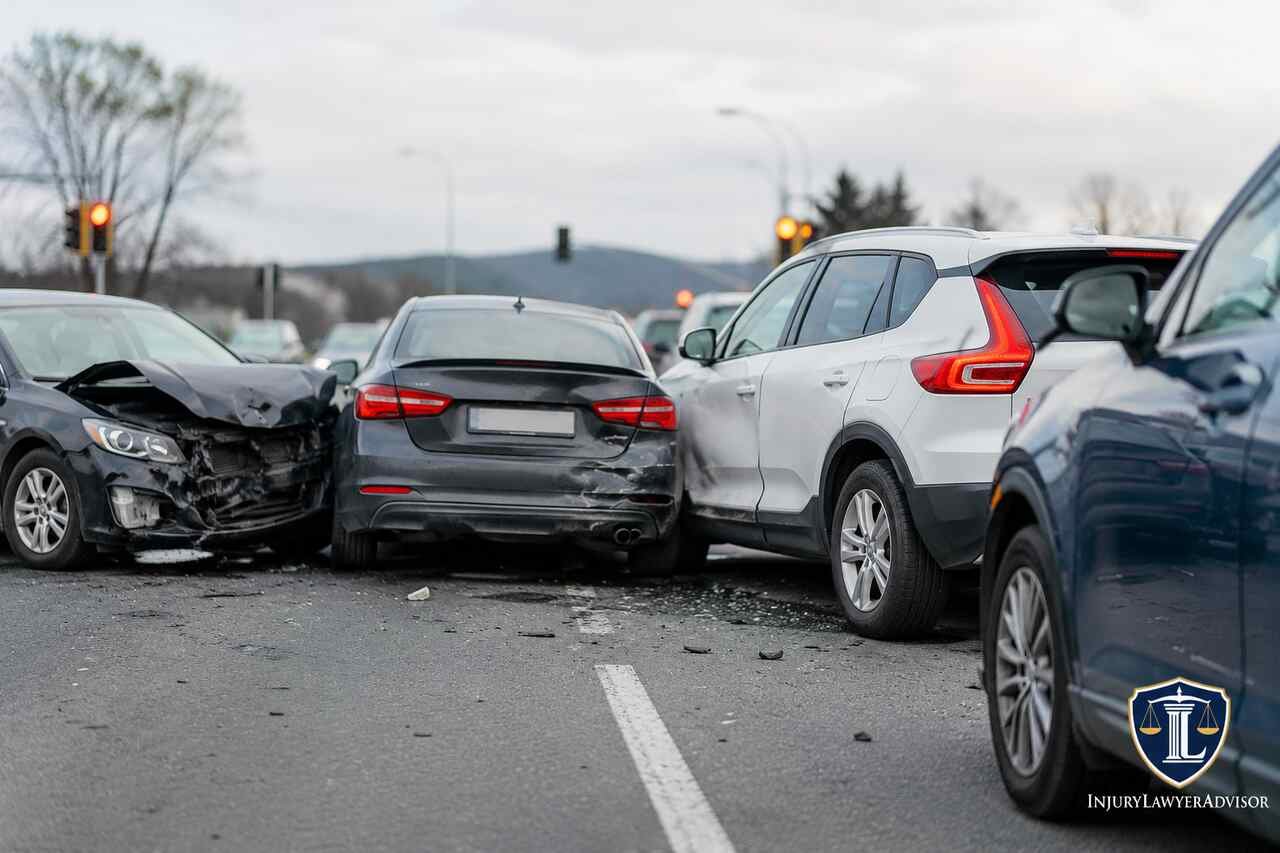
Determining who is liable in multi-car accidents is one of the most challenging aspects of traffic collision claims. Unlike two-vehicle crashes, accidents involving three or more vehicles often create a chain reaction where multiple drivers, road conditions, vehicle defects, and external factors contribute to the outcome. Insurance companies, law enforcement agencies, accident reconstruction specialists, and courts must carefully evaluate evidence before assigning responsibility.
If you have been involved in a multi-car collision, understanding how liability is determined can help you protect your legal rights, communicate effectively with insurers, and pursue fair compensation for vehicle damage, medical expenses, lost income, and other losses. This guide explains the legal principles, investigation process, insurance considerations, and practical steps involved in determining liability after a multi-vehicle accident.
Gather Evidence Immediately After the Accident
The first step toward determining liability is preserving as much evidence as possible at the accident scene. Strong evidence often becomes the deciding factor when several drivers dispute responsibility.
Begin by checking for injuries and contacting emergency services. Once everyone is safe, take photographs of every vehicle involved, skid marks, debris, weather conditions, traffic signs, lane markings, and road damage. Capture images from multiple angles to establish the sequence of impacts.
Collect contact information from all drivers, passengers, and eyewitnesses. Exchange insurance details while avoiding discussions about fault. Statements made immediately after an accident may later be interpreted as admissions of liability.
Additional evidence such as dashcam footage, surveillance videos from nearby businesses, GPS data, and vehicle event data recorders can significantly strengthen a liability investigation. These records often reveal speed, braking patterns, steering inputs, and timing that eyewitnesses may not accurately remember.
Report the Collision to Law Enforcement
A police investigation creates an official record that insurers frequently rely upon during the claims process.
Officers typically document vehicle positions, interview drivers and witnesses, identify traffic violations, and prepare an accident report. Although the police report does not automatically determine legal liability, it often carries considerable weight during insurance negotiations.
The report may include:
- Driver statements
- Witness observations
- Road conditions
- Weather conditions
- Traffic violations
- Estimated point of impact
- Diagram of the collision
- Citations issued
- Officer observations
If criminal violations such as reckless driving, distracted driving, or impaired driving contributed to the crash, those findings may further support civil liability claims.
Identify the Sequence of Vehicle Impacts
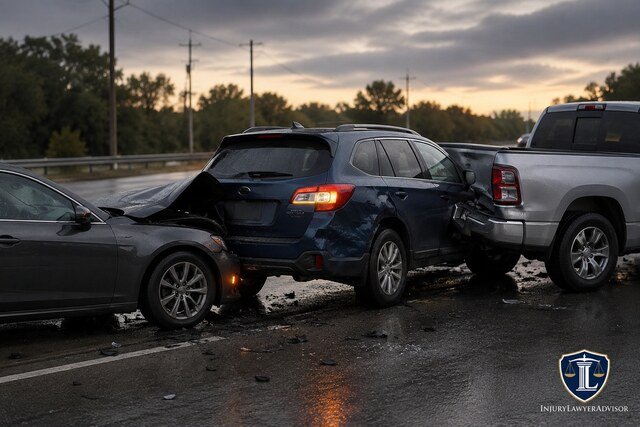
Understanding how each collision occurred is essential when multiple vehicles become involved.
Many chain-reaction accidents begin with a single negligent act. One driver may suddenly brake, another may follow too closely, while additional drivers fail to react in time. In other situations, multiple independent impacts occur almost simultaneously.
Investigators reconstruct the timeline by analyzing physical evidence including:
| Investigation Factor | Purpose |
| Vehicle damage | Identifies impact direction |
| Skid marks | Estimates braking distance |
| Debris field | Indicates collision points |
| Airbag deployment | Confirms impact severity |
| Dashcam footage | Shows driver actions |
| Surveillance video | Verifies accident sequence |
| Electronic vehicle data | Records speed and braking |
Accident reconstruction specialists use these findings to determine whether each driver had sufficient time and distance to avoid striking another vehicle.
Evaluate Each Driver’s Duty of Care
Every driver owes a legal duty to operate their vehicle safely and reasonably under existing road conditions.
Drivers must obey speed limits, maintain proper following distances, remain attentive, signal lane changes, and adjust their driving during rain, snow, fog, or heavy traffic. A breach of these responsibilities may establish negligence.
Examples of negligent conduct include:
- Distracted driving
- Texting while driving
- Speeding
- Tailgating
- Unsafe lane changes
- Running red lights
- Driving while fatigued
- Driving under the influence
- Ignoring hazardous weather conditions
Even when one driver initially causes an accident, another driver’s negligence may worsen the overall collision.
Determine Whether Comparative Negligence Applies
Many jurisdictions recognize that several drivers can share responsibility for the same accident.
Rather than assigning all blame to one individual, investigators evaluate the percentage of fault attributable to each party. This approach is commonly known as comparative negligence.
For example:
| Driver | Percentage of Fault | Reason |
| Driver A | 60% | Sudden unsafe lane change |
| Driver B | 25% | Following too closely |
| Driver C | 15% | Distracted driving |
Compensation is often adjusted according to each driver’s assigned share of fault. A person found partially responsible may recover reduced damages depending on the laws of the jurisdiction.
Some regions follow pure comparative negligence, while others apply modified comparative negligence, limiting recovery once a driver’s fault reaches a specified threshold.
Examine Common Types of Multi-Car Accidents
Different collision patterns often produce different liability outcomes.
Rear-end chain collisions frequently begin when one driver fails to stop in time. However, investigators must determine whether earlier impacts forced vehicles into one another.
Highway pileups often occur during fog, heavy rain, snow, or icy conditions. Reduced visibility may increase the responsibility of drivers who failed to reduce speed appropriately.
Intersection crashes may involve drivers who ignore traffic signals, make illegal turns, or fail to yield the right-of-way.
Lane-change accidents can trigger multiple impacts if one driver enters another lane without sufficient clearance.
Construction zone accidents may involve temporary traffic controls, narrowed lanes, or contractor negligence.
Understanding the collision type helps investigators identify which traffic laws may have been violated.
Assess External Factors That May Share Liability
Drivers are not always the only parties responsible.
Road maintenance agencies may become partially liable if dangerous road conditions contributed to the crash. Examples include missing signs, malfunctioning traffic signals, large potholes, or inadequate road maintenance.
Vehicle manufacturers may share responsibility when defective brakes, steering systems, tires, airbags, or electronic safety systems malfunction.
Commercial trucking companies may be liable if they failed to maintain vehicles, violated driver hour regulations, or hired unqualified operators.
Potentially responsible parties include:
- Government agencies
- Vehicle manufacturers
- Tire manufacturers
- Commercial employers
- Trucking companies
- Maintenance contractors
- Cargo loading companies
Liability investigations often expand beyond the drivers themselves.
Work With Insurance Companies Carefully
Insurance investigations begin soon after the accident.
Each insurer interviews policyholders, reviews police reports, examines vehicle damage, evaluates medical records, and consults experts when necessary. Because multiple insurance policies may become involved, negotiations can become lengthy.
Avoid speculating about fault during recorded statements. Provide factual information without guessing about events you did not observe.
Maintain copies of:
- Medical bills
- Vehicle repair estimates
- Rental car receipts
- Lost wage documentation
- Photographs
- Correspondence
- Police reports
- Witness information
Well-organized documentation strengthens insurance claims and supports future legal proceedings if negotiations fail.
Calculate Recoverable Damages
Victims of multi-car accidents may pursue compensation for several categories of damages depending on liability findings.
Economic damages compensate measurable financial losses, while non-economic damages address personal harm that cannot easily be calculated.
| Damage Category | Examples |
| Medical expenses | Hospital care, surgery, rehabilitation |
| Property damage | Vehicle repairs or replacement |
| Lost income | Missed work and reduced earning capacity |
| Pain and suffering | Physical pain and emotional distress |
| Disability | Permanent impairment |
| Future treatment | Ongoing medical care |
| Out-of-pocket costs | Transportation and related expenses |
Proper documentation helps establish the full value of each damage category.
Consult an Attorney When Liability Is Disputed
Complex multi-vehicle accidents frequently involve conflicting witness statements, competing insurance companies, and extensive evidence.
An attorney can coordinate independent investigations, retain accident reconstruction experts, obtain surveillance footage, negotiate with insurers, and represent clients during litigation if settlement discussions fail.
Legal representation becomes especially valuable when:
- Multiple drivers deny responsibility.
- Serious injuries are involved.
- Commercial vehicles participated.
- Government entities may be liable.
- Insurance coverage is insufficient.
- Comparative negligence becomes disputed.
- Expert testimony is required.
Early legal guidance also helps preserve evidence before it disappears or becomes unavailable.
Follow Preventive Driving Practices to Reduce Future Risk
Although not every accident can be avoided, defensive driving significantly lowers the likelihood of becoming involved in a chain-reaction collision.
Maintain generous following distances, especially during adverse weather. Scan traffic well ahead rather than focusing only on the vehicle immediately in front of you. Avoid distractions such as mobile phones, adjust speed according to road conditions, and ensure your vehicle receives regular maintenance.
Modern safety technologies such as automatic emergency braking, forward collision warning, adaptive cruise control, blind-spot monitoring, and electronic stability control provide additional protection but should never replace attentive driving.
Drivers who consistently anticipate hazards have more time to react, reducing the chance that a single mistake escalates into a multi-vehicle accident.
Conclusion
Determining who is liable in multi-car accidents requires a careful examination of evidence, driver behavior, traffic laws, vehicle damage, witness testimony, and expert analysis. Unlike simple two-car collisions, multi-vehicle crashes often involve shared responsibility among several parties, including drivers, employers, manufacturers, or government agencies.
The strongest liability cases are built on timely evidence collection, accurate accident documentation, professional investigation, and a thorough understanding of negligence and comparative fault principles. By preserving evidence, cooperating appropriately with law enforcement, maintaining detailed records, and seeking legal guidance when necessary, accident victims place themselves in the best position to recover fair compensation for their losses.
Understanding how liability is established also encourages safer driving habits that can reduce the risk of future chain-reaction accidents and protect everyone sharing the road.
FAQs
1. Who is usually at fault in a multi-car accident?
The first driver who acted negligently is not always solely responsible. Liability depends on each driver’s actions, the sequence of impacts, road conditions, and available evidence. Multiple drivers may share fault.
2. Can more than one driver be liable for the same accident?
Yes. Many jurisdictions apply comparative negligence rules, allowing responsibility to be divided among multiple drivers based on their percentage of fault.
3. Does a rear-end collision automatically make the rear driver liable?
Not always. While rear drivers are often presumed responsible for following too closely, exceptions exist when another vehicle is pushed forward, makes an unsafe maneuver, or stops unexpectedly under circumstances that shift or divide liability.
4. What evidence is most important in determining liability?
Photographs, dashcam footage, police reports, witness statements, surveillance videos, vehicle damage, skid marks, electronic vehicle data, and accident reconstruction analyses are among the most valuable forms of evidence.
5. How long does it take to settle a multi-car accident claim?
Simple claims may settle within a few months, while complex cases involving serious injuries, disputed liability, multiple insurers, or litigation can take a year or longer.
6. Should I speak with the other driver’s insurance company?
You should provide basic factual information required under your obligations, but avoid speculating about fault or giving recorded statements without understanding your rights. In significant or disputed cases, consulting an attorney before detailed discussions can help protect your interests.
