

Introduction
Determining liability after a car accident directly impacts insurance claims, compensation, and legal outcomes. Knowing how to prove fault in a car accident allows you to protect your financial interests and establish a clear narrative supported by evidence. Whether dealing with minor collisions or serious crashes, fault is established through documentation, witness accounts, legal standards, and investigative analysis. This guide walks through actionable steps to build a strong fault claim, ensuring clarity, accuracy, and legal strength at every stage.
Gather Immediate Evidence at the Accident Scene
Start building your case the moment the accident occurs by collecting as much evidence as possible before anything changes.
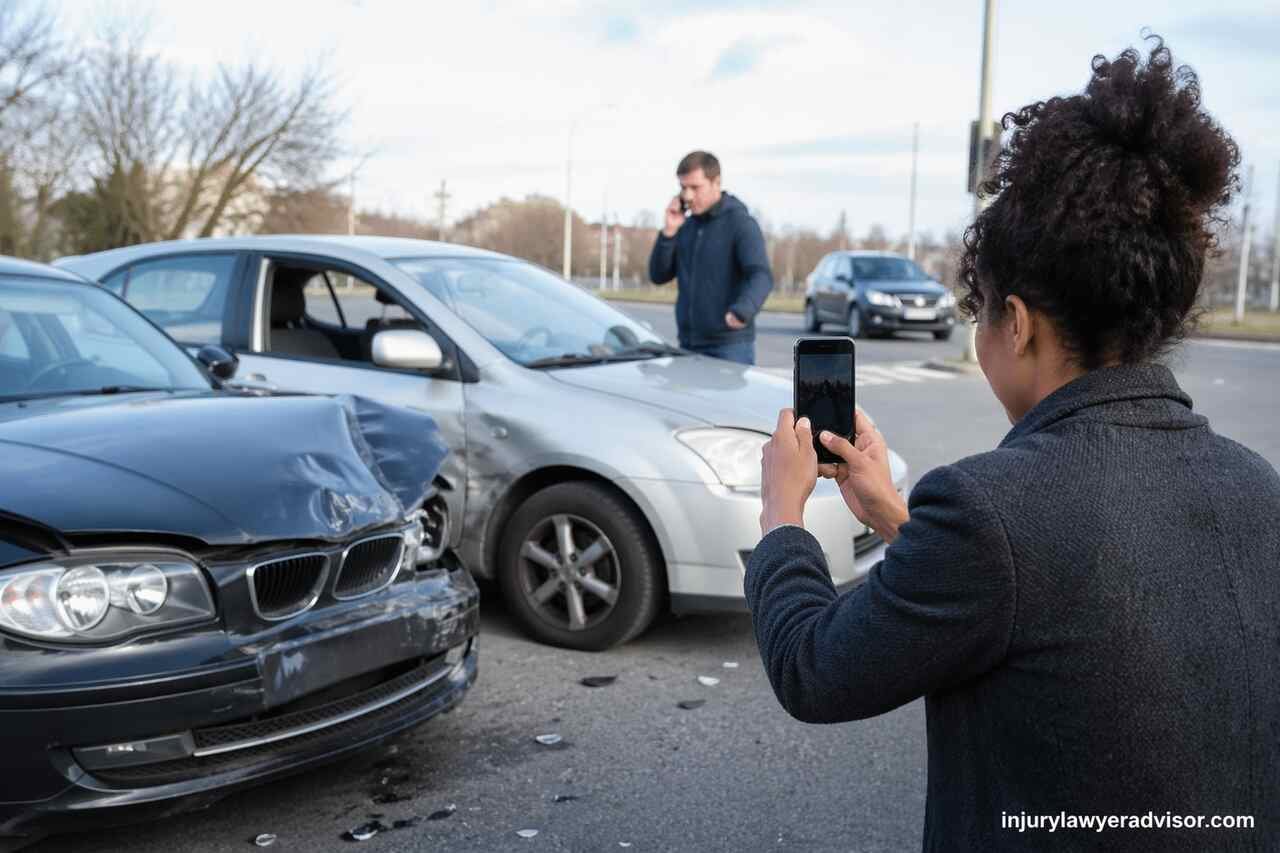
Capture photos and videos of all vehicles, road conditions, skid marks, traffic signs, weather, and visible injuries. These visual records preserve the state of the scene and prevent disputes later. Use multiple angles and include timestamps if possible.
Document key elements such as license plates, vehicle damage points, and positions of cars relative to lanes or intersections. These details help reconstruct how the accident occurred and identify which driver violated traffic norms.
Immediate evidence strengthens your claim because physical conditions can quickly change. Weather, traffic flow, and vehicle removal can erase crucial details, making early documentation critical.
Call Law Enforcement and Secure an Official Police Report
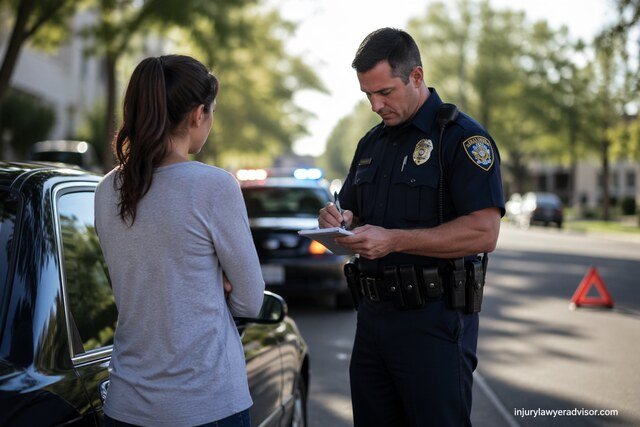
Requesting police presence ensures that a neutral authority records the incident objectively.
Officers create an accident report that includes driver statements, witness input, diagrams, and preliminary fault assessments. This document becomes a foundational piece of evidence for insurance companies and legal proceedings.
Provide accurate information but avoid speculating or admitting fault during conversations. Stick to factual descriptions of what happened.
The police report often carries significant weight because it combines professional observation with structured documentation. Even if fault is not explicitly assigned, the report supports your version of events.
Identify and Collect Witness Statements
Independent witnesses add credibility by providing unbiased perspectives.
Speak to bystanders, other drivers, or nearby pedestrians who saw the accident. Collect their names, contact details, and brief statements about what they observed.
Witness testimony helps clarify disputed facts such as traffic light status, speed, or driver behavior. These accounts can confirm or contradict claims made by involved parties.
Strong witness statements reduce ambiguity and reinforce your narrative, especially in cases where physical evidence alone is insufficient.
Exchange and Verify Driver Information
Accurate identification of all involved parties ensures accountability and proper claim processing.
Collect names, contact details, driver’s license numbers, insurance providers, and vehicle registration information. Double-check the accuracy of this data before leaving the scene.
This information connects each driver to their insurer and establishes responsibility chains. Without it, pursuing compensation becomes significantly harder.
Verification prevents future disputes about identity or insurance coverage, which can delay or weaken your case.
Analyze Traffic Laws and Violations
Fault is often determined by identifying which driver violated traffic regulations.
Review applicable traffic rules such as right-of-way, speed limits, lane discipline, and signal compliance. Compare these rules with the actions of each driver during the accident.
Common violations include running red lights, failing to yield, distracted driving, or improper lane changes. Each violation directly contributes to liability assessment.
Understanding legal standards helps align your evidence with objective criteria rather than subjective opinions, strengthening your argument.
Obtain and Review Surveillance or Dashcam Footage
Video evidence provides one of the most compelling forms of proof in accident cases.
Check nearby buildings, traffic cameras, or vehicles equipped with dashcams. Request access to recordings as soon as possible since footage is often overwritten.
Video captures real-time events such as vehicle speed, signal changes, and driver reactions. This eliminates guesswork and disputes.
Footage can decisively establish fault by showing exactly how the collision occurred, making it one of the strongest pieces of evidence.
Assess Vehicle Damage and Accident Reconstruction
The pattern of damage on vehicles reveals how the collision happened.
Examine impact points, direction of force, and severity of damage. Front-end damage may indicate rear-ending, while side damage can suggest failure to yield or improper turns.
Accident reconstruction experts use physics, measurements, and scene data to recreate the sequence of events. Their analysis provides technical validation of fault.
This step transforms raw evidence into a logical narrative supported by scientific reasoning, which is highly persuasive in disputes.
Work with Insurance Companies Strategically
Insurance adjusters evaluate fault based on evidence, reports, and policy rules.
Submit all collected documentation including photos, witness statements, and police reports. Provide a clear, consistent account of the incident.
Avoid giving recorded statements without preparation, as inconsistencies can weaken your claim. Stick to verified facts and avoid assumptions.
Insurance companies rely on comparative analysis of evidence. A well-documented case increases the likelihood of a favorable fault determination.
Understand Comparative and Contributory Negligence Rules
Fault is not always assigned entirely to one party.
Comparative negligence allows multiple parties to share responsibility based on their level of fault. For example, one driver may be 70% responsible while another is 30%.
Contributory negligence rules may limit or eliminate compensation if you are partially at fault, depending on jurisdiction.
Understanding these frameworks helps you evaluate your position realistically and prepare for potential reductions in compensation.
Consult a Legal Professional for Complex Cases
Legal expertise becomes essential when disputes arise or damages are significant.
An attorney analyzes evidence, identifies legal strategies, and represents your interests in negotiations or court proceedings. They ensure compliance with legal procedures and deadlines.
Lawyers also handle communication with insurers and opposing parties, reducing the risk of errors that could harm your case.
Professional guidance increases the chances of accurately proving fault and securing fair compensation.
Organize Documentation and Build a Strong Case File
A structured case file ensures all evidence is accessible and logically arranged.
Include police reports, medical records, repair estimates, photos, videos, witness statements, and correspondence with insurers.
Chronologically organize documents to create a clear timeline of events and actions taken after the accident.
A well-prepared file supports consistency and strengthens your credibility during claims or legal proceedings.
Use Medical Records to Support Injury Claims
Injury documentation links the accident to physical harm, reinforcing liability.
Seek medical attention immediately after the accident, even if injuries seem minor. Medical reports provide professional validation of injuries and their severity.
Include treatment records, prescriptions, diagnostic results, and doctor statements in your case file.
Medical evidence demonstrates the consequences of the accident, which influences both fault perception and compensation value.
Compare Types of Evidence and Their Impact
| Evidence Type | Strength Level | Purpose | Example Use Case |
| Photos/Videos | High | Visual proof of scene conditions | Showing vehicle positions |
| Police Reports | High | Official documentation | Supporting fault assessment |
| Witness Statements | Medium-High | Independent verification | Confirming traffic signal status |
| Dashcam Footage | Very High | Real-time event recording | Proving reckless driving |
| Medical Records | Medium | Injury validation | Linking injuries to accident |
| Expert Analysis | High | Technical reconstruction | Explaining collision mechanics |
Evaluate Common Accident Scenarios and Fault Indicators
| Accident Type | Likely At-Fault Driver | Key Indicator |
| Rear-End Collision | Driver in the rear | Following too closely |
| T-Bone Accident | Driver failing to yield | Side impact at intersection |
| Lane Change Crash | Driver changing lanes | Improper merge or blind spot neglect |
| Head-On Collision | Driver crossing center line | Wrong lane entry |
| Parking Lot Accident | Depends on movement | Right-of-way confusion |
Maintain Consistency in Statements and Claims
Consistency ensures credibility throughout the fault determination process.
Align your statements across police reports, insurance claims, and legal discussions. Avoid contradictions or changing details.
Review your documentation before providing any formal statements to ensure accuracy.
Consistency reinforces trust and prevents opposing parties from exploiting discrepancies.
Prepare for Dispute Resolution or Court Proceedings
Some cases require escalation beyond insurance settlements.
Be ready to present evidence, witness testimony, and expert analysis in a structured manner. Legal representation becomes critical at this stage.
Court proceedings evaluate fault based on the strength, clarity, and reliability of presented evidence.
Preparation ensures that your case remains coherent and persuasive under scrutiny.
Conclusion
Proving fault in a car accident requires a combination of immediate action, detailed evidence collection, legal understanding, and strategic communication. From documenting the scene to analyzing traffic violations and leveraging expert insights, each step builds a stronger claim. Organized records, credible witness accounts, and consistent statements significantly improve your ability to establish liability. By following these structured steps, you position yourself for a fair and accurate outcome in both insurance claims and legal proceedings.
FAQ’s
- How long do I have to prove fault after a car accident?
The timeframe depends on local laws, but most jurisdictions impose a statute of limitations ranging from one to three years for filing claims. - Can I prove fault without a police report?
Yes, but it becomes more challenging. You will need strong alternative evidence such as photos, witness statements, and video footage. - Does insurance always determine fault?
Insurance companies assess fault initially, but their decision can be challenged in court if disputed. - What if both drivers share fault?
In comparative negligence systems, compensation is reduced based on your percentage of fault. - Is dashcam footage always accepted as evidence?
Generally yes, as long as it is authentic and legally obtained, though admissibility may vary by jurisdiction. - Should I admit fault at the scene?
No. Avoid making statements about fault. Provide factual information only and let investigations determine liability.
