



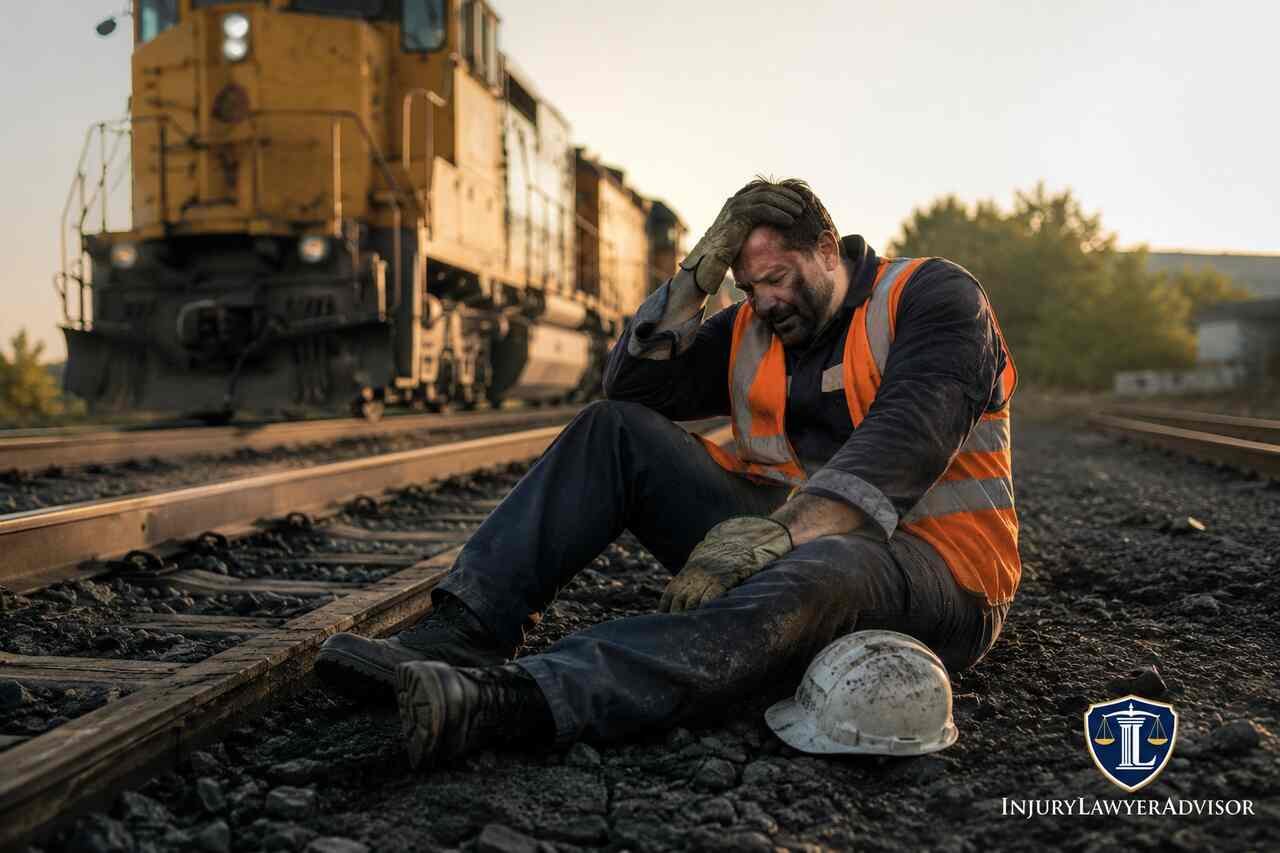
Railroad work remains one of the most demanding and hazardous occupations in the United States. Employees often operate heavy machinery, work around moving trains, handle dangerous equipment, and perform physically demanding tasks in challenging environments. Although safety regulations have improved over the years, workplace accidents continue to occur, leaving workers with serious injuries, financial uncertainty, and difficult legal decisions.
Knowing when to hire a railroad injury lawyer can make a significant difference in protecting your rights and pursuing fair compensation. Unlike many workplace injury claims, railroad employee injuries are often governed by the Federal Employers’ Liability Act (FELA), a federal law that requires injured workers to prove employer negligence rather than relying on a traditional workers’ compensation system.
This guide explains the situations in which hiring a railroad injury lawyer is beneficial, the legal process involved, and the factors that can affect the outcome of a claim.
Understand How Railroad Injury Claims Differ from Standard Workplace Accidents
Many people assume that railroad employees receive workers’ compensation benefits after a workplace injury. In reality, most interstate railroad workers are covered under the Federal Employers’ Liability Act (FELA). This law provides injured employees with the opportunity to recover compensation when a railroad company’s negligence contributed to the injury.
Unlike workers’ compensation, FELA requires the injured worker to establish that the railroad failed to provide a reasonably safe workplace. Even if the employer’s negligence played only a small role in causing the injury, the worker may still have a valid claim.
Because these cases involve unique legal standards, federal laws, and extensive evidence, legal representation is often valuable from the beginning of the claim.
Recognize Situations That Call for Immediate Legal Representation
Not every workplace incident requires hiring an attorney immediately. However, several circumstances strongly suggest that consulting a railroad injury lawyer is in your best interest.
You should consider legal representation if:
- You suffered serious or permanent injuries.
- Your injury prevents you from returning to work.
- The railroad company disputes responsibility.
- You are pressured to give recorded statements.
- Company investigators contact you immediately after the accident.
- Your claim has been delayed or denied.
- Multiple parties may be responsible.
- You have suffered significant financial losses.
- A family member was fatally injured in a railroad accident.
Early legal guidance helps preserve evidence before it disappears and prevents costly mistakes during the claims process.
Seek Legal Help Immediately After a Serious Injury
The hours and days following a railroad accident are often critical.
After a serious injury, railroad companies typically begin investigating immediately. Their representatives may collect witness statements, inspect equipment, photograph the accident scene, and prepare internal reports. Their goal is often to minimize liability and defend against future claims.
Hiring an attorney early allows an independent investigation to begin while evidence remains available. Important records such as maintenance logs, surveillance footage, inspection reports, event recorder data, and witness testimony may become more difficult to obtain as time passes.
Prompt legal action also ensures that important filing deadlines are not missed.
Hire a Lawyer Before Speaking With Company Claim Representatives


Following an accident, injured employees are often contacted by railroad supervisors, claims representatives, or investigators.
Although these conversations may appear routine, statements made during interviews can later become evidence. Workers sometimes unintentionally speculate about the cause of the accident or accept partial responsibility without realizing the legal consequences.
A railroad injury lawyer can advise you regarding:
- Recorded interviews
- Written statements
- Medical authorizations
- Settlement discussions
- Requests for additional documentation
Having legal guidance before communicating with company representatives helps protect your interests throughout the process.
Consider Legal Representation for Permanent Disabilities
Some railroad injuries permanently change a worker’s ability to earn a living.
Examples include:
- Spinal cord injuries
- Traumatic brain injuries
- Amputations
- Severe orthopedic injuries
- Loss of hearing
- Vision impairment
- Chronic nerve damage
These injuries often require lifelong medical care, rehabilitation, and workplace accommodations. Calculating future financial losses becomes significantly more complex than simply adding current medical expenses.
An experienced attorney can work with medical professionals, vocational experts, and economists to estimate long-term damages accurately.
Protect Your Rights if Employer Negligence Contributed to the Accident
Many railroad injuries occur because of unsafe working conditions rather than employee mistakes.
Potential examples include:
| Unsafe Condition | Possible Result |
| Defective equipment | Crushing injuries |
| Poor track maintenance | Derailments |
| Inadequate lighting | Falls |
| Faulty hand brakes | Equipment accidents |
| Insufficient training | Operational mistakes |
| Lack of safety equipment | Preventable injuries |
| Unsafe work schedules | Fatigue-related accidents |
Even when an employee shares some responsibility, compensation may still be available under FELA because comparative negligence rules can apply.
Determining negligence usually requires careful investigation and legal analysis.
Evaluate the Full Value of Your Injury Claim
Many injured workers underestimate the true financial impact of a railroad injury.
Compensation may include much more than current medical bills.
Potential damages may include:
| Type of Compensation | Description |
| Medical expenses | Past and future treatment |
| Lost wages | Income lost during recovery |
| Reduced earning capacity | Future loss of income |
| Pain and suffering | Physical and emotional impact |
| Disability | Permanent impairments |
| Rehabilitation costs | Physical and occupational therapy |
| Mental health treatment | Psychological care following trauma |
| Wrongful death damages | Compensation for surviving family members where applicable |
An attorney evaluates both current and future losses before negotiating with the railroad company.
Preserve Critical Evidence Before It Disappears
Evidence is one of the strongest factors in a successful railroad injury claim.
Useful evidence may include:
- Accident scene photographs
- Surveillance video
- Witness statements
- Equipment inspection reports
- Maintenance records
- Safety manuals
- Medical records
- Employment records
- Time sheets
- Communication logs
Some evidence may only be available for a limited period. Early legal involvement increases the likelihood of preserving this information.
Avoid Accepting a Quick Settlement Without Legal Advice
After an accident, injured workers sometimes receive early settlement offers.
While immediate financial assistance may seem attractive, early offers often occur before the full extent of injuries becomes known.
A settlement generally ends the legal claim permanently. If future complications arise, additional compensation may no longer be available.
Before signing any release, it is wise to understand:
- Future medical expenses
- Permanent disability risks
- Lost earning potential
- Ongoing treatment costs
- Tax considerations
- Long-term financial needs
Legal advice helps determine whether a settlement reflects the actual value of the claim.
Choose a Railroad Injury Lawyer With Relevant Experience
Not every personal injury attorney regularly handles railroad injury cases.
When selecting legal representation, consider factors such as:
- Experience handling FELA claims
- Trial experience
- Knowledge of railroad operations
- Familiarity with federal regulations
- Access to accident reconstruction experts
- Strong communication practices
- Transparent fee structure
- Positive professional reputation
Initial consultations often provide an opportunity to discuss the circumstances of the injury and evaluate whether the attorney is a good fit.
Prepare for the Railroad Injury Claim Process
Understanding the legal process can reduce uncertainty during recovery.
A typical railroad injury case may involve:
- Initial consultation
- Case evaluation
- Independent investigation
- Evidence collection
- Medical documentation
- Expert analysis
- Settlement negotiations
- Filing a lawsuit if necessary
- Discovery
- Trial or settlement resolution
Some cases resolve through negotiation, while others require litigation depending on the disputed issues.
Take Action Before Legal Deadlines Expire
Railroad injury claims are subject to legal deadlines. Waiting too long to pursue a claim can result in losing the ability to seek compensation altogether.
Beyond formal filing deadlines, delays may also affect witness availability, evidence preservation, and the accuracy of accident reconstruction.
Seeking legal advice promptly helps ensure that important procedural requirements are addressed while the evidence is still fresh.
Conclusion
Hiring a railroad injury lawyer is often one of the most important decisions an injured railroad worker can make after a serious accident. Because railroad injury claims differ from traditional workplace injury cases, understanding your legal rights early can help protect your financial future and improve your ability to pursue fair compensation.
If your injury resulted from unsafe working conditions, defective equipment, inadequate training, or another form of employer negligence, consulting an attorney as soon as practical allows evidence to be preserved, deadlines to be met, and your claim to be evaluated based on its full long-term value. Even if you are uncertain whether you have a valid case, an early legal consultation can provide clarity about your options and help you make informed decisions during your recovery.


