

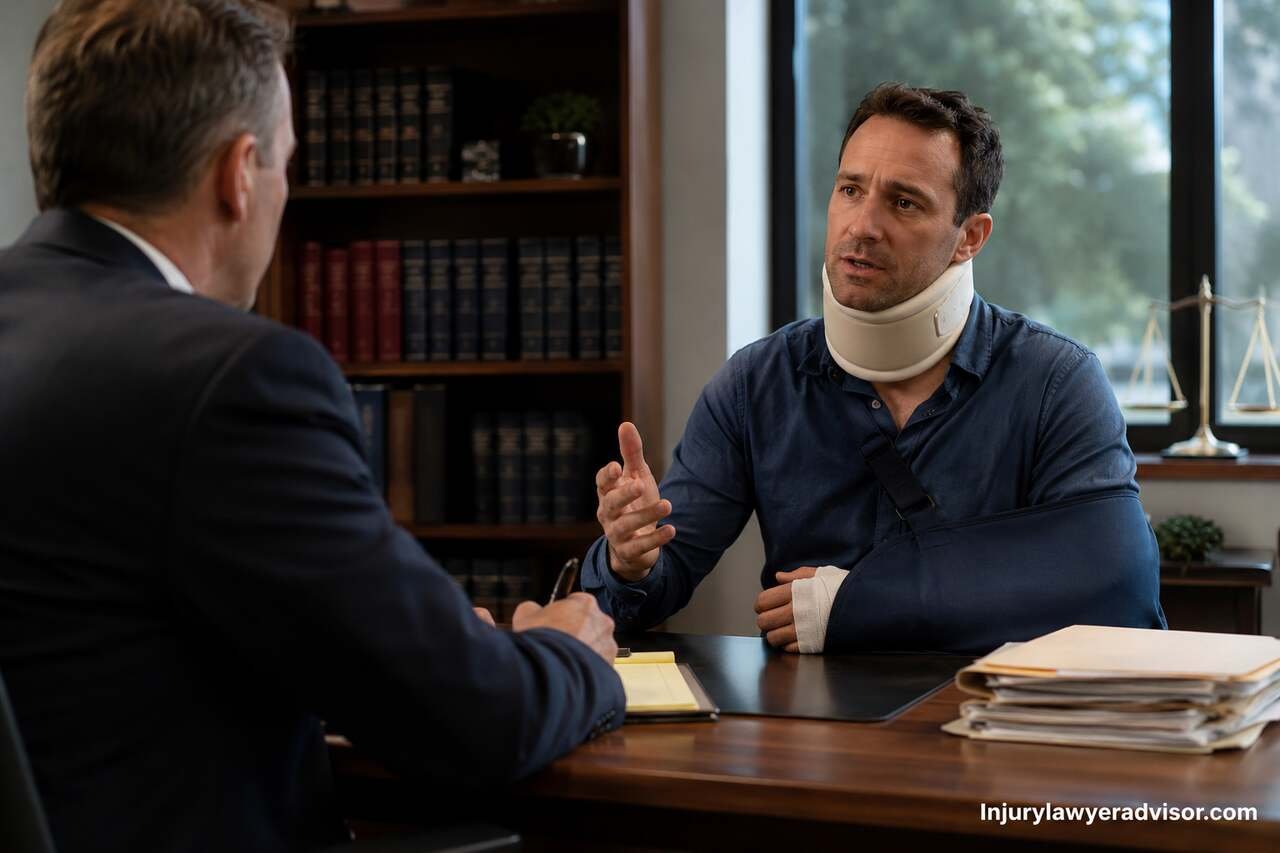
Accidents disrupt daily life in ways that most people never expect. A car collision, workplace incident, slip and fall accident, defective product injury, or medical negligence case can create physical pain, emotional stress, and financial uncertainty at the same time. Medical expenses increase quickly, insurance companies begin investigations immediately, and injured individuals often struggle to understand their legal rights while trying to recover.
Hiring a personal injury attorney at the right time can significantly affect the outcome of a claim. Legal representation helps injured victims preserve evidence, negotiate with insurance companies, calculate long-term damages, and pursue fair compensation. Many people delay legal action because they assume the injury is minor or believe the insurance provider will handle the claim fairly. In reality, delayed legal guidance often leads to reduced settlements, lost evidence, and avoidable mistakes.
A personal injury attorney evaluates liability, identifies responsible parties, and develops a strategy that aligns with state laws and insurance procedures. The timing of legal representation matters because every injury claim depends on evidence, documentation, witness statements, medical evaluations, and filing deadlines.
This guide explains when you should hire a personal injury attorney, the signs that indicate professional legal help is necessary, and how attorneys strengthen injury claims across different accident scenarios.
Seek Immediate Legal Help After Serious Physical Injuries
A serious injury changes both medical and financial circumstances almost instantly. Broken bones, spinal cord trauma, traumatic brain injuries, severe burns, internal organ damage, and permanent disabilities often require surgeries, rehabilitation, long-term therapy, and ongoing medical care. These injuries also reduce earning capacity and may prevent a victim from returning to work.
Personal injury attorneys become essential when injuries involve substantial medical treatment or long recovery periods. An attorney reviews hospital records, diagnostic imaging, physician evaluations, treatment plans, and rehabilitation expenses to calculate both current and future damages. Without legal guidance, injured victims frequently underestimate the full cost of recovery.
Severe injury claims usually involve multiple insurance adjusters, medical experts, and legal defense teams. Insurance companies attempt to minimize payouts by disputing liability, challenging medical necessity, or arguing that pre-existing conditions contributed to the injury. An attorney protects the injured person from unfair settlement tactics and ensures all damages are properly documented.
The following table highlights common serious injuries and the legal considerations attached to them.
| Injury Type | Common Medical Requirements | Legal Concerns |
| Traumatic Brain Injury | Neurological care, rehabilitation, imaging scans | Long-term cognitive impairment damages |
| Spinal Cord Injury | Surgery, physical therapy, mobility assistance | Permanent disability compensation |
| Severe Burns | Skin grafts, reconstructive procedures | Pain and suffering evaluation |
| Internal Organ Damage | Emergency surgery, hospitalization | High-value medical claims |
| Multiple Fractures | Orthopedic treatment, recovery therapy | Lost wages and future treatment costs |
Hire an Attorney When Insurance Companies Deny Responsibility
Insurance disputes often begin shortly after an accident investigation starts. An insurance provider may claim that the injured person caused the accident, partially contributed to the incident, or lacks sufficient evidence to support the claim. Liability disputes become especially complicated in multi-vehicle accidents, commercial trucking collisions, construction incidents, and premises liability cases.
A personal injury attorney investigates accident reports, surveillance footage, witness testimony, police documentation, and expert analysis to establish liability. Attorneys work with accident reconstruction specialists, engineers, and medical professionals to strengthen the case. This evidence-based approach improves the chances of obtaining fair compensation.
Insurance adjusters are trained negotiators whose primary objective is to reduce financial exposure for the insurance company. They may request recorded statements, pressure victims into early settlements, or delay communication to weaken the claim. Legal representation shifts communication responsibilities to the attorney and prevents insurance companies from exploiting procedural mistakes.
Disputed liability cases also involve comparative negligence rules in many states. These laws reduce compensation if the injured person shares responsibility for the accident. An attorney evaluates how comparative fault laws affect the case and develops arguments that minimize blame assigned to the victim.
Contact a Personal Injury Attorney After Car Accidents With Major Damages

Motor vehicle accidents remain one of the most common reasons people hire personal injury attorneys. Car crashes involve insurance claims, medical evaluations, vehicle repair disputes, and liability investigations that become increasingly complicated when injuries are severe.
Attorneys assist after rear-end collisions, distracted driving accidents, drunk driving crashes, rideshare incidents, motorcycle collisions, commercial truck accidents, and pedestrian injuries. Each type of accident presents different legal considerations. For example, trucking accidents may involve trucking companies, maintenance providers, cargo loaders, and commercial insurance policies.
An attorney collects evidence quickly before it disappears. Traffic camera footage, black box data, skid mark analysis, cellphone records, and eyewitness accounts can all influence the outcome of a claim. Prompt legal action also ensures compliance with filing deadlines and insurance notification requirements.
Victims often accept low settlement offers because immediate financial pressure makes quick compensation appear attractive. However, early offers rarely account for long-term medical treatment, chronic pain, future surgeries, or reduced earning potential. Attorneys evaluate the true financial impact of the accident before entering settlement negotiations.
The following table outlines common accident scenarios and the legal support attorneys provide.
| Accident Scenario | Potential Challenges | Attorney Support |
| Rear-End Collision | Disputed injury severity | Medical documentation and negotiation |
| Truck Accident | Multiple liable parties | Commercial liability investigation |
| Motorcycle Crash | Bias against riders | Evidence collection and witness analysis |
| Pedestrian Accident | Catastrophic injuries | Long-term damage calculations |
| Rideshare Accident | Complex insurance coverage | Corporate and insurance coordination |
Pursue Legal Representation When Medical Malpractice Causes Harm
Medical malpractice claims involve healthcare professionals, hospitals, surgical facilities, diagnostic centers, and insurance defense teams. These cases require extensive medical documentation and expert testimony to prove negligence.
Patients should contact a personal injury attorney when medical errors result in surgical complications, misdiagnosis, delayed diagnosis, medication mistakes, anesthesia errors, birth injuries, or improper treatment. Medical negligence often leads to additional surgeries, prolonged illness, permanent disability, or preventable death.
Attorneys handling malpractice claims collaborate with independent medical experts who review treatment records and determine whether the healthcare provider failed to meet accepted standards of care. This expert analysis forms the foundation of a malpractice lawsuit.
Hospitals and medical insurers aggressively defend malpractice claims because payouts can be substantial. Legal teams representing healthcare institutions frequently challenge causation, arguing that the underlying illness caused the patient’s condition rather than negligence. An experienced attorney understands how to present medical evidence clearly and persuasively.
Medical malpractice cases also involve strict procedural requirements, including affidavits of merit, expert certifications, and shorter filing deadlines in some states. Delayed legal action may permanently prevent recovery.
Retain an Attorney After Workplace Injuries Beyond Workers’ Compensation
Workplace injuries often involve more than standard workers’ compensation benefits. Although workers’ compensation covers medical treatment and partial wage replacement, it may not fully compensate injured employees for long-term losses.
A personal injury attorney evaluates whether third-party liability exists in addition to workers’ compensation coverage. Construction accidents, machinery malfunctions, defective equipment injuries, toxic exposure incidents, and vehicle-related workplace accidents frequently involve manufacturers, contractors, subcontractors, or property owners.
Attorneys investigate Occupational Safety and Health Administration reports, maintenance records, safety protocols, and witness testimony to determine whether negligence contributed to the injury. Third-party lawsuits may provide compensation for pain and suffering, future income loss, and other damages unavailable through workers’ compensation systems.
Employers and insurance carriers sometimes dispute the severity of workplace injuries or argue that employees violated safety procedures. Legal representation helps injured workers protect their rights during medical evaluations, disability determinations, and settlement negotiations.
Certain industries face particularly high injury risks. Construction workers encounter falls, electrocution hazards, and heavy machinery accidents. Healthcare employees experience repetitive stress injuries and lifting accidents. Warehouse workers face forklift incidents and falling object injuries. Attorneys tailor legal strategies to the specific workplace environment and applicable regulations.
Hire Legal Counsel When Slip and Fall Accidents Lead to Significant Losses
Slip and fall accidents may appear straightforward, but premises liability claims are often difficult to prove. Property owners and insurance companies frequently argue that hazardous conditions were obvious, temporary, or unrelated to the injury.
An attorney helps establish that a property owner failed to maintain safe conditions. This process involves reviewing maintenance logs, cleaning schedules, inspection records, surveillance footage, and witness testimony. Attorneys also determine whether building code violations or inadequate safety procedures contributed to the accident.
Premises liability claims arise in grocery stores, shopping centers, apartment complexes, hotels, restaurants, parking lots, office buildings, and private residences. Wet floors, uneven sidewalks, broken stairs, inadequate lighting, loose carpeting, and icy walkways commonly contribute to injuries.
Slip and fall injuries range from minor bruises to severe fractures and traumatic brain injuries. Older adults face especially serious risks because falls can cause hip fractures, mobility limitations, and permanent loss of independence.
Insurance companies often attempt to settle premises liability claims quickly before victims understand the long-term impact of their injuries. Legal representation ensures medical evaluations accurately document the extent of harm and future treatment needs.
Contact an Attorney Immediately After Wrongful Death Incidents
Wrongful death claims arise when negligence causes a fatal injury. Families dealing with the sudden loss of a loved one often face funeral expenses, lost household income, emotional trauma, and unresolved legal questions.
Personal injury attorneys help surviving family members pursue compensation through wrongful death lawsuits. These claims may involve car accidents, workplace incidents, defective products, medical malpractice, nursing home abuse, or criminal acts.
An attorney identifies liable parties, gathers evidence, consults expert witnesses, and calculates economic and non-economic damages. Compensation may include funeral costs, medical expenses incurred before death, lost future earnings, loss of companionship, and emotional suffering.
Wrongful death litigation requires sensitivity and thorough preparation. Insurance companies and corporate defendants frequently dispute liability or attempt to reduce damages by minimizing the deceased person’s projected future income and contributions.
State laws determine who may file a wrongful death claim and how damages are distributed among surviving relatives. Attorneys ensure compliance with procedural requirements while allowing families to focus on grieving and recovery.
Preserve Evidence Quickly Before Critical Information Disappears
Evidence preservation is one of the strongest reasons to hire a personal injury attorney immediately after an accident. Physical evidence, surveillance footage, digital records, witness recollections, and accident scene conditions can disappear within days or even hours.
Attorneys send preservation letters to businesses, insurance companies, trucking companies, employers, and property owners to prevent destruction of relevant evidence. These legal notices require parties to preserve documents, electronic communications, maintenance records, and video footage connected to the incident.
In vehicle accidents, attorneys may secure black box data, cellphone records, GPS tracking information, and vehicle inspection reports. In premises liability cases, attorneys may obtain surveillance footage before routine deletion occurs. In medical malpractice cases, attorneys preserve treatment records and internal communications.
Witness statements also become less reliable over time. Memories fade, witnesses relocate, and details become inconsistent. Early legal involvement improves the accuracy and credibility of testimony.
Strong evidence directly affects settlement value and trial outcomes. Claims supported by detailed documentation and expert analysis are more difficult for insurance companies to dispute.
Protect Your Claim Before Speaking Extensively With Insurance Adjusters
Insurance adjusters contact accident victims quickly because early communication provides opportunities to gather statements that may weaken future claims. Injured individuals sometimes apologize unintentionally, speculate about fault, or minimize symptoms before understanding the seriousness of their injuries.
A personal injury attorney manages communication with insurance companies and prevents damaging statements from affecting the case. Attorneys review settlement offers, negotiate compensation, and ensure that claim documentation supports medical and financial damages.
Insurance companies use several common tactics during injury claims:
- Requesting recorded statements immediately after the accident
- Offering quick settlements before full medical evaluation
- Delaying communication to pressure victims financially
- Questioning medical necessity or treatment consistency
- Monitoring social media activity for contradictory evidence
Legal representation creates a structured process for communication and documentation. Attorneys advise clients regarding medical treatment consistency, evidence preservation, and interactions with investigators.
This protection becomes especially important in high-value claims involving catastrophic injuries, commercial insurance policies, or disputed liability.
Pursue Compensation for Long-Term Financial and Emotional Damages
Personal injury claims involve more than immediate medical expenses. Serious injuries create ongoing financial and emotional consequences that affect careers, family responsibilities, mobility, and quality of life.
Attorneys calculate damages comprehensively by reviewing medical costs, future treatment needs, rehabilitation expenses, prescription medication costs, home modifications, transportation needs, and lost earning capacity. Economic experts and vocational specialists may assist in evaluating future financial losses.
Non-economic damages also play a major role in injury claims. Chronic pain, emotional distress, anxiety, depression, post-traumatic stress disorder, loss of enjoyment of life, and reduced personal relationships all influence compensation.
In catastrophic injury cases, attorneys may seek damages for permanent disability and future caregiving needs. These claims require careful financial forecasting because lifetime medical costs can become substantial.
The following table summarizes the primary categories of compensation in personal injury claims.
| Compensation Category | Examples |
| Medical Expenses | Emergency care, surgery, rehabilitation |
| Lost Income | Missed work, reduced earning capacity |
| Pain and Suffering | Physical pain, emotional distress |
| Property Damage | Vehicle repair or replacement |
| Future Care Costs | Long-term therapy, home assistance |
| Loss of Consortium | Impact on family relationships |
Accurate damage calculation often determines whether a settlement adequately supports long-term recovery. Without legal guidance, victims frequently accept compensation that fails to cover future expenses.
Prepare for Litigation When Settlement Negotiations Fail
Most personal injury claims settle outside court, but some cases require litigation to achieve fair compensation. Insurance companies may refuse reasonable settlement terms, dispute liability, or challenge the severity of injuries.
A personal injury attorney prepares every case as though it may proceed to trial. This preparation includes gathering evidence, interviewing witnesses, consulting experts, filing court documents, conducting depositions, and presenting legal arguments.
Litigation becomes more likely in cases involving catastrophic injuries, wrongful death, defective products, commercial defendants, or disputed negligence. Trial preparation also strengthens settlement negotiations because insurance companies recognize the risk of an unfavorable jury verdict.
Attorneys understand procedural rules, evidentiary standards, and courtroom strategies that injured individuals typically cannot manage independently. Legal counsel also reduces stress by handling deadlines, motions, negotiations, and court appearances.
Some personal injury claims involve mediation or arbitration before trial. Attorneys guide clients through these alternative dispute resolution processes and evaluate whether proposed settlements align with the claim’s true value.
Choose an Attorney Before State Filing Deadlines Expire
Every state imposes statutes of limitations that limit the amount of time available to file a personal injury lawsuit. Missing these deadlines usually prevents victims from recovering compensation entirely.
The filing period varies depending on the state, type of accident, and parties involved. Claims against government entities often require much shorter notice periods. Medical malpractice cases may involve separate deadlines connected to the discovery of negligence.
Attorneys track filing requirements, prepare legal documentation, and ensure compliance with procedural rules. Delayed action creates additional challenges because evidence becomes harder to obtain and witnesses become more difficult to locate.
Early legal consultation also allows attorneys to evaluate whether additional claims exist. For example, a workplace injury may involve both workers’ compensation and third-party liability claims. A vehicle accident may involve uninsured motorist coverage, product liability issues, or roadway maintenance claims.
Waiting too long to seek legal advice reduces strategic options and increases the likelihood of avoidable mistakes.
Evaluate Attorney Experience Before Hiring Legal Representation
Not all attorneys handle personal injury claims with the same level of experience or resources. Choosing the right attorney directly affects investigation quality, negotiation strength, and trial preparation.
Injured individuals should evaluate an attorney’s experience with similar accident types, settlement history, trial experience, and access to expert witnesses. Attorneys handling complex cases often work with accident reconstruction specialists, medical professionals, economists, and vocational experts.
Communication style also matters. Clients benefit from attorneys who provide clear updates, explain legal procedures, and respond promptly to questions. Transparency regarding contingency fees, litigation costs, and case strategy helps establish trust.
Most personal injury attorneys offer free consultations and contingency fee arrangements, meaning legal fees are collected only if compensation is recovered. This structure allows injured individuals to pursue legal action without significant upfront expenses.
A strong attorney-client relationship improves case preparation because clients feel comfortable sharing medical information, financial concerns, and accident details. Thorough communication strengthens both legal strategy and settlement negotiations.
Conclusion
Hiring a personal injury attorney at the right moment can significantly influence the financial and legal outcome of an injury claim. Serious injuries, disputed liability, insurance company resistance, workplace accidents, medical malpractice incidents, wrongful death cases, and long-term financial losses all create situations where legal guidance becomes essential.
Personal injury attorneys protect evidence, manage insurance negotiations, calculate comprehensive damages, and prepare cases for litigation when necessary. Early legal involvement improves evidence preservation, strengthens liability arguments, and reduces the risk of costly procedural mistakes.
Injury victims often face overwhelming physical, emotional, and financial pressure after an accident. Professional legal representation allows injured individuals and their families to focus on recovery while an attorney handles investigations, negotiations, and legal strategy. Understanding when to hire a personal injury attorney helps accident victims protect their rights and pursue fair compensation with confidence.
FAQ’s
How soon should I hire a personal injury attorney after an accident?
You should contact a personal injury attorney as soon as possible after an accident, especially if injuries are serious or liability is disputed. Early legal involvement helps preserve evidence, secure witness statements, and prevent insurance companies from taking advantage of procedural mistakes.
Can I handle a personal injury claim without an attorney?
Minor claims involving small medical expenses and clear liability may be manageable without legal representation. However, claims involving serious injuries, long-term treatment, disputed fault, or insurance company resistance usually benefit significantly from attorney involvement.
What does a personal injury attorney charge?
Most personal injury attorneys work on a contingency fee basis. This means the attorney receives payment only if compensation is recovered through a settlement or court award. The fee is typically a percentage of the final recovery amount.
What compensation can I recover in a personal injury case?
Compensation may include medical expenses, lost wages, future treatment costs, rehabilitation expenses, pain and suffering, emotional distress, property damage, and reduced earning capacity. Wrongful death cases may also include funeral expenses and loss of companionship damages.
How long does a personal injury case take?
Case timelines vary depending on injury severity, medical treatment duration, liability disputes, and insurance negotiations. Some claims settle within months, while complex litigation cases may take several years.
Should I accept the insurance company’s first settlement offer?
Initial settlement offers are often lower than the full value of the claim. Insurance companies may attempt to settle quickly before the long-term effects of injuries become clear. Consulting a personal injury attorney before accepting any offer helps ensure fair compensation evaluation.
