


Introduction
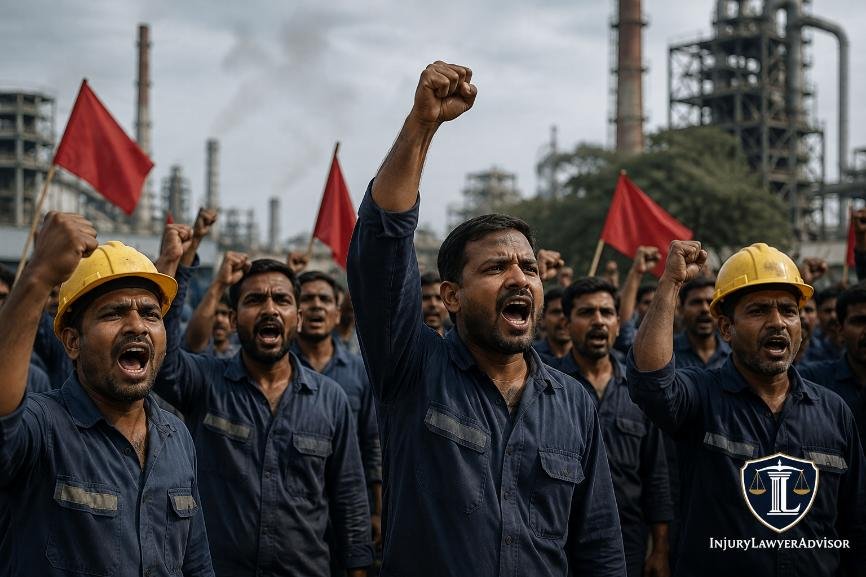
A strike is one of the most significant tools available to workers for expressing collective dissatisfaction with their employer. Under the Industrial Disputes Act, 1947 (India), a strike is recognized as a legitimate form of industrial action, but it is also subject to strict legal conditions. The Act aims to balance the interests of employees, employers, and society by ensuring that industrial disputes are resolved peacefully while preventing unnecessary disruption to production and public welfare.
Understanding the legal framework governing strikes is essential for employees, trade unions, employers, human resource professionals, law students, and business owners. The Industrial Disputes Act defines what constitutes a strike, specifies when it is lawful or unlawful, outlines procedural requirements, and prescribes penalties for illegal industrial action. This comprehensive guide explains every important aspect of strikes under the Industrial Disputes Act, including legal provisions, procedures, different types of strikes, workers’ rights, employer obligations, judicial interpretations, and practical implications.
Understand the Meaning of a Strike Under the Industrial Disputes Act
Section 2(q) of the Industrial Disputes Act, 1947 defines a strike as a cessation of work by a body of persons employed in any industry acting in combination. It also includes a concerted refusal to continue working or a refusal to accept employment by workers acting together.
This definition highlights three essential elements. First, there must be a group of workers rather than an isolated individual. Second, the stoppage of work must be collective and coordinated. Third, the action must relate to an industrial establishment where an employer and employees share an employment relationship.
A strike is not simply absenteeism or individual misconduct. It is a collective industrial action intended to persuade an employer to address demands relating to wages, working conditions, benefits, safety, promotion, disciplinary action, or other employment-related issues. The law recognizes this distinction because collective bargaining plays an important role in maintaining industrial harmony.
Identify the Essential Elements of a Valid Strike
Several legal requirements determine whether a work stoppage qualifies as a strike under the Act.
The first requirement is collective action. Workers must act together with a common objective rather than individually refusing work for unrelated reasons.
The second requirement is cessation of work. Employees must temporarily stop performing their duties. Partial work stoppages or isolated acts of negligence may not qualify unless they form part of organized industrial action.
The third requirement is a common purpose. Employees generally participate to obtain better employment conditions, challenge management decisions, or resolve an industrial dispute.
Another important element is the existence of an employer-employee relationship. Independent contractors or persons outside the employment relationship cannot claim protection under the Industrial Disputes Act merely because they stop providing services.
Table 1: Essential Elements of a Strike
| Element | Description |
| Collective action | Workers act together |
| Temporary work stoppage | Employees stop performing duties |
| Common objective | Shared industrial demand |
| Employer-employee relationship | Workers are employed in an industry |
| Industrial dispute | Usually connected with employment issues |
Follow the Legal Procedure Before Calling a Strike
The Industrial Disputes Act establishes procedural safeguards before workers may legally resort to a strike. These safeguards are especially strict for public utility services.
Employees working in public utility services cannot commence a strike without giving prior notice to the employer. The notice period provides an opportunity for negotiations and possible settlement before production or essential public services are interrupted.
Workers must also avoid commencing a strike during ongoing conciliation proceedings. The law encourages parties to participate sincerely in dispute resolution before adopting economic pressure through industrial action.
Failure to comply with statutory procedures can render an otherwise legitimate strike unlawful. Consequently, trade unions generally seek legal advice before issuing strike notices.
Comply With Special Rules for Public Utility Services
Public utility services receive special treatment because interruptions may seriously affect public welfare.
Examples include services relating to:
- Water supply
- Electricity
- Postal services
- Railways
- Air transport
- Public health services
- Telecommunications (where notified)
- Essential government-notified industries
Employees in these sectors must give advance notice before commencing a strike. They cannot strike:
- Without giving the prescribed notice.
- Within the notice period.
- Before the specified strike date.
- During conciliation proceedings.
- For a specified period after conciliation concludes.
These restrictions ensure continuity of essential public services while preserving employees’ rights to collective bargaining.
Distinguish Between Legal and Illegal Strikes
A strike becomes lawful when workers satisfy all statutory requirements and do not violate prohibitory provisions under the Industrial Disputes Act.
Conversely, a strike becomes illegal if it violates statutory restrictions, ignores mandatory notice requirements, or continues during legally protected dispute resolution proceedings.
Table 2: Legal Strike vs Illegal Strike
| Basis | Legal Strike | Illegal Strike |
| Notice | Given where required | Not given |
| Timing | Complies with law | Violates restrictions |
| Conciliation | Not during prohibited period | Conducted during prohibited period |
| Court orders | Respected | Ignored |
| Legal protection | Available | Limited or unavailable |
| Penalties | Generally none | Possible punishment under the Act |
A lawful strike enjoys statutory recognition, whereas an illegal strike may expose workers and unions to disciplinary measures, financial consequences, and legal penalties.
Recognize Different Types of Strikes
Industrial relations have developed several forms of strikes depending on the objective and method adopted by workers.
General Strike
Employees across multiple departments or industries collectively suspend work to support common demands.
Token Strike
Workers stop work for a short period, often a few hours or one day, to demonstrate dissatisfaction while allowing future negotiations.
Sit-Down Strike
Employees remain inside the workplace but refuse to perform their duties.
Pen-Down Strike
Common among office employees, workers attend the workplace but refuse to carry out official work.
Tool-Down Strike
Industrial workers stop operating machinery while remaining present at the workplace.
Go-Slow
Workers deliberately reduce productivity instead of completely stopping work.
Sympathy Strike
Employees support workers from another organization or industry by participating in industrial action.
Each form has distinct legal implications. Courts often examine the facts rather than the label assigned by participants.
Prepare Valid Grounds for Calling a Strike
Employees generally resort to strikes after negotiations fail.
Common grounds include:
- Low wages
- Delay in salary payments
- Poor working conditions
- Unsafe workplace
- Excessive workload
- Retrenchment
- Unfair dismissal
- Discrimination
- Denial of statutory benefits
- Refusal to recognize a trade union
- Violation of service conditions
Industrial action is typically considered the last step after dialogue, collective bargaining, and conciliation fail to produce a satisfactory resolution.
Understand the Rights of Employees During a Strike
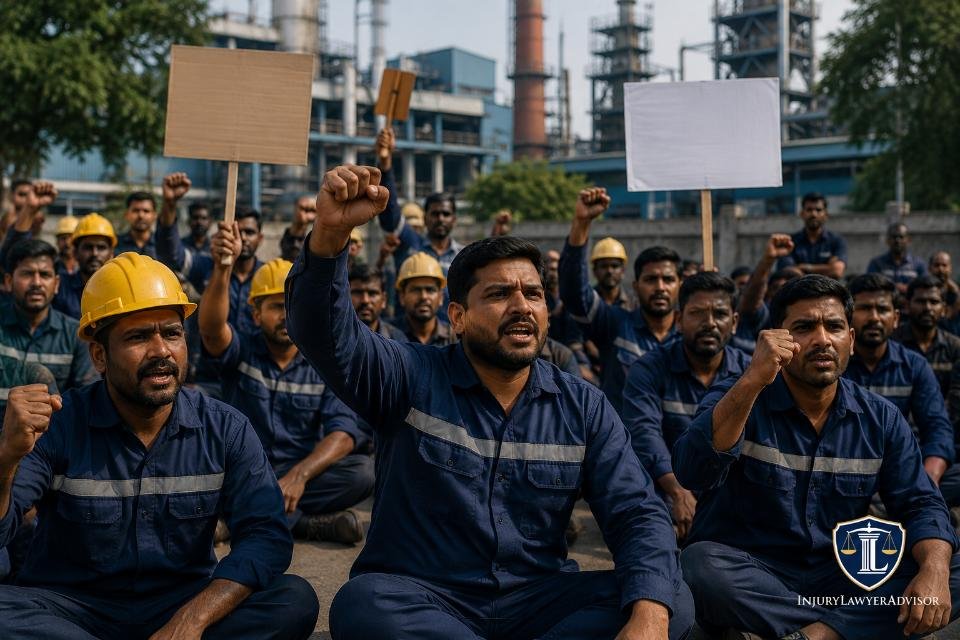

Employees possess several legal rights even when participating in collective industrial action.
Workers may organize collectively through registered trade unions. They may negotiate with employers regarding employment conditions and participate in lawful strikes subject to statutory restrictions.
However, participation in an illegal strike may reduce available legal protections. Courts have consistently held that the right to strike is not an absolute fundamental right under the Constitution, although peaceful collective bargaining remains an important component of industrial democracy.
Employees should therefore ensure procedural compliance before initiating industrial action.
Fulfill the Responsibilities of Trade Unions
Trade unions play an essential role in organizing lawful industrial action.
Union leaders must:
- Conduct negotiations with management.
- Issue proper strike notices.
- Educ-ate members regarding legal requirements.
- Encourage peaceful demonstrations.
- Participate in conciliation proceedings.
- Avoid unlawful coercion or violence.
- Maintain discipline among workers.
Responsible union leadership often prevents disputes from escalating into prolonged industrial conflict.
Respond to a Strike as an Employer
Employers also possess legal rights and responsibilities when confronted with industrial action.
Management should first determine whether the strike complies with statutory requirements. Employers may participate in conciliation proceedings, negotiate with employee representatives, or seek legal remedies where necessary.
Rather than immediately imposing disciplinary measures, many organizations attempt settlement through mediation, collective bargaining, or government intervention. Early communication frequently reduces financial losses and restores industrial peace more quickly.
Employers must also ensure that any response remains proportionate and consistent with applicable labour laws and employment contracts.
Examine the Consequences of Illegal Strikes
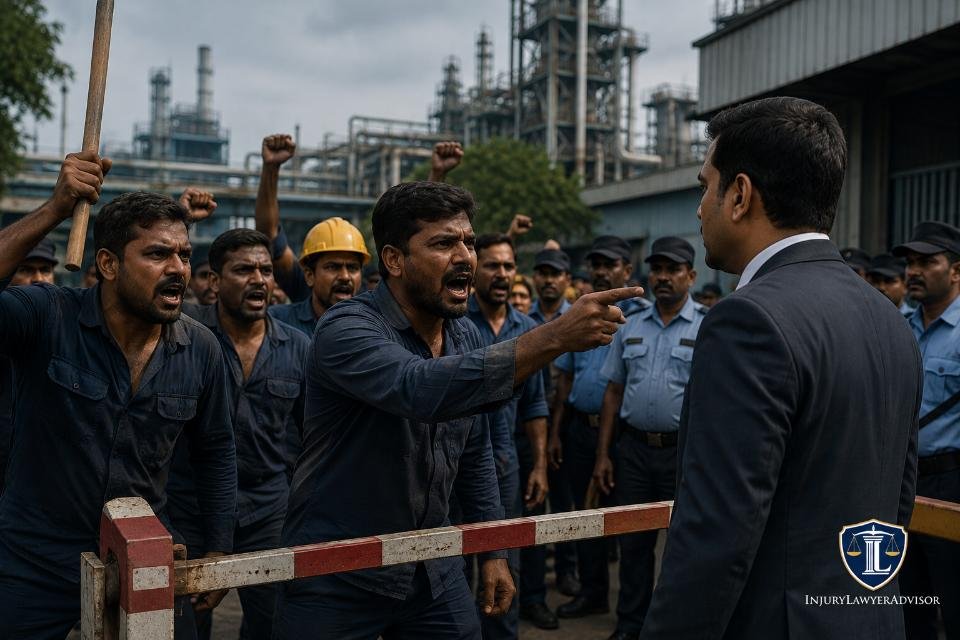
Illegal strikes may produce significant legal and financial consequences for workers, employers, and trade unions.
Employees participating in unlawful industrial action may face wage deductions based on the principle of “no work, no pay.” Depending on the circumstances, disciplinary proceedings may also be initiated in accordance with service rules and applicable law.
Trade unions that encourage illegal strikes may encounter legal challenges, reputational harm, and weakened bargaining positions. Employers may suffer production losses, delayed deliveries, customer dissatisfaction, and financial damage.
The wider economy can also be affected through disruptions in supply chains, reduced productivity, and diminished investor confidence, particularly when strikes occur in critical industries.
Resolve Industrial Disputes Before Resorting to a Strike
The Industrial Disputes Act encourages peaceful settlement mechanisms before workers cease work.
Important dispute resolution methods include:
- Collective bargaining
- Conciliation
- Mediation
- Arbitration
- Labour Courts
- Industrial Tribunals
- National Tribunals
These mechanisms aim to balance employee rights with uninterrupted industrial production. Successful negotiations often produce mutually beneficial solutions while avoiding prolonged disputes and litigation.
Employers and employees who actively participate in these processes are more likely to preserve long-term working relationships and organizational stability.
Review Important Judicial Principles on Strikes
Indian courts have repeatedly emphasized that the right to strike is subject to statutory regulation. Judicial decisions distinguish between the freedom of association enjoyed by workers and the legality of stopping work.
Courts generally examine factors such as compliance with procedural requirements, the conduct of employees during the strike, the existence of conciliation or adjudication proceedings, and whether the action disrupted essential public services. Peaceful industrial action that complies with the law is treated differently from strikes involving violence, intimidation, or deliberate destruction of property.
These judicial principles reinforce the objective of the Industrial Disputes Act, which seeks to protect legitimate collective bargaining while maintaining industrial peace and public interest.
Compare Strike and Lockout
A strike represents industrial action initiated by employees, while a lockout is an action taken by an employer. Both are regulated under the Industrial Disputes Act because each can significantly affect industrial relations.
| Feature | Strike | Lockout |
| Initiated by | Employees or trade unions | Employer |
| Purpose | Press employment-related demands | Pressure employees during a dispute |
| Nature | Workers stop work | Employer closes workplace or suspends work |
| Legal regulation | Governed by statutory conditions | Governed by statutory conditions |
| Impact | Production stops due to workers | Production stops due to employer |
Understanding the distinction helps both employers and employees evaluate their legal rights and responsibilities during industrial disputes.
Maintain Industrial Harmony Through Preventive Measures
Preventing industrial disputes is often more effective than resolving them after a strike begins.
Organizations can reduce the likelihood of strikes by promoting transparent communication, fair wage structures, timely grievance redressal, safe working conditions, regular consultations with employee representatives, and effective collective bargaining. Training supervisors in conflict management and maintaining compliance with labour laws also contributes to healthier workplace relations.
Employees benefit when management addresses concerns promptly, while employers gain through improved productivity, reduced absenteeism, and stronger organizational commitment. A culture of trust and dialogue remains the most sustainable foundation for industrial harmony.
Conclusion
A strike under the Industrial Disputes Act, 1947 is a legally recognized form of collective action that enables employees to press employment-related demands. However, the Act carefully regulates this right by prescribing procedural requirements, notice obligations, and restrictions designed to protect industrial peace and the public interest. Workers, trade unions, and employers all have defined rights and responsibilities, and compliance with the statutory framework is essential to ensure that industrial action remains lawful.
Understanding the distinction between legal and illegal strikes, following prescribed procedures, participating in dispute resolution mechanisms, and encouraging constructive negotiations can significantly reduce industrial conflict. Ultimately, the Industrial Disputes Act seeks not merely to regulate strikes but to foster balanced labour relations that support both employee welfare and sustainable industrial growth.


