




An unauthorized bank transaction lawyer can help when fraudulent transfers cause financial loss and the bank refuses or fails to resolve the dispute. Legal assistance may be especially useful for large losses, repeated unauthorized transactions, or disputes over whether a transaction was actually authorized.
What Counts as an Unauthorized Bank Transaction?
Under Regulation E, an unauthorized electronic fund transfer generally involves money taken from a consumer’s account by someone other than the consumer, without actual authority, where the consumer receives no benefit from the transfer. The rule can apply to transactions such as debit card purchases, ATM withdrawals, certain online transfers, and electronic payments.
Common examples include:
- A stolen debit card used to make purchases.
- ATM withdrawals made after someone obtains your card and PIN.
- Electronic transfers initiated after account credentials are stolen.
- Fraudulent transactions resulting from phishing or account takeover.
- Recurring electronic debits that you never authorized.
- Transactions initiated by someone who obtained access credentials through fraud or robbery.
A disputed transaction is not automatically an unauthorized transaction under federal law. For example, if you voluntarily gave another person access to your debit card or account and allowed that person to make transactions, some later transactions may be treated differently. Regulation E specifically contains exceptions involving people who were furnished an access device by the consumer.
This distinction can become a major issue when banks deny claims involving relatives, employees, caregivers, acquaintances, or people who previously had permission to access the account.
When Should You Contact an Unauthorized Bank Transaction Lawyer?
You may want legal advice when the bank’s internal dispute process no longer appears capable of resolving the problem fairly.
A lawyer may be especially useful when:
| Situation | Why Legal Help May Matter |
| The bank denied a large fraud claim | An attorney can assess whether federal or state law supports the denial |
| Multiple unauthorized transfers occurred | Different notice deadlines and liability periods may apply |
| The bank claims you authorized the transaction | Evidence about authentication and actual authority may become important |
| The bank refuses provisional credit | The investigation procedure may need closer review |
| Your account was drained through account takeover | The case may involve numerous transfers and substantial damages |
| The bank ignored documents or evidence | An attorney can evaluate whether the investigation complied with applicable law |
| Business and personal funds are involved | Consumer protection laws may not apply equally to every account |
| A lawsuit or arbitration is being considered | Contract terms, damages, deadlines, and available claims must be evaluated |
Legal representation tends to make more economic sense when the amount at issue is substantial or when the bank’s decision creates additional losses, such as missed rent, overdraft charges, returned payments, or business disruption.
For a small isolated transaction, the bank’s dispute procedure or a regulatory complaint may be more practical than hiring an attorney.
Report the Transaction to Your Bank Immediately
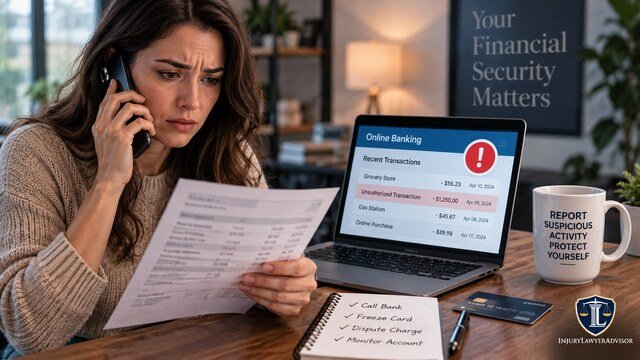

Speed matters after discovering unauthorized activity.
For certain unauthorized debit card transactions involving a lost or stolen access device, Regulation E can limit consumer liability when the loss or theft is reported promptly. If the consumer notifies the financial institution within two business days after learning of the loss or theft, liability generally cannot exceed the lesser of $50 or the amount of unauthorized transfers made before notice.
Waiting longer can increase potential liability. CFPB guidance that a consumer who reports a lost or stolen debit card after two business days could potentially be responsible for as much as $500, depending on the circumstances.
A separate rule concerns transactions appearing on periodic statements. Consumers generally should notify the bank within 60 days after the institution sends the statement containing the unauthorized transfer. Failure to report within that period can expose the consumer to liability for certain later unauthorized transactions that could have been prevented by timely notice.
The safest approach is simple: report suspicious activity as soon as you discover it rather than waiting for a deadline.
What Happens After You Dispute an Unauthorized Transaction?
For many errors covered by Regulation E, a bank or credit union generally has 10 business days to investigate after receiving notice. If the institution determines that an error occurred, CFPB guidance states that it generally must correct the error within one business day and report the results to the consumer within three business days.
Some investigations can take longer if the financial institution follows procedures that include provisionally crediting the disputed amount while completing the investigation.
An investigation may examine:
- Login records.
- Device identifiers.
- IP addresses.
- ATM or merchant information.
- PIN authentication.
- One-time security codes.
- Transaction history.
- Customer communications.
- Changes to passwords or contact information.
- Whether the account holder benefited from the transaction.
- Whether another person previously had authority to access the account.
A denial does not necessarily mean the bank’s conclusion is legally correct. The question is whether the evidence and applicable rules actually support that conclusion.
Why Banks Deny Unauthorized Transaction Claims
Banks may deny disputes for several reasons. Some are legitimate. Others may warrant closer examination.
A bank might conclude that the transaction was authorized because the correct password, PIN, device, or security code was used. But successful authentication does not always answer the legal question of who actually initiated or authorized the transfer.
For example, a fraudster who tricks a consumer into revealing credentials may technically use valid authentication information. Whether the resulting transaction receives Regulation E protection can depend on the precise facts and the way the transfer occurred.
Banks may also deny claims because:
- The consumer reported the transaction late.
- The bank believes a household member made the transaction.
- The customer previously allowed the person to use the account.
- The transaction originated from a familiar device.
- The consumer allegedly benefited from the transaction.
- The bank believes the dispute involves a merchant disagreement rather than unauthorized access.
- The institution believes the consumer participated in the transaction.
These cases often turn on details rather than the dollar amount alone.
Evidence to Gather Before Speaking With a Lawyer
A lawyer can evaluate a dispute more effectively when the transaction history and communication record are organized.
Gather copies of:
- Bank statements showing each disputed transaction.
- Transaction confirmation emails or text alerts.
- Fraud notifications from the bank.
- Written dispute submissions.
- Claim numbers.
- Bank denial letters.
- Records of phone calls with bank representatives.
- Screenshots of suspicious account activity.
- Police or identity theft reports, if applicable.
- Emails, text messages, or messages connected to the fraud.
- Evidence showing where you were when the transaction occurred.
- Records of password or contact-information changes.
- Documentation of related losses and fees.
Create a simple timeline showing when the transaction occurred, when you discovered it, when you notified the bank, and how the institution responded.
That timeline can be especially important because federal protections may depend on reporting dates.
Regulation E and Unauthorized Electronic Transfers
The Electronic Fund Transfer Act and Regulation E establish consumer protections for covered electronic transfers. Regulation E includes rules concerning unauthorized transfers, consumer liability, disclosures, and error resolution.
One important point is that consumer negligence by itself does not automatically increase liability beyond Regulation E’s permitted limits. CFPB’s official interpretation specifically explains that conduct such as writing a PIN on a debit card does not independently allow a bank to impose greater liability than Regulation E permits.
That does not mean every fraud loss must be reimbursed. The transaction must fall within the law’s coverage, and exceptions can apply.
Consumer checking accounts and personal debit transactions are also different from many commercial accounts. Business accounts may be governed by other laws, contracts, security procedures, and Uniform Commercial Code provisions. A business owner dealing with unauthorized wire transfers should therefore seek advice tailored to commercial banking law rather than assuming Regulation E applies.
Debit Card Fraud and Credit Card Fraud Are Different
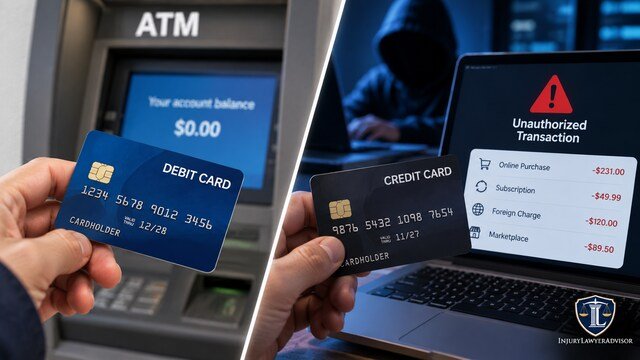
Consumers often describe every suspicious transaction as “bank fraud,” but the legal rules vary depending on the payment method.
Debit card and other qualifying electronic transfers are generally governed by Regulation E. Credit card unauthorized-use rules generally fall under Regulation Z and the Fair Credit Billing Act framework.
For unauthorized credit card use, federal rules generally limit a cardholder’s liability to the lesser of $50 or the amount obtained through unauthorized use before the issuer is notified, assuming the applicable conditions are satisfied. If only the account number was stolen and the card itself was not lost, CFPB guidance states that consumers generally have no liability for unauthorized use.
Billing disputes also carry notice requirements. CFPB guidance recommends contacting the card company immediately and sending a written billing-error notice within 60 calendar days after the disputed charge appears on the statement to preserve applicable billing-error rights.
This distinction matters because an attorney evaluating a case needs to identify the payment system first.
Can You Sue a Bank for Failing to Refund Fraudulent Transactions?
Potentially, but a rejected fraud claim does not automatically create a successful lawsuit.
A lawyer must first determine what law applies, whether the bank complied with its statutory obligations, what evidence supports the consumer’s position, what damages resulted, and whether the account agreement requires arbitration instead of court litigation.
Possible disputes may concern:
- Failure to properly investigate a Regulation E error notice.
- Improper allocation of liability for unauthorized transfers.
- Failure to provide required provisional credit when applicable.
- Breach of account agreements.
- State consumer protection claims.
- Negligence or other state-law theories, where legally available.
- Improper handling of identity theft or account takeover.
The available causes of action vary significantly by transaction type and jurisdiction.
A lawsuit may also be unnecessary. Some disputes can be resolved through escalation with the bank, a regulatory complaint, mediation, arbitration, or attorney correspondence.
What Can an Unauthorized Bank Transaction Lawyer Do?
A lawyer does more than send a demand letter.
The attorney may examine whether the transaction falls within Regulation E, Regulation Z, state law, commercial banking rules, or another legal framework. The lawyer can also compare the bank’s investigation records with the applicable requirements.
Depending on the case, legal work may include:
- Reviewing statements and transaction records.
- Identifying reporting deadlines.
- Determining whether the transaction was legally unauthorized.
- Requesting relevant bank records.
- Challenging the bank’s denial.
- Calculating direct and consequential losses where legally recoverable.
- Filing regulatory complaints.
- Negotiating a settlement.
- Handling arbitration.
- Filing a lawsuit where appropriate.
An attorney may be particularly valuable when a bank relies heavily on evidence showing that a valid password or PIN was used. Authentication evidence can be relevant, but it may not prove that the account holder personally authorized the transfer.
How Much Does an Unauthorized Transaction Lawyer Cost?
There is no universal fee.
Lawyers may charge:
- An hourly rate.
- A flat fee for reviewing a claim or sending a demand letter.
- A contingency fee based on recovery.
- A hybrid arrangement involving both fixed and contingent fees.
The structure depends on the amount in dispute, complexity of the transactions, potential legal claims, jurisdiction, and whether litigation is expected.
Before hiring counsel, ask what work the fee covers, whether litigation expenses are separate, and whether the attorney has handled electronic fund transfer or banking disputes before.
For a modest loss, paying thousands of dollars in legal fees may not be economically sensible unless attorney fees are potentially recoverable under the applicable law.
Steps to Take After Discovering Bank Fraud
A strong response usually follows this sequence:
Contact the bank immediately. Report every unauthorized transaction and request that compromised cards or access credentials be disabled.
Change account credentials. Replace passwords, PINs, security questions, and compromised devices where appropriate.
Document the dispute. Save confirmation numbers and submit written documentation even when the initial report was made by telephone.
Review earlier transactions. Fraudsters sometimes test an account with a small transaction before attempting larger withdrawals. CFPB guidance specifically warns that small unauthorized charges can precede additional fraudulent activity.
Monitor connected accounts. Check credit cards, payment applications, savings accounts, and any other linked financial services.
Escalate an improper denial. Request the reasoning behind the decision and determine what documentation the bank relied upon.
Consult a lawyer when necessary. Large losses, repeated denials, missed deadlines, complicated authentication disputes, or commercial transfers often justify legal review.
FAQ’s
Do I need a lawyer to dispute an unauthorized bank transaction?
Usually not at the beginning. Consumers can generally report unauthorized transactions directly to their financial institution. A lawyer becomes more useful when the dispute involves substantial losses, a denial, complicated facts, or possible violations of banking law.
Can a bank refuse to refund an unauthorized transaction?
Yes, depending on the circumstances. A bank might determine that the transaction was authorized, excluded from Regulation E, reported too late, or otherwise not covered. A denial can still be challenged if the bank’s reasoning or investigation appears inconsistent with applicable law.
How long do I have to report unauthorized activity?
The deadline depends on the transaction. For lost or stolen debit access devices, reporting within two business days can affect the maximum potential liability. Unauthorized transfers appearing on periodic statements should generally be reported within 60 days after the statement is transmitted.
What if someone used my correct PIN or password?
The use of correct credentials may be evidence considered during an investigation, but it does not necessarily resolve whether you legally authorized the transaction. Fraudsters can obtain valid credentials through theft, phishing, malware, scams, or account takeover.
Does Regulation E cover business bank accounts?
Regulation E principally protects consumers in covered electronic fund transfers. Commercial accounts can involve different legal rules, including account agreements and commercial banking provisions. Business owners should obtain advice specific to commercial transactions.
Can I challenge a bank after it has already denied my fraud claim?
Yes. A denial does not necessarily end the dispute. You may be able to provide additional evidence, request further information, escalate the matter internally, file a regulatory complaint, pursue arbitration, or consult an attorney about available legal remedies.
Conclusion
An unauthorized bank transaction lawyer is most valuable when an unauthorized transfer creates a significant financial loss and the normal bank dispute process fails to resolve it. Federal laws such as the Electronic Fund Transfer Act and Regulation E provide meaningful protections for many consumer transactions, but reporting deadlines, authorization questions, transaction type, and account type can substantially change the outcome.
Report suspicious activity immediately, preserve every piece of evidence, and carefully review any explanation the bank provides for denying your claim. When large sums, repeated fraudulent transfers, disputed authorization, or procedural failures are involved, an attorney familiar with banking and consumer financial law can evaluate whether further action is justified.


