



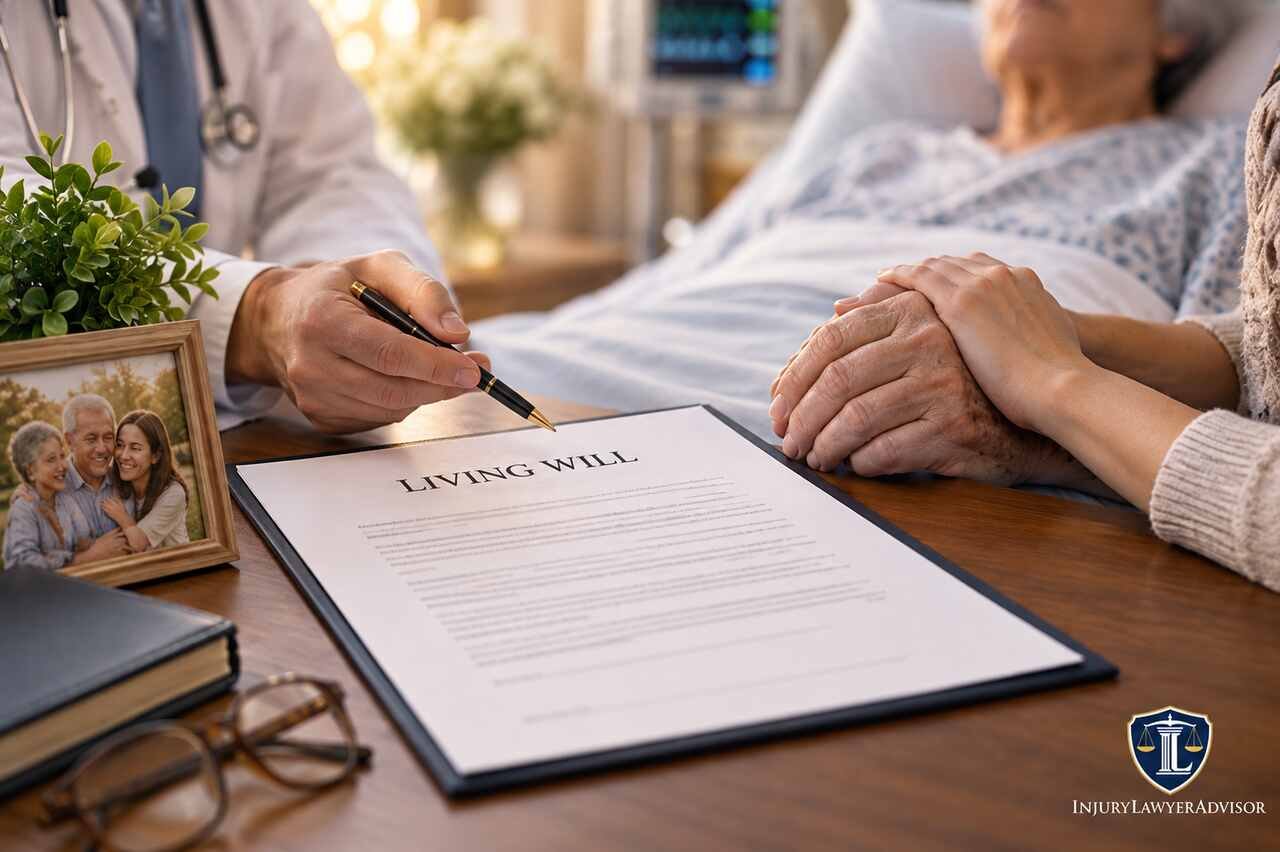
A living will is a legal document that states your medical care preferences if you cannot make or communicate decisions yourself. It helps guide doctors and family members and is different from a last will, which handles property after death.
What Does a Living Will Do?
A living will gives medical professionals written instructions about the care you want if you cannot make medical decisions yourself. Depending on state law and the language of the document, it may apply when you are terminally ill, permanently unconscious, seriously incapacitated, or otherwise unable to communicate your preferences.
The document may address treatments that could keep you alive when recovery is unlikely, but it can also state treatments you want to receive. A living will is therefore not simply a document for refusing medical care.
The National Institute on Aging describes a living will as an advance directive that allows a person to specify common medical treatments they would want or avoid and the circumstances in which those decisions apply.
For example, imagine someone suffers a severe brain injury and cannot communicate. Doctors believe the person may require long-term mechanical ventilation and artificial nutrition. If that person previously completed a valid living will addressing these circumstances, the medical team and family have written guidance about the person’s preferences rather than having to guess.
What Medical Decisions Can a Living Will Cover?
The exact options depend on the form and state law, but living wills commonly address life-sustaining and end-of-life treatments.
MedlinePlus notes that advance directives may address CPR, feeding through a tube or IV, extended use of a breathing machine, medicines, surgery, blood transfusions, and other medical interventions.
Typical decisions may include:
| Medical decision | What you may be able to specify |
| Cardiopulmonary resuscitation (CPR) | Whether attempts should be made to restart your heart or breathing |
| Mechanical ventilation | Whether and for how long you would want a breathing machine |
| Artificial nutrition | Whether you would want feeding through a tube |
| Artificial hydration | Whether fluids should be provided through an IV |
| Dialysis | Whether you would want treatment replacing kidney function |
| Medications and procedures | Preferences concerning certain treatments, operations, or medicines |
| Comfort-focused care | Preferences for pain relief and symptom management |
| Organ or tissue donation | Some advance-planning documents allow these wishes to be recorded |
The most useful instructions usually provide context rather than simply checking “yes” or “no.” Someone may accept temporary ventilation when recovery is reasonably expected, for example, but decline prolonged ventilation if physicians determine that meaningful recovery is extremely unlikely.
Discussing these scenarios with a physician can help you understand what different treatments actually involve before recording your choices.
When Does a Living Will Take Effect?
A living will generally becomes relevant when you cannot make or communicate your own medical decisions. As long as you retain decision-making capacity, your current decisions ordinarily take priority over instructions written for a future period of incapacity.
The precise activation requirements depend on the state and the document. Some state forms focus specifically on terminal illness or permanent unconsciousness. Others operate within broader advance-directive laws.
Because these requirements differ, using a form designed for your state is important. The National Institute on Aging recommends checking that any advance-directive form obtained online is legally recognized where you live.
This distinction also explains why a living will is not simply a general authorization for another person to control your health care. It records your own instructions. A separate health care power of attorney typically appoints another person to make decisions when you cannot.
Living Will vs. Health Care Power of Attorney


A living will and a health care power of attorney are closely related, but they perform different jobs.
A living will gives instructions. A durable power of attorney for health care appoints a decision-maker, often called a health care proxy, agent, representative, or surrogate.
Suppose your living will says you do not want prolonged life support if you have an irreversible condition. That instruction can guide doctors and your family. But an unexpected medical situation may arise that the document never anticipated. A health care proxy can discuss the situation with physicians and make a decision based on your known wishes and values.
The National Institute on Aging explains that a proxy may be appointed in addition to or instead of a living will. The proxy becomes especially useful when unforeseen situations arise.
For many people, having both provides broader protection: the living will records specific preferences, while the proxy can respond to circumstances the document does not address.
A Living Will Is Not the Same as a Last Will
The similar names cause considerable confusion.
A last will and testament explains how property and other matters should be handled after a person’s death. A living will concerns medical treatment while the person is still alive.
A living will generally does not decide who receives your house, savings, investments, personal belongings, or other assets. It also does not replace estate-planning documents.
Likewise, a traditional financial power of attorney is different from a health care power of attorney. Giving someone authority to manage your bank account does not necessarily give that person authority to make medical decisions.
Keeping these documents clearly organized can prevent family members from searching through unrelated financial or estate papers during a medical emergency.
Living Will vs. DNR and POLST


A living will should also not be confused with a do-not-resuscitate order (DNR).
A DNR is a medical order telling health professionals not to attempt CPR if the person’s breathing or heartbeat stops. Although a living will may state that a person does not want CPR under specified circumstances, the National Institute on Aging notes that having a DNR order in the medical record can provide clearer instructions in a hospital or nursing facility.
A POLST, sometimes called MOLST or another state-specific name, is also different. These forms are medical orders generally intended for people who are seriously ill, medically frail, or approaching the end of life. They translate treatment preferences into orders health professionals can act on more directly in an emergency. Availability and terminology vary by state.
A healthy adult may reasonably create an advance directive decades before needing intensive medical care. A POLST is usually considered later when a person’s medical condition makes specific treatment decisions more immediate.
Who Should Have a Living Will?
Advance care planning is not limited to older adults or people with terminal illnesses. An unexpected accident, stroke, severe infection, brain injury, or other medical event can leave an adult temporarily or permanently unable to communicate.
The National Institute on Aging specifically identifies the idea that advance care planning is needed only by older or seriously ill people as a myth, noting that emergencies can happen at any age.
A living will can be especially worth considering if you have strong preferences about life-sustaining treatment, have a serious or progressive medical condition, want to reduce uncertainty for relatives, or believe family members might disagree about your care.
It can also be useful for unmarried partners. Without appropriate advance-planning documents, state law may determine who has authority to participate in decisions when a patient cannot decide for themselves. The legally recognized decision-maker may not necessarily be the person the patient would have chosen.
How to Make a Living Will
The safest process begins with your state’s requirements rather than a generic form.
First, think about what matters to you beyond individual treatments. Consider whether you would prioritize living as long as medically possible, independence, the ability to communicate, relief from suffering, time with family, or other personal values.
Next, discuss realistic medical scenarios with a physician. Terms such as ventilation, artificial nutrition, CPR, dialysis, and comfort care can be difficult to evaluate without understanding what they involve and when they might offer meaningful benefit.
Then obtain an advance-directive or living-will form recognized in your state. States may impose requirements concerning signatures, witnesses, notarization, who may act as a witness, or other formalities. Do not assume that requirements are identical nationwide.
After signing the document correctly, distribute copies. Your health care proxy, physician, close relatives, and anyone likely to become involved during an emergency should know that the document exists and where to find it.
A perfectly written living will stored somewhere nobody can access may provide little practical help during an emergency.
Should You Hire a Lawyer?
You do not necessarily need an attorney merely to create an advance care plan. The National Institute on Aging notes that most states provide free advance-directive forms and that a lawyer is not required simply to complete advance planning.
Legal advice can still be valuable when your situation is complicated. You may want professional guidance if you maintain homes in multiple states, state forms are unclear, family conflict is likely, or you want your medical directives coordinated with broader estate and incapacity planning.
A physician can answer a different set of questions. Lawyers help with legal validity and document structure, while health care professionals can explain the likely effects of medical treatments. Some people benefit from speaking with both.
What Happens If You Do Not Have a Living Will?
Lack of a living will does not mean doctors automatically stop treating you. It means there may be less direct evidence of what you would have wanted if you become incapable of deciding for yourself.
State law may determine who can make decisions on your behalf. Depending on the jurisdiction and circumstances, that might be a spouse, adult child, parent, another relative, or another legally recognized surrogate.
The problem is not necessarily that family members do not care. They may genuinely disagree about your wishes.
One relative may believe you would want every available treatment. Another may believe you would prioritize comfort if recovery were unlikely. Written instructions and conversations held before a crisis can give everyone a clearer reference point.
Review and Update Your Living Will
A living will should not be treated as a document you sign once and forget.
Preferences can change after a new diagnosis, marriage, divorce, death in the family, major surgery, relocation, or personal experience with serious illness. Moving to another state can also justify reviewing your paperwork because legal requirements vary.
The National Institute on Aging recommends reviewing advance directives at least annually and after significant life changes.
When you replace an old document, make sure the people holding copies know about the change. Your medical team and health care proxy should have the current version rather than relying on outdated instructions.
FAQ’s
Can a living will be changed?
Yes. Advance directives can generally be changed while you retain the legal capacity to make your own decisions. Follow your state’s procedures, replace outdated copies, and notify your health care providers and proxy when you make changes.
Does a living will mean doctors will not treat me?
No. A living will can request treatment as well as decline particular interventions. Its purpose is to communicate your preferences under specified circumstances, not automatically to stop medical care.
Can my family override my living will?
The answer depends on state law, the document, your medical circumstances, and whether the instructions clearly apply. A valid directive provides important evidence of your wishes, but difficult or unforeseen situations can still arise. Clear conversations with family and a health care proxy can reduce uncertainty.
Is a living will valid in every state?
Advance directives are recognized throughout the United States, but requirements and terminology vary. If you move or spend substantial time in another state, review your documents with an appropriate professional and confirm that they comply with applicable state law.
Where should I keep my living will?
Keep the original somewhere accessible rather than in a location that may be difficult to reach during an emergency. Give copies to your health care proxy, physicians, and appropriate family members. Some states also maintain advance-directive registries.
Conclusion
So, what is a living will? It is a written legal directive explaining the medical treatment you want or do not want if you become unable to make or communicate those decisions yourself.
Its greatest value is clarity. A living will can give doctors specific guidance, help a health care proxy understand your preferences, and reduce the burden on family members who might otherwise have to guess.
Because living-will laws and required forms vary by state, use documents recognized where you live and follow the applicable signing or witnessing requirements. Combine the paperwork with conversations about your values, medical preferences, and choice of health care decision-maker. Those conversations can make the written instructions far more useful when an unexpected medical decision arises.


