


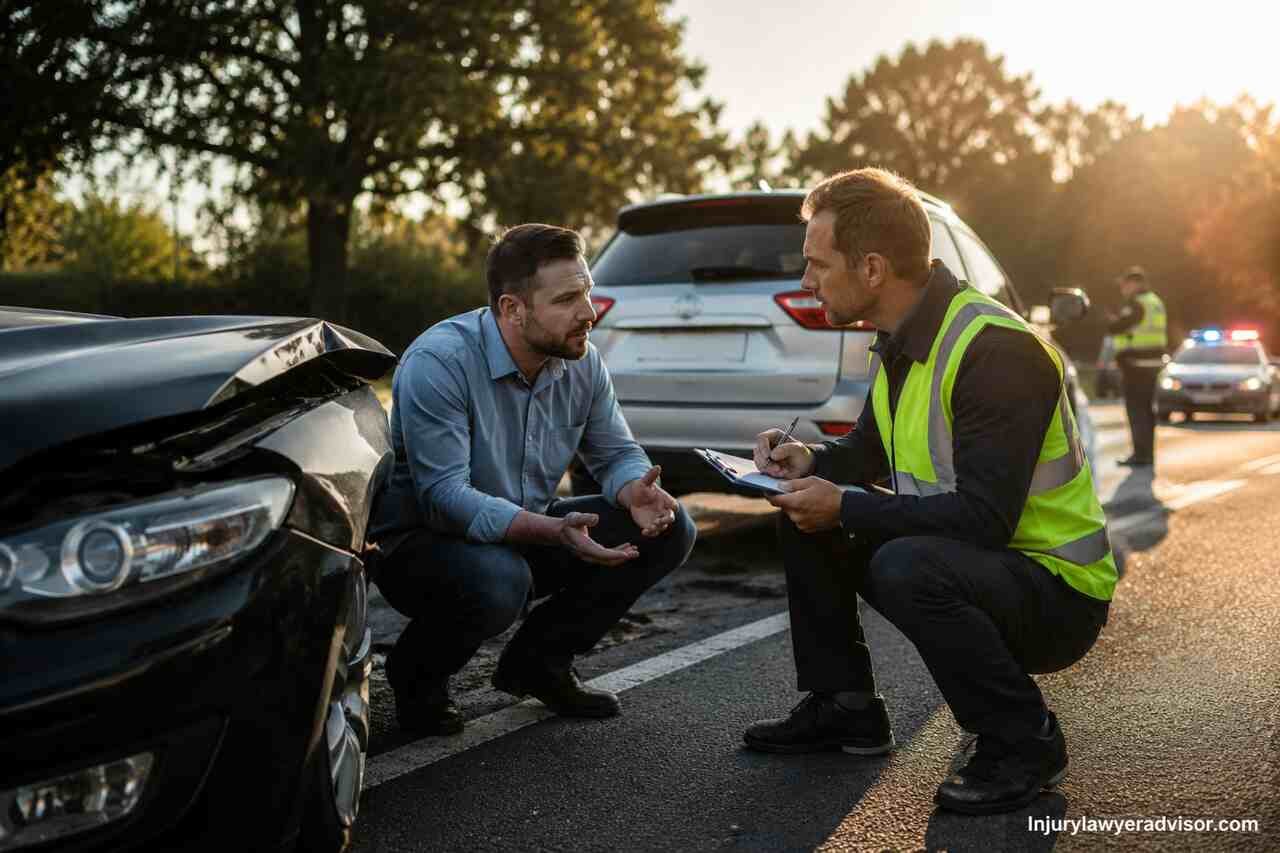
Accident damages are usually paid by the at-fault driver’s insurance company, although payment responsibility can also involve vehicle owners, employers, rideshare companies, government entities, uninsured motorist coverage providers, and courts depending on negligence, policy limits, and state liability laws. Personal injury claims, property damage claims, medical payments coverage, comparative negligence rules, and settlement negotiations all influence financial responsibility after a collision.
| Accident Scenario | Primary Paying Party | Secondary Financial Source | Common Claim Type |
| Rear-end collision | At-fault driver’s insurer | Driver personally | Property damage claim |
| Multi-vehicle accident | Multiple insurers | Comparative negligence allocation | Bodily injury claim |
| Hit-and-run crash | Victim’s uninsured motorist coverage | Collision coverage | UM/UIM claim |
| Commercial truck accident | Trucking company insurer | Cargo company or maintenance contractor | Commercial liability claim |
| Rideshare accident | Rideshare insurance policy | Driver’s personal insurance | Third-party liability claim |
| Government vehicle collision | Government agency | Municipal insurance fund | Tort claim |
| Uninsured driver accident | Victim’s uninsured motorist insurer | Lawsuit against driver | UM coverage claim |
| Defective vehicle accident | Vehicle manufacturer | Parts supplier | Product liability claim |
Why Does Financial Responsibility Matter After an Accident?
Financial responsibility determines who pays for medical expenses, vehicle repairs, lost wages, rehabilitation costs, emotional suffering, and legal damages after a collision. Insurance policies, negligence laws, liability investigations, and court decisions all shape compensation outcomes. Drivers, passengers, pedestrians, cyclists, businesses, and property owners all need a clear understanding of liability because accident costs can quickly become financially devastating.
Accident claims also involve legal obligations between insurers, injured parties, law enforcement agencies, healthcare providers, and attorneys. Insurance adjusters evaluate evidence, while courts review negligence standards when settlement negotiations fail. Fault allocation affects compensation percentages, policy payouts, and long-term financial exposure.
Who Usually Pays for Damages After a Car Accident?
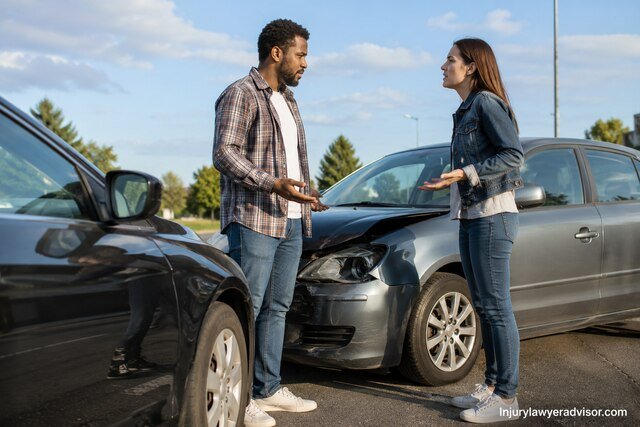

The at-fault driver’s insurance company usually pays for damages after a car accident. Liability insurance exists to compensate injured parties for bodily injuries, vehicle repairs, medical treatment, and related losses caused by negligence.
Insurance carriers investigate police reports, witness statements, medical records, repair invoices, traffic camera footage, and accident reconstruction evidence before approving compensation. State laws also determine whether a fault-based system or no-fault system applies.
Liability Insurance
Liability insurance covers bodily injury and property damage caused by the policyholder. Bodily injury liability usually pays for hospital bills, rehabilitation costs, pain and suffering, lost income, and legal defense expenses. Property damage liability typically covers vehicle repair costs, replacement expenses, fences, buildings, utility poles, and other damaged property.
Policy limits control maximum payouts. A driver carrying $50,000 in bodily injury coverage cannot rely on insurance to pay damages exceeding policy limits without personal financial exposure.
Collision Coverage
Collision coverage pays for the policyholder’s vehicle damage regardless of fault. Vehicle owners often use collision coverage for faster repairs while insurers pursue reimbursement through subrogation.
Collision claims generally require deductibles. Deductible amounts are later recoverable in some situations if the insurer successfully proves another driver caused the accident.
Medical Payments Coverage
Medical payments coverage, often called MedPay, pays immediate healthcare expenses after a crash. Emergency transportation, X-rays, surgical procedures, physician consultations, and rehabilitation sessions are commonly covered.
Medical payments coverage operates independently from fault determination in many jurisdictions. Fast medical reimbursement helps injured individuals avoid treatment delays.
Uninsured and Underinsured Motorist Coverage
Uninsured motorist coverage protects drivers injured by uninsured motorists, while underinsured motorist coverage supplements compensation when the at-fault driver’s policy limits are insufficient.
Many severe injury cases involve damages exceeding minimum liability limits. Underinsured motorist policies reduce financial risk for families facing catastrophic injuries.
How Does Fault Determine Who Pays?
Fault determines financial responsibility by identifying which party acted negligently before the collision. Negligence refers to failure to exercise reasonable care while operating a vehicle, maintaining property, or following safety regulations.
Courts and insurers analyze duty of care, breach of duty, causation, and damages when evaluating liability. Traffic violations, distracted driving, speeding, intoxication, reckless lane changes, and failure to yield frequently establish negligence.
| Fault Factor | Description | Impact on Compensation |
| Distracted driving | Mobile phone use or inattention | Increases liability percentage |
| Speeding | Exceeding speed limits | Supports negligence claims |
| Driving under influence | Alcohol or drug impairment | May trigger punitive damages |
| Failure to yield | Ignoring traffic rules | Creates primary fault evidence |
| Weather conditions | Rain, fog, or ice | May reduce comparative fault arguments |
| Mechanical failure | Brake or tire malfunction | May shift liability to manufacturers |
| Traffic camera footage | Video evidence | Strengthens claim credibility |
| Witness testimony | Independent observations | Supports fault allocation |
Comparative Negligence
Comparative negligence reduces compensation when injured parties share fault for an accident. A driver found 20% responsible may only recover 80% of total damages.
States follow different comparative negligence models. Pure comparative negligence allows recovery even when a claimant bears most responsibility, while modified comparative negligence restricts recovery beyond specific fault percentages.
Contributory Negligence
Contributory negligence is a stricter legal standard that can completely bar compensation if the injured party contributed to the accident in any measurable way.
Few jurisdictions still use contributory negligence because the doctrine often produces harsh financial outcomes for accident victims.
No-Fault Insurance Systems
No-fault insurance systems require drivers to seek compensation from their own insurers regardless of who caused the crash. Personal injury protection coverage typically handles medical expenses and wage losses.
No-fault systems reduce litigation volume for minor accidents, although severe injury thresholds may still permit lawsuits against negligent parties.
What Damages Are Covered After an Accident?
Accident damages include economic losses, non-economic losses, and occasionally punitive damages. Compensation categories depend on injury severity, negligence evidence, policy terms, and state laws.
Medical Expenses
Medical damages include emergency care, hospitalization, surgeries, prescription medications, diagnostic imaging, physical therapy, rehabilitation services, psychological counseling, and future treatment costs.
Long-term injuries often require life-care planning and ongoing specialist treatment. Severe trauma cases may involve millions of dollars in projected medical expenses.
Property Damage
Property damage compensation covers vehicle repair costs, replacement value, towing fees, storage charges, rental vehicle expenses, and personal property destroyed during the accident.
Insurance adjusters typically evaluate market value, depreciation, repair feasibility, and total loss thresholds.
Lost Wages and Reduced Earning Capacity
Lost income damages compensate victims unable to work during recovery periods. Reduced earning capacity claims address permanent disabilities limiting future employment opportunities.
Vocational experts and economic analysts often calculate long-term financial losses in serious injury lawsuits.
Pain and Suffering
Pain and suffering damages compensate physical discomfort, emotional distress, anxiety, trauma, depression, sleep disruption, and reduced quality of life.
Insurance companies frequently dispute non-economic damages because subjective suffering is harder to quantify than medical invoices.
Punitive Damages
Punitive damages punish reckless or malicious conduct rather than compensate direct losses. Drunk driving accidents, intentional misconduct, and extreme negligence sometimes justify punitive awards.
Punitive damages are generally awarded by courts instead of insurance companies because many policies exclude intentional wrongdoing.
Who Pays in Multi-Vehicle Accidents?
Multiple drivers and insurance carriers may share financial responsibility in chain-reaction crashes and intersection pileups. Liability allocation depends on evidence analysis, collision sequencing, road conditions, and negligent conduct.
Insurance adjusters and accident reconstruction experts examine vehicle damage patterns, braking distances, surveillance footage, black-box data, and eyewitness testimony to determine contribution percentages.
Chain-Reaction Collisions
Chain-reaction accidents often involve rear-end impacts that push multiple vehicles into each other. Leading drivers, trailing drivers, and middle vehicles may all share liability depending on reaction time and following distance.
Comparative negligence rules frequently divide damages proportionally among responsible parties.
Commercial Truck Accidents
Commercial trucking accidents may involve trucking companies, cargo loaders, maintenance contractors, logistics firms, and vehicle manufacturers.
Federal trucking regulations create additional liability considerations involving driver fatigue, maintenance records, hours-of-service violations, and cargo security standards.
Intersection Accidents
Intersection crashes often arise from failure to yield, red-light violations, distracted driving, or improper turns.
Traffic camera recordings and witness testimony become especially important because drivers frequently dispute signal timing and right-of-way responsibilities.
Who Pays for Damages in Rideshare Accidents?
Rideshare accident compensation may involve personal auto insurance, rideshare company insurance policies, and third-party liability coverage depending on driver status during the collision.
Transportation network companies maintain layered insurance structures for periods when drivers are offline, waiting for ride requests, or actively transporting passengers.
Offline Driver Status
Personal auto insurance usually applies when a rideshare driver is not using the rideshare application.
Rideshare companies generally deny coverage during fully offline periods.
Waiting for Ride Requests
Limited rideshare liability coverage often applies once the application is active but no passenger has entered the vehicle.
Coverage limits during waiting periods are typically lower than active-trip coverage limits.
Passenger Transport Period
Higher commercial liability coverage usually applies once passengers enter the vehicle or rides are accepted through the platform.
Passenger injury claims may involve substantial policy limits because rideshare companies anticipate elevated liability exposure during active transportation.
Who Pays if the At-Fault Driver Has No Insurance?
Uninsured drivers create significant financial challenges because direct recovery becomes difficult without liability coverage. Victims often rely on uninsured motorist coverage, collision insurance, lawsuits, and personal asset recovery attempts.
Uninsured Motorist Insurance
Uninsured motorist insurance compensates injured drivers when negligent motorists lack insurance coverage. Medical bills, wage losses, and pain-and-suffering damages may qualify under uninsured motorist policies.
Policyholders benefit from uninsured motorist protection because uninsured driving rates remain high in many regions.
Personal Lawsuits Against Uninsured Drivers
Victims may file lawsuits directly against uninsured drivers to recover damages. Successful judgments can result in wage garnishments, property liens, or bank account seizures.
Collection efforts are often difficult because uninsured drivers frequently lack substantial assets.
State Compensation Programs
Some jurisdictions maintain victim compensation programs or uninsured motorist funds for specific accident situations.
Government-administered compensation systems usually involve strict eligibility requirements and claim deadlines.
How Do Insurance Companies Decide Payout Amounts?
Insurance companies calculate payouts using policy terms, liability assessments, medical evaluations, repair estimates, expert opinions, and negotiation strategies.
Claims adjusters review photographs, invoices, treatment records, wage documentation, and accident reports before determining settlement values.
Claims Investigation
Claims investigations verify accident details, fault allocation, injury severity, and policy applicability.
Investigators often interview witnesses, inspect vehicles, analyze surveillance footage, and review cellular records in disputed cases.
Settlement Negotiations
Settlement negotiations involve communication between insurers, attorneys, claimants, and healthcare providers.
Insurance carriers frequently attempt lower initial offers to minimize financial exposure. Strong documentation and legal representation often improve settlement outcomes.
Litigation and Court Judgments
Lawsuits become necessary when parties cannot agree on liability or compensation values.
Judges and juries evaluate negligence evidence, expert testimony, and financial damages before issuing binding decisions.
What Role Do Personal Injury Lawyers Play?
Personal injury lawyers protect accident victims during negotiations, evidence collection, litigation, and settlement discussions. Legal representation improves procedural compliance and increases leverage against insurance companies.
Attorneys understand insurance tactics, liability standards, medical documentation requirements, and courtroom procedures.
Evidence Collection
Lawyers gather police reports, surveillance recordings, medical records, witness statements, employment records, and expert opinions.
Comprehensive evidence strengthens negotiation positions and trial preparation.
Damage Valuation
Attorneys calculate economic losses, future treatment expenses, emotional suffering, and reduced earning capacity.
Accurate valuation prevents premature settlements that underestimate long-term financial consequences.
Court Representation
Trial lawyers present evidence, cross-examine witnesses, challenge expert testimony, and advocate for fair compensation before judges and juries.
Courtroom experience becomes especially valuable in catastrophic injury disputes.
What Happens When an Employer Is Involved?
Employers may become financially responsible when employees cause accidents during work-related activities. Vicarious liability laws hold businesses accountable for negligent conduct occurring within employment duties.
Commercial insurance policies often provide higher liability limits than personal auto policies.
Delivery Driver Accidents
Delivery companies may face liability for crashes involving delivery vans, food delivery vehicles, and logistics fleets.
Employer responsibility depends on driver status, employment classification, and work-related activity at the time of the accident.
Company Vehicle Collisions
Businesses owning commercial fleets usually maintain corporate liability insurance for employee-operated vehicles.
Fleet management policies and driver training records can influence negligence evaluations.
Negligent Hiring Claims
Negligent hiring lawsuits arise when employers fail to screen dangerous drivers adequately.
Poor driving histories, substance abuse records, and lack of licensing credentials may strengthen negligent hiring allegations.
Can Vehicle Manufacturers Pay for Accident Damages?
Vehicle manufacturers may pay damages when defective components contribute to accidents or injury severity. Product liability law applies to defective brakes, airbags, steering systems, tires, ignition switches, and electronic safety systems.
Manufacturing defects, design defects, and inadequate safety warnings all create potential manufacturer liability.
Brake System Defects
Brake failures can cause catastrophic collisions due to reduced stopping ability.
Mechanical inspections and engineering analyses often determine whether manufacturing defects contributed to the accident.
Tire Blowouts
Defective tires may separate, burst, or lose tread during operation.
Tire manufacturers can face liability if design flaws or production defects caused instability.
Airbag Malfunctions
Faulty airbags may fail to deploy or deploy unexpectedly.
Product recalls and crash testing evidence frequently become central factors in airbag litigation.
How Long Does Compensation Take After an Accident?
Accident compensation timelines vary according to injury severity, liability disputes, insurance cooperation, medical treatment duration, and litigation complexity.
Simple property damage claims may resolve within weeks, while catastrophic injury lawsuits can continue for years.
Immediate Claims Stage
Initial claims involve accident reporting, evidence submission, and insurer acknowledgment.
Fast reporting improves evidence preservation and procedural compliance.
Medical Treatment Phase
Serious injury claims often remain open until treatment stabilizes because future damages are difficult to calculate during ongoing recovery.
Maximum medical improvement assessments frequently influence settlement timing.
Settlement or Trial Resolution
Settlement agreements usually resolve claims faster than courtroom trials.
Litigation timelines may extend due to discovery procedures, expert witness scheduling, appeals, and judicial backlog.
What Should Drivers Do Immediately After an Accident?
Drivers should prioritize safety, medical attention, evidence preservation, and legal compliance immediately after a collision. Early decisions significantly influence insurance claims and liability disputes.
Contact Emergency Services
Police officers create official accident reports documenting roadway conditions, witness statements, vehicle positions, and visible injuries.
Emergency medical responders also create treatment records supporting future claims.
Gather Evidence
Drivers should photograph vehicle damage, injuries, traffic signs, road hazards, weather conditions, and license plates.
Independent witness contact information strengthens credibility during disputes.
Notify Insurance Companies
Prompt insurance notification prevents policy violations and accelerates claim processing.
Detailed but accurate statements reduce opportunities for insurers to challenge claim validity.
Seek Medical Evaluation
Medical evaluations identify hidden injuries such as concussions, internal bleeding, spinal trauma, and soft tissue damage.
Delayed treatment can weaken both medical recovery and legal claims.
How Do State Laws Affect Accident Compensation?
State laws shape negligence standards, insurance requirements, filing deadlines, and compensation restrictions. Legal differences between jurisdictions dramatically affect claim outcomes.
Statute of Limitations
Statutes of limitations establish deadlines for filing lawsuits after accidents.
Missed deadlines can permanently eliminate compensation rights regardless of injury severity.
Minimum Insurance Requirements
States establish mandatory minimum liability coverage requirements for registered drivers.
Low minimum coverage limits often create financial challenges in severe injury cases.
Damage Caps
Some jurisdictions limit non-economic damages such as pain and suffering.
Medical malpractice claims and government liability claims commonly involve statutory damage caps.
What Challenges Commonly Delay Accident Payments?
Insurance disputes, insufficient documentation, liability disagreements, medical complications, and fraudulent claim investigations frequently delay compensation.
Complex claims require extensive evidence review and negotiation.
Disputed Liability
Conflicting witness accounts and unclear evidence can delay fault determinations.
Accident reconstruction experts are often hired when insurers disagree.
Incomplete Medical Records
Missing treatment documentation weakens injury claims and slows settlement review.
Consistent treatment history strengthens compensation demands.
Policy Limit Disputes
Severe accidents often exceed available policy limits.
Additional litigation may become necessary to pursue excess compensation.
What Are the Financial Risks of Driving Without Insurance?
Uninsured driving creates legal penalties, personal liability exposure, license suspension risks, and substantial financial vulnerability.
Drivers lacking coverage may face lawsuits, wage garnishment, asset seizure, and criminal penalties depending on local regulations.
Personal Asset Exposure
Uninsured drivers become personally responsible for judgments exceeding available resources.
Homes, savings accounts, and future wages may become collection targets.
License Suspension
Many jurisdictions suspend driving privileges for uninsured motorists involved in accidents.
Reinstatement often requires proof of financial responsibility and penalty payments.
Increased Future Insurance Costs
High-risk insurance classifications dramatically increase future premium costs.
Coverage availability may also become limited after uninsured driving violations.
Conclusion
Financial responsibility after an accident depends on negligence, insurance coverage, state laws, policy limits, and evidence quality. At-fault drivers usually pay through liability insurance, although compensation may also involve uninsured motorist coverage, employers, rideshare companies, commercial insurers, vehicle manufacturers, or court judgments. Medical expenses, property damage, lost wages, emotional suffering, and future treatment costs all influence claim value.
Accident victims benefit from immediate medical treatment, evidence preservation, prompt insurance reporting, and legal guidance. Insurance companies evaluate liability carefully, while courts resolve disputes involving comparative negligence, catastrophic injuries, and insufficient policy coverage. Strong documentation, legal awareness, and comprehensive insurance protection significantly improve financial recovery outcomes after a collision.
FAQ’s
Who pays for damages if both drivers caused the accident?
Both drivers may share financial responsibility under comparative negligence rules. Compensation is usually reduced according to each driver’s percentage of fault.
Does insurance always cover all accident damages?
Insurance does not always cover every loss. Policy limits, exclusions, uncovered damages, and catastrophic injuries can leave drivers personally exposed.
Can passengers file accident claims?
Passengers can usually file claims against negligent drivers, including drivers of vehicles in which passengers were riding.
What happens if the at-fault driver leaves the scene?
Hit-and-run victims often rely on uninsured motorist coverage, collision insurance, and police investigations for compensation.
How long should accident victims wait before contacting a lawyer?
Accident victims should contact a lawyer as soon as possible after receiving medical attention because early legal guidance improves evidence preservation and procedural compliance.
Can accident compensation include emotional distress?
Pain and suffering damages often include emotional distress, anxiety, trauma, depression, and reduced quality of life.
Will filing a claim increase insurance premiums?
Insurance premiums may increase after claims depending on fault findings, claim history, insurer policies, and state regulations.
Can employers be liable for employee accidents?
Employers may be financially responsible when employees cause accidents during work-related activities.
What happens when damages exceed insurance limits?
Victims may pursue additional compensation through lawsuits, umbrella policies, underinsured motorist coverage, or structured settlements.
Why do insurance companies deny accident claims?
Insurance companies may deny claims due to policy exclusions, disputed liability, insufficient evidence, fraud concerns, or missed reporting deadlines.


