



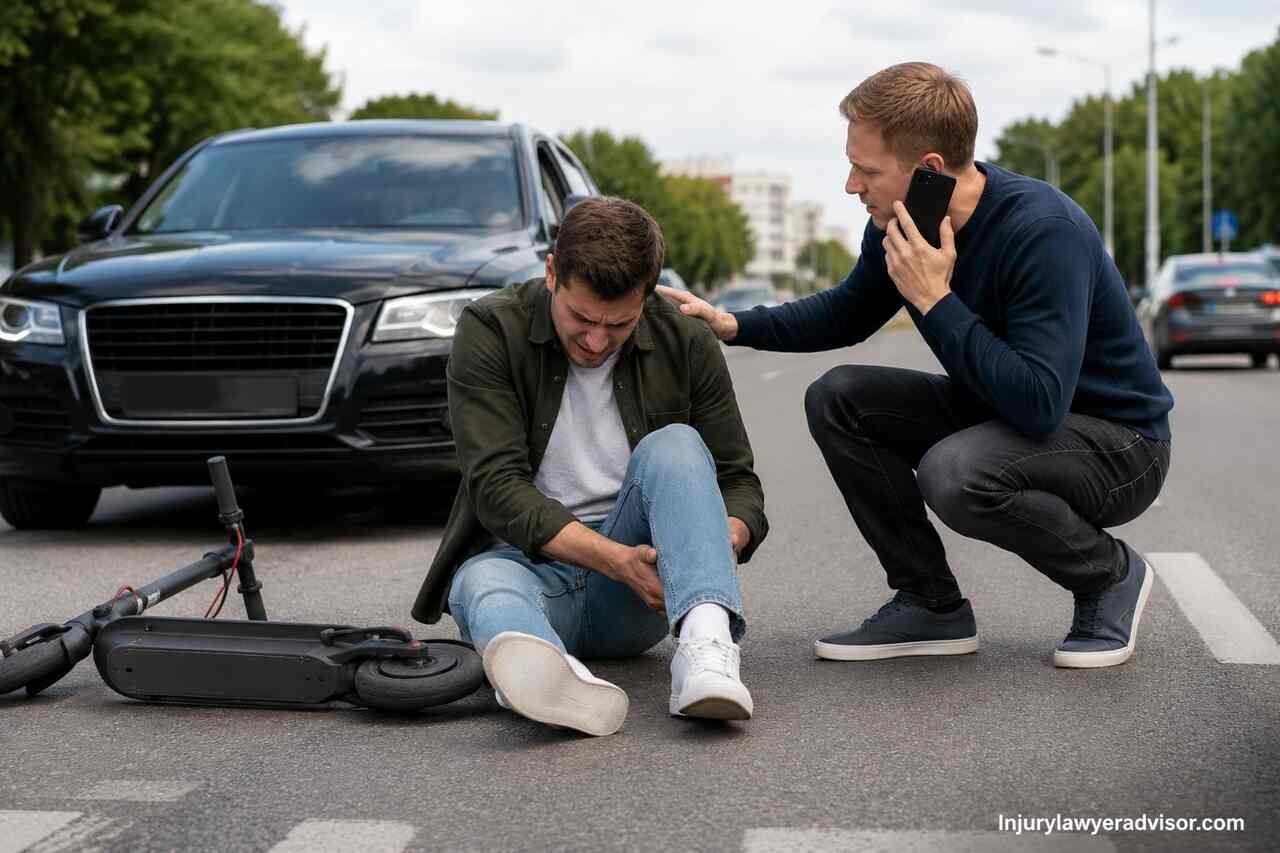
Electric scooters give riders a fast, affordable way to move through city streets, campuses, neighborhoods, and business districts. When a crash happens, however, the rider often has little protection against vehicles, pavement, defective equipment, road hazards, or careless pedestrians. An electric scooter accident lawyer helps injured riders identify who caused the crash, preserve evidence, deal with insurance companies, and pursue compensation for medical bills, lost income, pain, and long-term harm.
Get Medical Care Immediately After the Crash
Medical treatment should be the first step after an electric scooter accident because injuries can worsen quickly after the initial shock fades. Head trauma, fractures, spinal injuries, dental damage, road rash, internal injuries, and soft tissue injuries may not be fully obvious at the scene.
A rider should visit an emergency room, urgent care center, primary care doctor, or specialist as soon as possible. Medical records should describe the date of the crash, the pain location, diagnostic tests, treatment plan, prescriptions, work restrictions, and follow-up needs. These records connect the accident to the injury and make it harder for an insurer to argue that the condition came from something else.
Prompt care also protects the legal claim. Insurance companies often use treatment gaps to reduce settlement value. A lawyer can organize hospital records, imaging results, therapy notes, surgical reports, medication costs, and future care opinions so the claim reflects the full medical impact of the scooter crash.
Report the Electric Scooter Accident
A formal report creates an official record of the crash. The injured rider should call police when a vehicle, serious injury, hit-and-run driver, unsafe road condition, commercial scooter, or public property is involved. A police report may include the accident location, involved parties, witness names, insurance details, apparent violations, and officer observations.
The rider should also report the crash to the scooter rental company when a shared scooter was involved. Rental platforms may have app data, trip history, scooter ID numbers, maintenance logs, GPS information, speed data, battery status, prior complaints, and user agreement records. These details can become important when the accident involves brake failure, throttle malfunction, steering problems, poor maintenance, or defective equipment.
In some cases, the city, county, university, property owner, or business district may also need notice. Claims involving public entities often have shorter notice deadlines than ordinary injury claims. Because these deadlines vary by state and municipality, an electric scooter accident lawyer should review the facts quickly.
Preserve Evidence Before It Disappears
Strong evidence can determine whether an electric scooter injury claim succeeds. The injured rider should take photos and videos of the scooter, vehicle, road surface, traffic signs, lighting, skid marks, debris, potholes, parked cars, bike lane markings, helmet damage, clothing damage, and visible injuries. If the scooter was rented, the rider should screenshot the app ride receipt, route, charges, scooter number, and any customer support messages.
Witness information is also important. A witness may confirm that a driver turned without looking, a scooter malfunctioned, a sidewalk hazard caused the fall, or a rideshare driver opened a door into the rider’s path.
Nearby stores, apartment buildings, buses, traffic cameras, and doorbell cameras may capture footage, but many systems delete recordings within days.
A lawyer can send preservation letters to drivers, companies, property owners, municipalities, and scooter operators. These letters demand that relevant evidence be saved. Early evidence collection is critical because accident details can fade or be lost quickly.
Identify Every Party That May Be Responsible
Electric scooter accidents often involve more than one responsible party. A negligent driver may be liable for speeding, distracted driving, unsafe turns, dooring, failure to yield, impaired driving, or unsafe lane changes.
A scooter company may be responsible when poor maintenance, defective brakes, faulty software, worn tires, or unsafe deployment contributed to the crash.
A city, county, or road maintenance contractor may be involved when a pothole, broken pavement, missing sign, poor lighting, unsafe construction zone, or dangerous bike lane design caused the accident. A property owner may be responsible if the crash occurred on private property with unsafe conditions. A scooter manufacturer or parts supplier may be liable if a design defect, manufacturing defect, or inadequate warning caused the injury.
Identifying all parties matters because compensation often depends on available insurance and legal responsibility. A driver may have auto insurance, a company may have commercial coverage, a property owner may have liability insurance, and a manufacturer may have product liability coverage. A lawyer investigates each source instead of accepting the first insurer’s narrow version of the crash.
Prove Negligence With Clear Facts
To recover compensation, the injured person usually must prove that another party owed a duty of care, breached that duty, caused the crash, and created measurable damages. For example, a driver owed a duty to watch for vulnerable road users. The driver breached that duty by turning across a bike lane without checking. That turn caused the scooter rider to fall. The rider suffered a broken wrist, medical bills, and missed work.
Evidence may include police reports, medical records, witness statements, surveillance footage, app data, expert analysis, vehicle damage, scooter inspection results, and traffic law violations. In cases involving unsafe roads, evidence may include maintenance records, prior complaints, repair history, city inspection logs, and photos showing the hazard.
Fault can be disputed. An insurer may argue that the rider was speeding, riding on a sidewalk, ignoring traffic signals, carrying a passenger, not wearing a helmet, or using the scooter while distracted. A lawyer responds by separating actual legal fault from blame-shifting tactics.
Calculate the Full Value of the Claim
An electric scooter accident claim should include both immediate losses and future harm. Medical expenses may include ambulance transport, emergency care, surgery, hospitalization, imaging, medication, wound care, physical therapy, chiropractic care, occupational therapy, assistive devices, and follow-up appointments.
Lost income may include missed wages, reduced hours, lost bonuses, lost self-employment income, and reduced future earning capacity. Serious injuries can affect a person’s ability to stand, walk, type, drive, lift, concentrate, or perform job duties. Pain and suffering may include physical pain, emotional distress, scarring, sleep disruption, anxiety, loss of mobility, and reduced quality of life.
Property damage may include the scooter, helmet, phone, glasses, backpack, laptop, clothing, or other personal items damaged in the crash. A lawyer may use medical experts, vocational experts, economists, and life-care planners when the injury has long-term effects.
| Damage Category | Examples | Useful Proof |
| Medical costs | ER care, surgery, therapy, medication | Bills, records, treatment plans |
| Lost income | Missed work, reduced hours, lost contracts | Pay stubs, tax returns, employer letters |
| Future losses | Ongoing care, reduced earning ability | Doctor opinions, expert reports |
| Pain and suffering | Pain, anxiety, sleep problems, scarring | Medical notes, photos, personal journal |
| Property damage | Helmet, phone, clothing, personal scooter | Receipts, repair estimates, photos |
Handle Insurance Companies Carefully
Insurance adjusters protect the insurer’s financial interests. They may ask for recorded statements, broad medical authorizations, quick settlement agreements, or admissions that weaken the claim. A rider should avoid guessing about speed, fault, injury severity, or future recovery before receiving medical guidance and legal advice.
A fast settlement may seem helpful when bills are piling up, but it can close the claim permanently. Once a release is signed, the injured person usually cannot ask for more money later, even if surgery becomes necessary or symptoms worsen.
An electric scooter accident lawyer communicates with insurers, prepares a demand package, responds to disputes, negotiates settlement terms, and protects the client from unfair pressure. This is especially important when several insurers are involved, such as auto insurance, commercial liability insurance, health insurance, uninsured motorist coverage, and scooter company coverage.
Review Local Scooter Laws and Deadlines
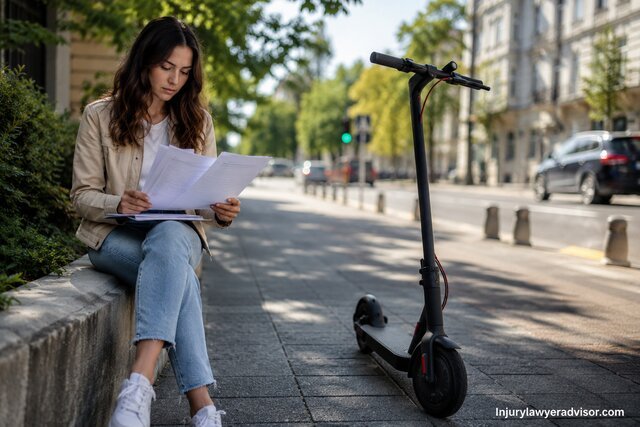

Electric scooter laws vary by state, city, and campus. Rules may address helmet requirements, speed limits, minimum rider age, sidewalk riding, bike lane use, parking, nighttime operation, passenger restrictions, and equipment standards. Violating a local scooter rule does not automatically destroy a claim, but it may affect fault arguments.
Deadlines also vary. Personal injury statutes of limitation can range by state, and claims against public entities may require earlier written notice. Some government-related claims may have deadlines measured in months rather than years. Missing a deadline can prevent recovery even when the case is strong.
A lawyer reviews the accident location, applicable traffic rules, public entity notice requirements, rental agreement terms, insurance deadlines, and court filing deadlines. This review helps prevent avoidable procedural mistakes.
Investigate Scooter Defects and Maintenance Failures
Some electric scooter crashes happen because the scooter itself fails. Common problems may include brake failure, stuck throttles, loose handlebars, sudden power loss, steering instability, worn tires, software errors, battery issues, poor lighting, or missing reflectors. Shared scooters may also be damaged by prior users and returned to service without adequate inspection.
A defect claim may involve the scooter operator, maintenance contractor, manufacturer, distributor, software provider, or parts supplier. These cases often require inspection of the scooter before it is repaired, destroyed, or returned to circulation. Photos alone may not be enough.
A lawyer may work with engineers or product safety experts to inspect the scooter, review maintenance records, evaluate prior complaints, and determine whether the product was defective or poorly maintained. This step is critical when the rider did nothing wrong but the scooter suddenly malfunctioned.
Document the Injury Recovery Process
A strong claim requires consistent documentation. The injured person should keep medical appointments, follow treatment instructions, attend therapy, take prescribed medication, and report symptoms honestly. Missed appointments can be used against the claim.
A recovery journal can help show how the injury affects daily life. The rider can record pain levels, sleep problems, mobility limits, missed family events, work difficulties, emotional stress, and activities that became harder after the accident. Photos of bruising, swelling, scars, casts, braces, stitches, and road rash can also support the claim.
Documentation should remain factual. Social media posts can be misinterpreted, so injured riders should avoid posting accident details, injury updates, workout photos, travel photos, or comments about settlement negotiations while the claim is active.
Compare Settlement and Lawsuit Options
Many electric scooter accident claims settle without trial, but settlement should reflect the evidence, liability risks, insurance limits, medical prognosis, and long-term damages. A demand letter usually explains fault, injuries, treatment, financial losses, and the requested compensation.
If the insurer denies responsibility or offers too little, a lawsuit may be necessary. Litigation can include pleadings, written discovery, depositions, expert reports, mediation, motions, and trial preparation. Filing suit may also allow the lawyer to subpoena records that are not available through ordinary claim negotiations.
Settlement gives certainty and avoids trial risk. A lawsuit may increase pressure and uncover stronger evidence. The best choice depends on the facts, available insurance, injury severity, and the client’s goals.
| Legal Path | Best Used When | Main Advantage | Main Risk |
| Insurance claim | Fault is clear and injuries are documented | Faster resolution | Low initial offers |
| Negotiated settlement | Both sides agree on liability and damages | Predictable outcome | Final release limits future recovery |
| Mediation | Disputes remain but both sides want resolution | Structured negotiation | No guaranteed agreement |
| Lawsuit | Liability, damages, or coverage is disputed | Access to discovery and court pressure | Longer process |
| Trial | Settlement fails and strong evidence supports the claim | Possible full accountability | Uncertain verdict |
Choose the Right Electric Scooter Accident Lawyer
The right lawyer should understand personal injury law, traffic collisions, micromobility claims, insurance disputes, product defects, and local scooter regulations. Electric scooter cases can involve drivers, cities, rental companies, manufacturers, and property owners, so general experience with only simple car accident claims may not be enough.
A good lawyer should explain the fee structure, expected claim process, possible challenges, evidence strategy, communication practices, and realistic case value factors. Many personal injury lawyers work on a contingency fee, meaning attorney fees are paid from recovery rather than upfront hourly billing.
During the consultation, the injured person should bring photos, medical records, police report numbers, insurance letters, scooter app screenshots, witness details, bills, and employment records. Better information allows the lawyer to evaluate the case more accurately.
Avoid Mistakes That Reduce Compensation
Several mistakes can weaken an electric scooter accident claim. Waiting too long to get medical care creates doubt about injury causation. Failing to photograph the scene can make it harder to prove a pothole, missing sign, or unsafe lane design. Giving a recorded statement without preparation may allow an adjuster to use unclear wording against the rider.
Another common mistake is accepting the first settlement offer. Early offers often arrive before the full medical picture is known. A rider with a concussion, back injury, torn ligament, or fracture may need future care that is not yet included in the offer.
Throwing away damaged equipment can also hurt the case. The helmet, clothing, scooter parts, phone, and backpack may show impact force and crash mechanics. These items should be preserved until the lawyer says they are no longer needed.
Conclusion
An electric scooter accident lawyer helps injured riders move from confusion to control. The lawyer investigates fault, preserves evidence, identifies responsible parties, handles insurers, calculates damages, and protects filing deadlines. Because scooter crashes may involve drivers, road hazards, rental companies, product defects, and local regulations, a careful legal strategy can make a major difference in the final recovery.
FAQs
How soon should I contact an electric scooter accident lawyer?
Contact a lawyer as soon as possible after receiving medical care. Early legal help can preserve video footage, scooter data, witness statements, and deadline-sensitive claims.
Can I sue if a car hit me while I was riding an electric scooter?
Yes, you may have a claim if the driver’s negligence caused the crash. Common examples include failure to yield, distracted driving, unsafe turns, speeding, and dooring.
Can I recover compensation if I was not wearing a helmet?
Possibly. Not wearing a helmet may affect arguments about head injuries in some cases, but it does not automatically prevent recovery. The effect depends on local law and the injuries involved.
Who pays after a rented electric scooter accident?
Payment may come from a negligent driver’s insurance, scooter company coverage, property insurance, government liability coverage, or another responsible party. The facts determine the available sources.
What compensation can an electric scooter accident claim include?
A claim may include medical bills, future treatment, lost income, reduced earning ability, pain and suffering, emotional distress, scarring, and damaged personal property.
Do electric scooter accident cases usually settle?
Many settle through insurance negotiations or mediation, but some require a lawsuit when fault, damages, insurance coverage, or scooter defects are disputed.


