


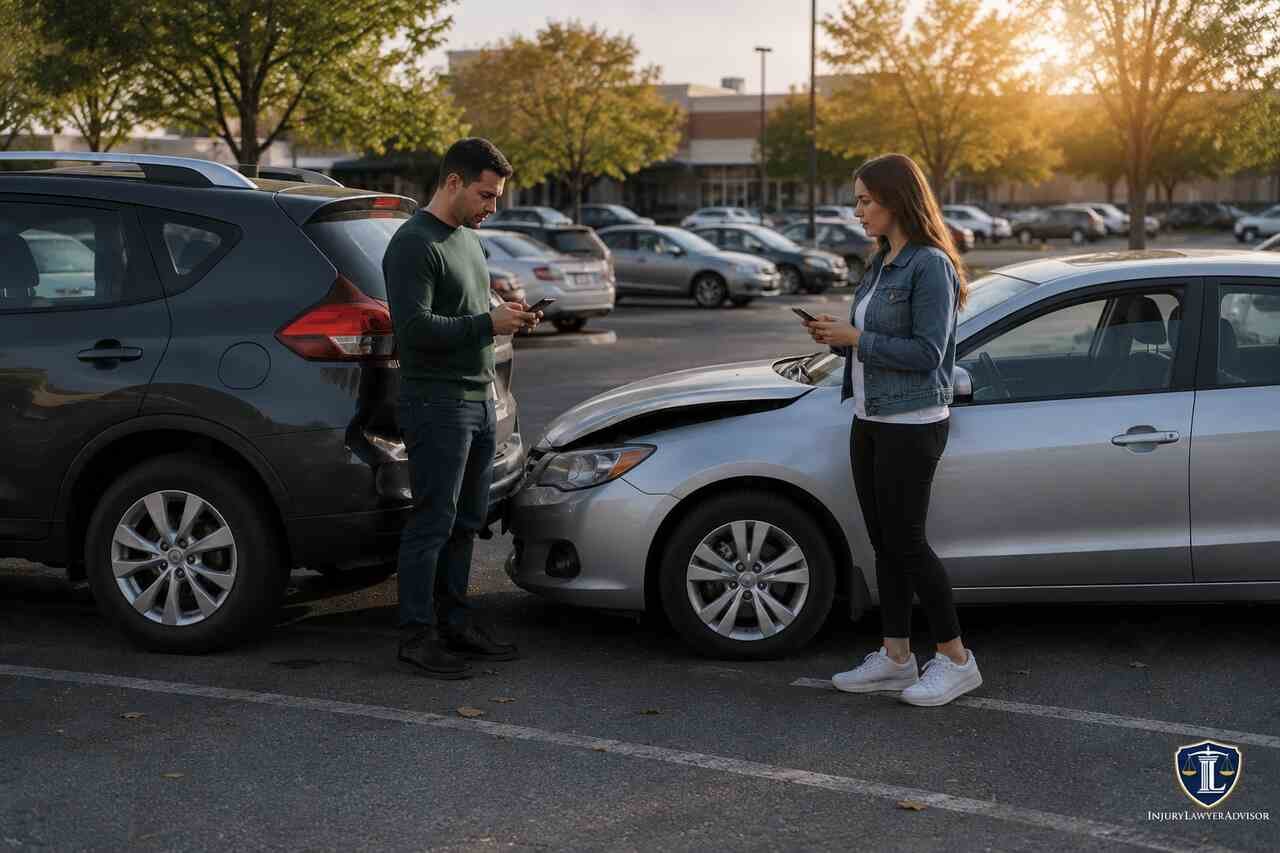
Parking lots may seem safer than busy highways, but accidents in parking garages, shopping centers, supermarkets, office complexes, apartment buildings, and other private properties happen regularly. Vehicles reverse from spaces, drivers compete for limited parking, pedestrians cross traffic lanes, and visibility can be restricted by parked cars.
When an accident causes injuries or significant property damage, determining responsibility can become complicated. A parking lot accident lawyer helps injured drivers, passengers, pedestrians, and other victims investigate what happened, identify the responsible party, deal with insurance companies, and pursue compensation when the law allows it.
Parking lot crashes can involve more than ordinary driver negligence. Depending on the circumstances, property owners, businesses, employers, or other parties may share responsibility. Understanding these relationships is important before accepting an insurance settlement or deciding whether to pursue a claim.
What Does a Parking Lot Accident Lawyer Do?
A parking lot accident lawyer is generally a personal injury attorney who handles motor vehicle accidents occurring in parking lots, parking garages, private roads, and similar areas.
The attorney’s role is not limited to filing a lawsuit. Much of the work involves determining how the collision occurred and building evidence that connects another party’s negligence to the victim’s injuries and financial losses.
A lawyer may:
- Review police or incident reports
- Obtain surveillance camera footage
- Interview drivers, passengers, and witnesses
- Examine photographs and vehicle damage
- Review medical records
- Investigate parking lot ownership and maintenance
- Analyze applicable traffic and negligence laws
- Communicate with insurance adjusters
- Calculate current and future damages
- Negotiate a settlement
- File a personal injury lawsuit when necessary
This investigation becomes particularly important when both drivers provide conflicting descriptions of the collision.
Why Parking Lot Accidents Can Be Legally Complicated
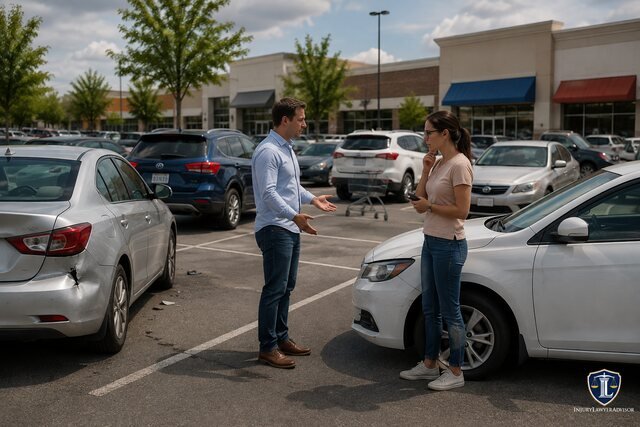

Parking lot accidents often occur at relatively low speeds, but low speed does not automatically mean minor injuries or simple liability.
A typical intersection accident may involve traffic signals, road markings, and established right-of-way rules. Parking lots can be less predictable. Drivers may travel between rows, reverse simultaneously, cut across empty spaces, or enter pedestrian areas.
The legal question usually centers on negligence.
Negligence generally involves establishing that someone owed a duty of reasonable care, failed to meet that duty, and caused an accident that resulted in damages.
For example, a driver backing out of a parking space normally has a responsibility to check for approaching vehicles and pedestrians. If the driver reverses without looking and strikes someone, that behavior may support a negligence claim.
The exact rules and standards vary by jurisdiction, which is one reason local legal advice can become important.
Common Causes of Parking Lot Accidents
Understanding the cause of an accident helps establish liability. Several recurring situations appear in parking lot collision claims.
Drivers Backing Out of Parking Spaces
Backing accidents are among the most recognizable parking lot collisions.
Drivers should check mirrors, blind spots, backup cameras, and surrounding traffic before reversing. However, backup technology does not eliminate a driver’s responsibility to observe the environment.
Two vehicles may also reverse from opposite spaces at the same time. In that situation, determining fault can require surveillance footage, witness statements, vehicle damage patterns, and other evidence.
Failure to Yield
Drivers traveling through parking lanes must remain alert for other vehicles and pedestrians.
Accidents may occur when someone ignores a stop sign, enters a main driving lane without checking for traffic, turns unexpectedly, or fails to yield where required.
Distracted Driving
Parking lots contain numerous distractions. Drivers may look for an available parking space, check their phones, speak with passengers, adjust navigation systems, or focus on nearby stores instead of traffic.
Even at low speeds, a few seconds of inattention can cause a collision.
Speeding and Aggressive Driving
A driver traveling too quickly may have insufficient time to react when another vehicle backs out or a pedestrian steps into the lane.
Aggressive behavior, such as competing for a parking space or cutting across parking rows, can also increase accident risk.
Poor Parking Lot Design or Maintenance
Not every accident results entirely from driver behavior.
Dangerous conditions may include:
- Poor lighting
- Damaged pavement
- Obstructed visibility
- Missing or confusing signs
- Faded pavement markings
- Poorly designed traffic routes
- Unsafe entrances and exits
When property conditions contribute to an accident, questions involving premises liability and property-owner responsibility may arise.
Who Is at Fault in a Parking Lot Accident?
Fault depends on the circumstances rather than simply where each vehicle was located.
A driver moving through a travel lane may have the right of way over a vehicle backing from a parking space in some situations. However, having the right of way does not necessarily excuse careless driving.
Several parties can potentially be responsible.
Another Driver
Driver negligence is the most common basis for liability. Examples include distracted driving, unsafe reversing, speeding, failing to yield, or driving while impaired.
Property Owner or Operator
A property owner or parking facility operator may become relevant when unsafe property conditions contribute directly to the accident.
For example, inadequate lighting or a severely obstructed intersection could become part of the liability investigation.
Employer
If a driver caused the accident while performing job duties, the driver’s employer may potentially have legal responsibility under applicable law.
Multiple Parties
Some cases involve shared fault.
Suppose one driver reverses without checking while another travels through the parking lot at an unsafe speed. Evidence may show that both actions contributed to the collision.
States handle shared responsibility differently through comparative negligence, modified comparative negligence, contributory negligence, or other legal rules. These differences can significantly affect compensation.
Evidence That Can Strengthen a Parking Lot Accident Claim
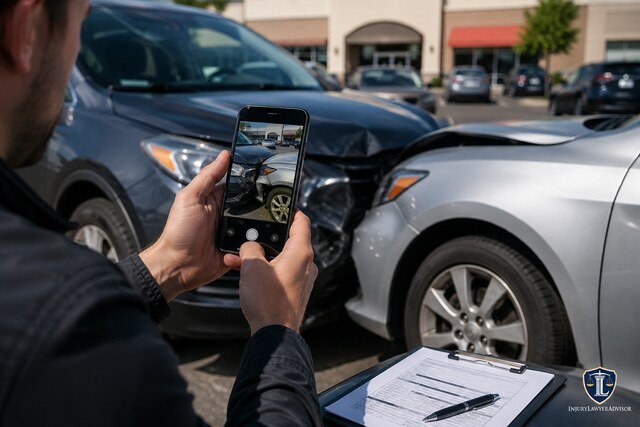
Evidence can disappear quickly after a parking lot accident.
Vehicles move, witnesses leave, weather changes, and surveillance systems may automatically overwrite recordings. Collecting information promptly can therefore make a substantial difference.
Photographs can document vehicle positions, damage, skid marks, traffic signs, pavement markings, lighting conditions, and nearby obstructions.
Surveillance footage can be particularly valuable. Shopping centers, apartment complexes, parking garages, banks, and other businesses often operate security cameras.
A parking lot accident lawyer may send a preservation request asking the property owner or business to retain relevant footage before it is deleted.
Other useful evidence can include witness statements, dashcam recordings, police reports, medical records, repair estimates, electronic vehicle data, and expert analysis.
The goal is to create a consistent factual picture connecting the negligent conduct to the accident and resulting damages.
What to Do After a Parking Lot Accident
The actions taken immediately after a collision can affect both personal safety and a later insurance or injury claim.
First, check for injuries and seek emergency assistance when necessary. Medical evaluation is important when symptoms such as neck pain, headaches, dizziness, back pain, numbness, or limited movement appear.
Exchange contact and insurance information with the other driver. Avoid arguing about fault at the scene.
Photograph the vehicles and surrounding area before they are moved when it is safe to do so. Capture wide photographs showing the parking layout as well as close photographs of damage.
Look for nearby security cameras and witnesses. Write down business names and camera locations because footage may need to be requested quickly.
Report the accident when required and notify the appropriate insurer. When injuries are significant or liability is disputed, speaking with an attorney before giving extensive recorded statements or accepting a settlement may help protect the claim.
Injuries Caused by Parking Lot Accidents
Parking lot crashes commonly happen at lower speeds than highway accidents, but serious injuries remain possible.
Potential injuries include whiplash, back injuries, shoulder injuries, fractures, concussions, traumatic brain injuries, knee injuries, cuts, bruising, and soft-tissue damage.
Pedestrians face greater risks because they lack the protection of a vehicle.
Children, older adults, wheelchair users, cyclists, and people loading groceries or entering vehicles can be especially vulnerable when drivers fail to check their surroundings.
Medical documentation is important because it connects the accident to diagnosed injuries, treatment, and related expenses.
Compensation in a Parking Lot Accident Claim
Compensation depends on the severity of the injuries, available insurance coverage, applicable law, liability evidence, and other case-specific factors.
Recoverable damages may include medical expenses, rehabilitation costs, lost wages, reduced earning capacity, property damage, and certain future treatment costs.
Some personal injury claims may also include compensation for pain, physical limitations, emotional effects, or loss of enjoyment of normal activities when permitted by applicable law.
A lawyer evaluates damages using medical records, employment documentation, expert opinions, insurance information, and evidence showing how the injury affects everyday life.
This matters because an early settlement offer may account for current bills without adequately considering future treatment or long-term financial effects.
How Insurance Companies Handle Parking Lot Accident Claims
Insurance companies investigate parking lot collisions much like other motor vehicle claims.
An adjuster may review statements, photographs, vehicle damage, reports, medical documentation, and available video footage before making a liability determination.
Problems can arise when the drivers disagree about what happened.
An insurer might argue that its policyholder had the right of way, the claimant contributed to the collision, the injuries existed before the accident, or medical treatment was excessive.
An attorney can challenge disputed conclusions with additional evidence and negotiate based on the documented value of the claim.
When Should You Contact a Parking Lot Accident Lawyer?
Not every minor parking lot collision requires legal representation. A small property-damage accident with no injuries and clear insurance coverage may be resolved directly through insurers.
Legal advice becomes more important when:
- Someone suffers significant injuries
- Fault is disputed
- Multiple vehicles are involved
- A pedestrian is injured
- An insurer denies or undervalues the claim
- A commercial vehicle is involved
- Unsafe property conditions contributed to the crash
- Multiple parties may share responsibility
- Long-term medical treatment is expected
- The accident causes substantial lost income
Deadlines also matter. Personal injury statutes of limitations vary by jurisdiction, and additional notice requirements may apply in certain cases. Waiting too long can jeopardize legal rights and make important evidence harder to obtain.
How to Choose a Parking Lot Accident Lawyer
Look for an attorney with meaningful experience handling motor vehicle accidents and personal injury claims rather than focusing solely on the lawyer’s advertising.
Ask about experience with disputed liability, pedestrian accidents, premises liability issues, insurance negotiations, and litigation.
It is also useful to understand the fee arrangement. Many personal injury attorneys work under contingency-fee agreements, meaning attorney fees are generally tied to the recovery. Clients should still review the written agreement carefully because case expenses and fee structures can differ.
A lawyer should also explain the strengths and weaknesses of the case clearly rather than guaranteeing a specific settlement.
Conclusion
A parking lot accident can involve far more than a damaged bumper. Injured victims may face medical treatment, lost income, insurance disputes, and uncertainty about who is legally responsible.
A parking lot accident lawyer can investigate driver negligence, surveillance footage, witness testimony, property conditions, insurance coverage, and other evidence to determine how the accident occurred and who may be liable.
After a serious collision, prioritize medical care, document the scene, preserve available evidence, report the accident appropriately, and avoid rushing into a settlement before the full extent of the losses is understood. When injuries are substantial or responsibility is disputed, qualified local legal advice can help clarify available options and protect important deadlines.
FAQ’s
Do I need a lawyer after a minor parking lot accident?
Not necessarily. A property-damage-only collision with clear liability may be handled through insurance. Legal assistance becomes more valuable when injuries, disputed fault, substantial losses, or multiple responsible parties are involved.
Who has the right of way in a parking lot?
Right-of-way rules depend on the parking lot configuration and local law. Vehicles traveling through designated lanes often have priority over vehicles leaving parking spaces, but every driver still has a duty to operate carefully.
Is the backing driver always responsible?
No. A backing driver may frequently be found responsible for failing to ensure the path was clear, but fault depends on all available evidence. Another driver’s speed, direction of travel, attention, and actions can also matter.
What happens if both drivers were backing up?
Both drivers may potentially share responsibility. Video footage, witnesses, vehicle damage, and each driver’s actions can help determine how fault should be allocated.
Can a store be responsible for a parking lot accident?
Potentially. If a dangerous property condition contributed to the collision, the property owner, operator, management company, or another responsible party may need to be investigated. Liability depends on the specific facts and applicable premises liability law.
Can pedestrians recover compensation after being hit in a parking lot?
Potentially, yes. A pedestrian injured because of another party’s negligence may have a personal injury claim. The pedestrian’s own conduct and local comparative-fault rules can also affect the outcome.
What if there is no police report?
The absence of a police report does not automatically prevent a claim. Photographs, surveillance footage, witnesses, medical documentation, insurance records, and other evidence can still establish what occurred.
How long do I have to file a parking lot accident claim?
The deadline depends on the jurisdiction and type of defendant. Because statutes of limitations and special notice rules differ, checking the applicable deadline promptly is important.


