



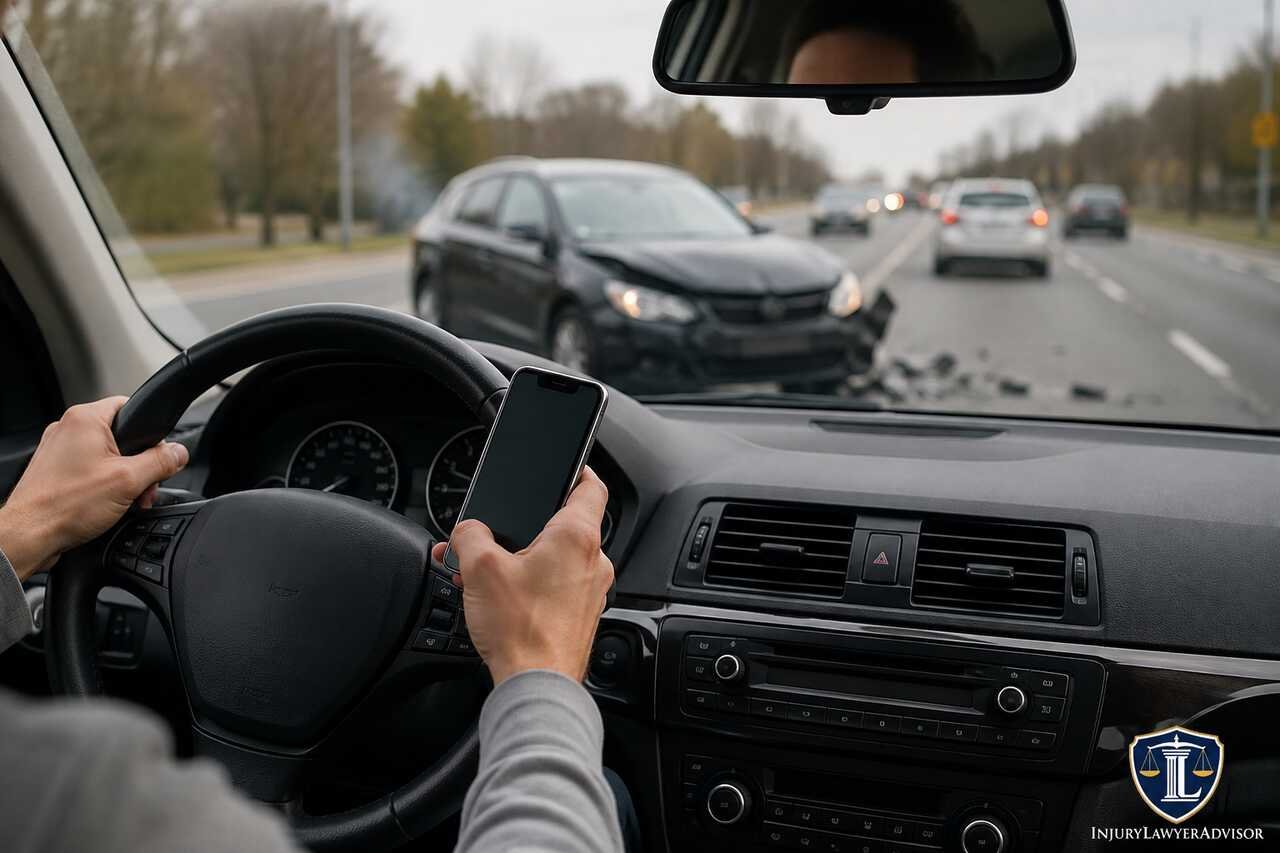
Texting while driving is one of the most dangerous forms of distracted driving. A driver who reads a message, types a reply, checks a notification, or looks at a mobile phone can take their eyes and attention away from traffic long enough to cause a serious collision.
For people injured in these crashes, proving that the other driver was distracted can become an important part of an insurance claim or personal injury lawsuit. A texting while driving accident lawyer can investigate the collision, preserve relevant evidence, determine who may be legally responsible, and pursue compensation for losses caused by the accident.
Understanding how texting-related crashes happen, what evidence can establish distraction, and how negligence affects liability can help injured people protect their legal rights after a collision.
What Is a Texting While Driving Accident?
A texting while driving accident is a motor vehicle collision in which a driver’s use of a mobile phone contributes to the crash. Although texting is a common example, distracted phone use can include reading emails, checking social media, entering information into an app, taking photographs, or interacting with notifications.
Distracted driving is generally divided into three categories:
- Visual distraction: taking the eyes away from the road.
- Manual distraction: removing one or both hands from the steering wheel.
- Cognitive distraction: directing mental attention away from driving.
Texting can involve all three forms simultaneously. A driver may look at a screen, use a hand to type, and concentrate on a conversation instead of surrounding traffic.
This combination can affect reaction time, lane control, speed awareness, hazard recognition, and the driver’s ability to respond to changing road conditions.
Why Texting While Driving Causes Serious Accidents
Driving requires continuous observation and rapid decision-making. Traffic signals change, vehicles brake unexpectedly, pedestrians enter intersections, and road conditions can shift within seconds.
A distracted driver may fail to notice these changes until avoiding a collision is difficult or impossible.
Common texting-related accidents include:
- Rear-end collisions
- Intersection crashes
- Side-impact accidents
- Highway collisions
- Lane-departure accidents
- Pedestrian and bicycle crashes
- Multi-vehicle collisions
For example, a driver looking down at a message may fail to notice traffic slowing ahead. By the time the driver looks back at the road, there may not be enough distance to stop safely.
Speed can make the consequences even more severe. Higher-speed impacts can increase the risk of traumatic brain injuries, spinal injuries, fractures, internal injuries, and other serious harm.
What Does a Texting While Driving Accident Lawyer Do?
A texting while driving accident lawyer represents people who have suffered injuries or other losses because of another driver’s alleged distraction or negligence.
The lawyer’s work typically begins with investigating how the accident occurred. Establishing that a phone was being used can require more evidence than simply showing that the driver possessed a mobile device.
An attorney may examine police reports, photographs, video recordings, witness statements, vehicle damage, medical records, electronic evidence, and other information connected with the crash.
The lawyer may also communicate with insurance companies, calculate damages, negotiate a settlement, and file a lawsuit when appropriate.
The central objective is to connect the distracted conduct to the collision and the collision to the injured person’s documented losses.
How Do Lawyers Prove a Driver Was Texting?
Evidence is especially important in a distracted driving claim because drivers may deny using their phones immediately before a crash.
Several sources of evidence can help establish what happened.
Cell Phone Records
Phone records may help establish whether calls, messages, or certain communications occurred around the time of an accident. Obtaining detailed records may require formal legal procedures, particularly after litigation begins.
Records alone do not always prove that the driver personally interacted with the device at the exact moment of impact, so lawyers often combine them with additional evidence.
Witness Statements
Passengers, pedestrians, nearby motorists, or other witnesses may have seen the driver looking down, holding a phone, typing, or behaving inattentively before the collision.
Independent witness testimony can help connect phone activity with the driver’s actions.
Video Evidence
Dashcams, traffic cameras, security cameras, and surveillance systems located near businesses or homes can sometimes capture a collision or the moments immediately preceding it.
Because some systems automatically overwrite recordings, preserving video evidence quickly can become important.
Police Reports
A responding police officer may document statements, observations, citations, witness information, and other details relevant to distracted driving.
A police report can provide useful evidence, although liability in a civil claim may require additional investigation.
Electronic and Vehicle Data
Depending on the circumstances, additional electronic information may help reconstruct the accident. Vehicle event data, navigation information, app activity, or other digital evidence can sometimes clarify timing and driver behavior.
The availability and admissibility of electronic evidence depend on the facts of the case and applicable law.
Negligence and Liability in a Texting While Driving Case
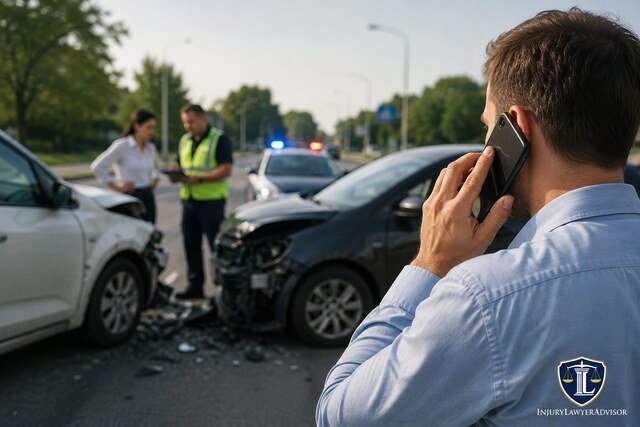

Most texting while driving injury cases are based on negligence.
A negligence claim generally examines whether the driver owed a duty of reasonable care, breached that duty, caused an accident, and produced legally recognized damages.
Drivers have a responsibility to operate vehicles with reasonable care. When someone allows texting or another distraction to interfere with safe driving, that conduct may support an allegation that the driver breached this duty.
However, proving distraction is only part of the case. The injured person generally must also establish causation.
For instance, evidence that a driver sent a message several minutes before a collision may not establish that texting caused the crash. Stronger evidence may show that the driver was interacting with a phone immediately before failing to stop, maintain a lane, yield, or respond to a traffic signal.
Traffic laws also vary by jurisdiction. Some states prohibit handheld phone use broadly, while others have more specific restrictions. A violation may affect a civil case differently depending on local negligence law.
Who Can Be Responsible for a Distracted Driving Accident?
The distracted driver is often the primary party investigated, but liability does not necessarily end there.
If the driver was working at the time of the collision, an employer may potentially become relevant under principles such as vicarious liability, depending on the driver’s employment status, job duties, and applicable state law.
Other parties may also become relevant when separate conduct contributed to the crash. Examples can include vehicle owners, commercial transportation companies, or parties responsible for defective vehicle components.
Determining liability therefore requires examining the entire accident rather than automatically assuming only one party can be responsible.
Compensation After a Texting While Driving Accident
An injured person may be able to pursue compensation for economic and non-economic losses, subject to applicable law and the evidence available.
Potential damages can include:
Medical expenses: Emergency treatment, hospitalization, surgery, medication, rehabilitation, physical therapy, diagnostic testing, and future medical care.
Lost income: Compensation may address wages lost while recovering from injuries.
Reduced earning capacity: Serious or permanent injuries may affect someone’s ability to perform the same work or earn the same income in the future.
Property damage: A claim may include vehicle repairs, replacement costs, and damage to personal property.
Pain and suffering: Depending on state law, compensation may address physical pain and the broader personal effects of an injury.
In fatal crashes, eligible family members or representatives may have rights under applicable wrongful death or survival statutes.
The value of a case depends on factors such as injury severity, medical evidence, available insurance coverage, liability, future treatment needs, lost earnings, and state law.
What to Do After an Accident Caused by a Texting Driver
Actions taken immediately after a collision can affect both personal safety and the evidence available later.
Seek appropriate medical attention, especially when there are signs of head, neck, back, or internal injuries. Some symptoms can develop or become more noticeable after the initial shock of an accident.
When it is safe to do so, photographs can document vehicle positions, damage, skid marks, traffic signals, road conditions, and other relevant details. Witness names and contact information can also be valuable.
Report the collision as required by local law and preserve documents associated with the accident, including medical bills, repair estimates, insurance correspondence, photographs, and employment records showing lost income.
Avoid deleting potentially relevant electronic information. Evidence preservation can become especially important when phone use is disputed.
Dealing With Insurance Companies After a Distracted Driving Crash
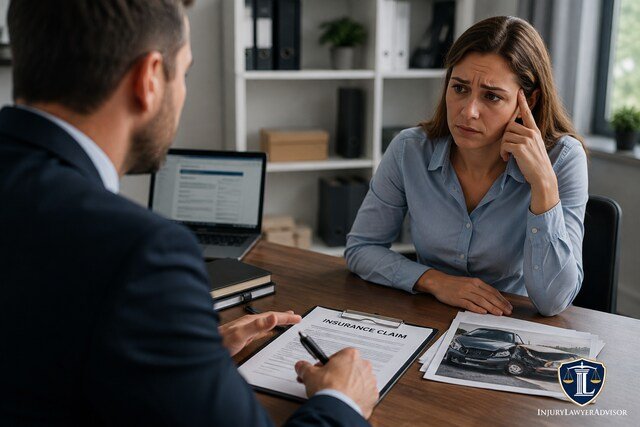
Insurance companies investigate accidents to determine liability and the amount they believe should be paid under applicable policies.
An insurer may question whether texting actually contributed to the accident, argue that the injured driver shares responsibility, dispute medical treatment, or challenge the amount of claimed damages.
Statements made shortly after an accident can also become part of the claim record.
A texting while driving accident lawyer can handle communications with insurers, organize supporting documentation, evaluate settlement proposals, and identify disputes that may require additional evidence.
A settlement should account for more than immediate expenses when an injury requires ongoing medical treatment or affects future employment.
When Should You Contact a Texting While Driving Accident Lawyer?
Legal assistance can become particularly important when an accident causes significant injuries, liability is disputed, multiple vehicles are involved, a commercial driver caused the collision, or an insurance company challenges the claim.
Timing also matters because evidence can disappear. Surveillance recordings may be erased, witnesses can become difficult to locate, and electronic information may become harder to obtain.
Personal injury claims are also subject to statutes of limitations and other procedural deadlines. These deadlines differ by jurisdiction and type of claim.
Speaking with a qualified attorney in the relevant state can help determine which deadlines and legal rules apply to a particular accident.
Conclusion
Texting while driving combines visual, manual, and cognitive distraction, making mobile phone use a serious safety issue on the road. When distraction leads to a collision, determining responsibility requires more than simply showing that the other driver owned or possessed a phone.
A strong claim connects evidence of distracted behavior with negligence, causation, injuries, and documented financial or personal losses. Phone records, witnesses, video footage, police documentation, medical evidence, and accident reconstruction information can all contribute to that process.
A texting while driving accident lawyer can investigate these connections, preserve important evidence, address insurance disputes, identify potentially responsible parties, and explain the legal options available under the law of the state where the accident occurred. Because evidence and filing deadlines can be time-sensitive, obtaining state-specific legal advice early can help protect a person’s ability to pursue a valid claim.
FAQ,s
Can I sue someone who was texting while driving?
Potentially. If a driver’s texting or distracted behavior constituted negligence and caused an accident resulting in compensable harm, the injured person may have grounds for a personal injury claim. The specific requirements depend on state law and the facts of the crash.
How can I prove the other driver was texting?
Evidence may include phone records, witness statements, dashcam footage, surveillance video, police reports, photographs, admissions, and other electronic information. Lawyers often use several sources together rather than relying on one piece of evidence.
What if the driver denies using a phone?
A denial does not necessarily end the investigation. Attorneys can seek independent evidence and, when legally available, use formal discovery procedures to request relevant records and information.
Can I recover compensation if I was partly responsible?
Possibly. States use different comparative or contributory negligence rules. In some jurisdictions, compensation may be reduced according to the injured person’s percentage of responsibility. In others, certain levels of fault can prevent recovery.
Does a texting ticket automatically prove my injury case?
Not necessarily. A traffic citation can be relevant evidence, but a civil personal injury case generally requires establishing the elements required by applicable law, including the relationship between the driver’s conduct and the injuries claimed.
Can an employer be liable when an employee was texting and driving?
Sometimes. Employer liability may arise when an employee causes an accident while acting within the scope of employment or under other applicable legal theories. Employment status, job duties, company policies, and the purpose of the trip can all matter.
How long do I have to file a texting while driving accident claim?
The deadline depends on the jurisdiction and circumstances. Statutes of limitations can restrict how long an injured person has to bring a lawsuit, and additional notice requirements may apply to certain defendants.
How much is a texting while driving accident case worth?
There is no standard settlement amount. Case value can depend on liability evidence, injury severity, medical expenses, lost income, future care, insurance coverage, long-term impairment, and the laws governing damages.


