




A slip and fall at work can cause serious injuries and unexpected medical or financial problems. After a fall, seek medical care, report the accident, document what happened, and understand the workplace injury rules that may apply.
What Counts as a Slip and Fall at Work?
A workplace slip and fall generally occurs when an employee loses balance and falls while in the work environment. Some incidents are same-level falls, such as slipping on a wet floor and landing on the floor. Others involve falling to a lower level, such as from a ladder, loading platform, scaffold, staircase, or elevated work surface.
OSHA’s recordkeeping rules generally presume that an injury is work-related when an event or exposure in the work environment caused or contributed to the condition or significantly aggravated a pre-existing injury or illness, subject to specific exceptions. OSHA defines the work environment to include the employer’s establishment as well as other locations where employees are working or are present as a condition of employment.
That distinction matters because a fall does not necessarily need to result from an obvious defect such as a broken stair. OSHA has previously explained, for recordkeeping purposes, that an employee who trips while walking across a level workplace floor may have a work-related injury even when the employer cannot identify exactly why the worker tripped.
Common Causes of Workplace Slips, Trips, and Falls
Slip and fall hazards vary considerably between an office, warehouse, restaurant, hospital, factory, construction site, and outdoor workplace. However, many accidents involve a relatively small group of recurring hazards.
Common examples include wet or recently cleaned floors, oil and grease, loose rugs, damaged flooring, boxes or equipment obstructing walkways, electrical cords, uneven surfaces, inadequate lighting, missing handrails, unsafe ladders, and insufficient protection around elevated work areas.
OSHA specifically advises workplaces to keep floors clean and, as far as possible, dry, while keeping aisles and passageways clear and in good repair. Its workplace guidance also recommends promptly addressing spills, uneven flooring, obstructed work areas, inadequate lighting, and other foreseeable hazards.
| Hazard | Example | Possible Injury |
| Wet surface | Recently mopped entrance | Sprain, fracture |
| Obstruction | Cable across a walkway | Knee, wrist, or shoulder injury |
| Uneven flooring | Broken tile or floor depression | Ankle or knee injury |
| Stair hazard | Damaged step or missing rail | Head, back, or leg injury |
| Elevated surface | Unprotected platform | Serious trauma or fracture |
| Poor housekeeping | Boxes blocking an aisle | Trip and same-level fall |
These incidents are not necessarily minor. OSHA materials identify strains, sprains, contusions, fractures, and back injuries among possible consequences of workplace slips, trips, and falls.
What Should You Do After a Slip and Fall at Work?
Your first concern should be your physical condition. If you have severe pain, heavy bleeding, difficulty breathing, loss of consciousness, confusion, suspected head or spinal trauma, or cannot safely move, seek emergency medical assistance rather than trying to continue working.
Even when an injury initially seems manageable, follow the appropriate workplace procedure for obtaining medical attention. Some injuries are more noticeable after the immediate shock of the accident subsides. A medical evaluation can also create contemporaneous documentation of the symptoms, diagnosis, and treatment.
Next, report the accident to your employer, supervisor, manager, or other designated person as soon as reasonably possible. Workers’ compensation reporting requirements and deadlines differ by jurisdiction, so employees should not assume they can wait indefinitely before providing notice.
When possible, document basic facts while they are still fresh. Useful information can include the date and time, exact location, activity you were performing, surface condition, lighting, weather if relevant, footwear, witnesses, visible hazards, and the symptoms you experienced immediately afterward.
Photographs can be particularly useful when a temporary condition caused the accident. A puddle may be cleaned, boxes moved, ice melted, a loose mat repositioned, or damaged flooring repaired shortly after the incident.
A practical post-accident checklist is:
- Move away from immediate danger if you can do so safely.
- Obtain necessary medical attention.
- Notify the appropriate supervisor or employer representative promptly.
- Record where, when, and how the accident occurred.
- Photograph the area and relevant hazard when safe and permitted.
- Record witness names and contact information where appropriate.
- Keep copies of accident reports, medical records, work restrictions, correspondence, and expense documentation.
- Check the workers’ compensation rules and deadlines that apply in your jurisdiction.
Can You Receive Workers’ Compensation After a Workplace Fall?
A workplace fall may qualify for workers’ compensation benefits, but eligibility cannot be determined simply from the fact that the accident occurred at work. Workers’ compensation systems are governed primarily by state law in the United States, while separate systems may apply to certain federal employees and occupational groups.
Depending on the applicable system and circumstances, benefits may address medical treatment and a portion of wages lost because of a covered work injury. More serious cases can involve temporary or permanent disability benefits. Eligibility, benefit calculations, authorized medical providers, waiting periods, filing procedures, and deadlines vary.
Employees should therefore distinguish OSHA recordkeeping rules from workers’ compensation eligibility. OSHA’s definition of a recordable work-related injury does not automatically determine whether an employee is legally entitled to workers’ compensation benefits.
Similarly, receiving workers’ compensation does not necessarily answer every potential legal question surrounding an accident. State law can affect whether another party may have separate liability.
Does Your Employer Have to Be at Fault?
Fault is not necessarily the central question in every workplace injury system. For example, OSHA’s recordkeeping guidance explains that employer control, preventability, and fault do not determine whether an injury is work-related for OSHA recordkeeping purposes.
This is important in seemingly simple accidents. Suppose an employee walks down a normal hallway, trips, and injures an ankle. OSHA has explained that such an event can still be presumed work-related for recordkeeping purposes even if investigators cannot determine why the employee tripped.
However, OSHA recordability, workers’ compensation eligibility, and negligence liability are separate legal concepts. A worker should not assume that an OSHA rule automatically establishes entitlement to compensation or proves negligence.
What If You Had a Pre-Existing Injury?
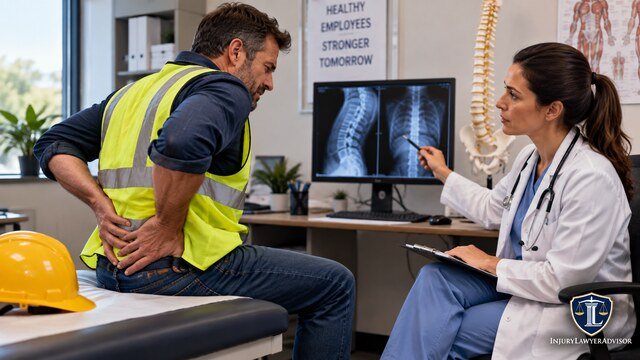

A previous back, knee, shoulder, or other medical problem does not automatically mean a subsequent workplace injury is unrelated to work.
Under OSHA’s recordkeeping standard, an injury or illness is generally considered work-related when a workplace event or exposure causes or contributes to the resulting condition or significantly aggravates a pre-existing injury or illness.
For example, OSHA has explained that ordinary movement such as walking or climbing stairs can constitute a workplace event when it is a discernible cause of an injury.
Workers’ compensation treatment of pre-existing conditions can be more complicated and depends on applicable law and medical evidence. Accurate medical documentation can therefore become especially important when symptoms existed before the fall.
Could Someone Other Than the Employer Be Responsible?
Sometimes a workplace fall involves a third party rather than, or in addition to, the employer.
Consider an employee sent to a customer’s property who falls because of a dangerous condition there. Another example might involve allegedly defective equipment supplied by an outside manufacturer or a hazard created by an independent contractor.
Depending on local law, such circumstances may raise questions about third-party liability in addition to workers’ compensation. These cases are fact-specific, and workers’ compensation rules can affect how any third-party recovery is handled.
For that reason, employees dealing with a serious injury, disputed claim, permanent impairment, or potentially responsible third party may benefit from obtaining jurisdiction-specific legal advice.
How Employers Can Reduce Slip and Fall Risks
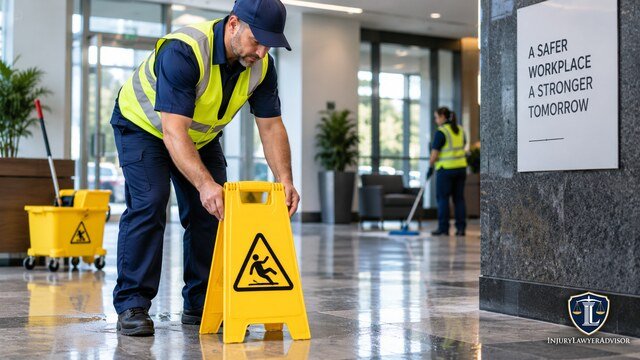
Prevention usually starts with identifying hazards before someone gets hurt. OSHA’s general-industry walking-working surface rules address workplace slip, trip, and fall hazards, while separate requirements apply in areas such as construction.
Good housekeeping is one of the simplest controls. Spills should be addressed promptly, passageways should remain unobstructed, damaged flooring should be repaired, and appropriate lighting should make stairs and walking surfaces visible.
Different workplaces need different controls. A commercial kitchen may focus heavily on grease, water, drainage, mats, and slip-resistant surfaces. A warehouse may concentrate on clear aisles, loading areas, floor condition, and elevated platforms. An office may need to address cables, loose carpeting, stairways, and recently cleaned floors.
OSHA’s guidance also recommends controls such as non-slip surfaces in appropriate locations, properly maintained ladders, secure electrical cords, adequate lighting, and removal of clutter and uneven walking surfaces.
Mistakes to Avoid After a Workplace Fall
One common mistake is failing to report an accident because the injury initially feels minor. Delayed symptoms can complicate both treatment and documentation.
Another problem is relying entirely on memory. A short factual record made soon after the accident may preserve details that become difficult to remember later. Employees should avoid exaggeration and speculation, though. Record what you actually observed rather than guessing about facts you do not know.
Workers should also avoid assuming that one rule applies everywhere. Reporting deadlines, workers’ compensation procedures, medical-provider requirements, benefit levels, and appeal rights can vary considerably between jurisdictions.
Finally, medical instructions and work restrictions should be taken seriously. If a healthcare professional imposes lifting, standing, walking, or other restrictions, make sure those restrictions are communicated through the appropriate workplace process.
FAQ’s
Should I report a slip and fall even if I feel fine?
Prompt reporting is generally sensible because symptoms may develop later and workplace policies or applicable law may impose reporting requirements. Follow your employer’s accident-reporting procedure and the rules applicable where you work.
What evidence should I keep after a workplace fall?
Relevant documentation can include photographs, the incident report, witness information, medical records, work restrictions, correspondence with the employer or insurer, wage information, and records of injury-related expenses. The evidence needed in a particular claim depends on applicable law.
Can a slip on a normal floor still be work-related?
For OSHA recordkeeping purposes, potentially yes. OSHA has explained that a trip occurring while an employee walks across a workplace floor can be presumed work-related even when no particular floor defect explains the trip.
What if a pre-existing condition contributed to my injury?
A pre-existing condition does not automatically make an incident non-work-related. OSHA’s recordkeeping rules consider whether a workplace event caused, contributed to, or significantly aggravated the condition. Workers’ compensation rules require a separate jurisdiction-specific analysis.
Can I make a claim if I fell while working from home?
Potentially, but the circumstances matter. OSHA’s recordkeeping rule distinguishes injuries directly related to performing paid work at home from injuries caused by the general home environment. For example, OSHA treats an injury from dropping work documents on your foot differently from tripping over a family dog while answering a work call.
When should I consider speaking with a lawyer?
Legal advice may be particularly useful when an injury is serious, benefits are denied or terminated, the facts are disputed, permanent disability is possible, deadlines are unclear, or a third party may share responsibility. An attorney familiar with the applicable jurisdiction can explain rights that a general article cannot determine.
Conclusion
A slip and fall at work should be treated as both a health issue and a workplace incident. Obtain appropriate medical care, report what happened promptly, preserve accurate documentation, and learn the specific workers’ compensation rules that apply where you work.
The cause also matters for prevention. Wet surfaces, cluttered aisles, damaged floors, unsafe stairs, poor lighting, and inadequate fall protection are hazards that can often be addressed before another employee is injured. OSHA’s walking-working surface standards provide an important safety framework in the United States, but compensation rights and filing procedures depend on the worker’s jurisdiction and individual circumstances.


